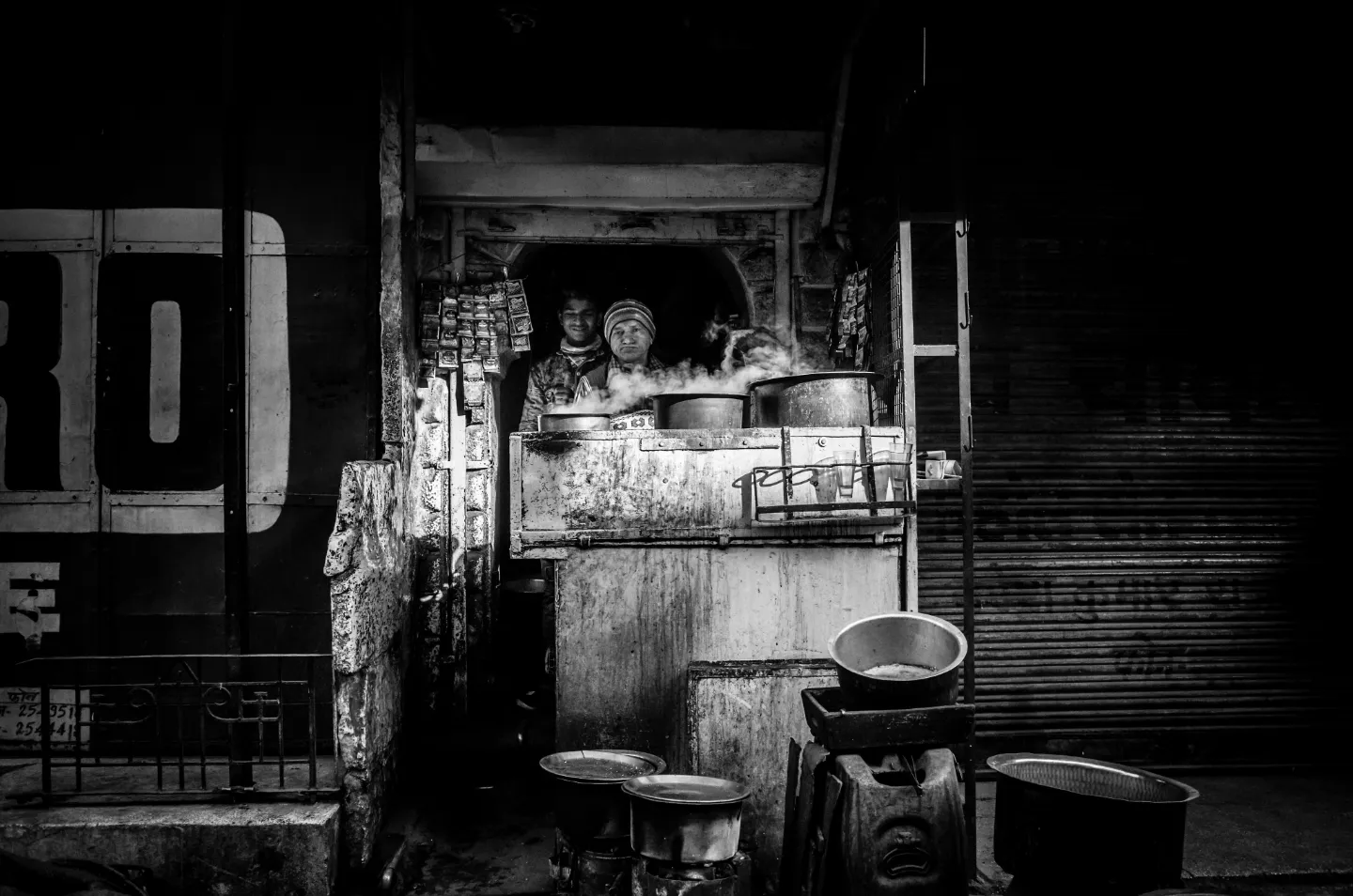
Chai Seller by Shirren Lim
Captured in the vibrant streets of Jodhpur, India, this photograph offers an intimate glimpse into the daily life of a local chai seller and his son. The photographer sought to document the authentic essence of the region, finding in this pair a profound representation of the human spirit. By utilizing a wide aperture and a candid approach, the image isolates the subjects against their bustling environment, emphasizing their connection. This work is award-worthy for its raw emotional resonance and the photographer’s ability to transform a fleeting, everyday encounter into a timeless narrative of heritage and connection.
Shirren Lim
Shirren Lim is a Malaysian photographer currently based in Jakarta, Indonesia, who discovered her true passion for the craft in 2009. Specializing in portraiture, she strives to capture humanity in its many forms through an intense and earthy aesthetic that emphasizes simple, impactful compositions. Inspired by the iconic work of Steve McCurry, Lim is dedicated to the pursuit of powerful, world-changing imagery, and her evocative work has been featured in numerous international web and printed publications.
Resonance Score Breakdown
Transparency Note: The resonance score (9.5/20) is calculated based on social engagement metrics collected before the award announcement.
Expert Photography Reviews · 7
The Weight of the Kettle
I remember a morning in a small station in Rajasthan where the steam from a copper pot seemed to hold more history than the walls surrounding it.
Read the reflection →Steam and Stone
The morning is a heavy curtain. It pulls back slowly, revealing the dust, the heat, the ancient weight of stone. We are born into a rhythm that existed long before us.
Read the reflection →Reviews & Comments
Share your thoughts about this award-winning photograph. Your reviews contribute to the community engagement score.
In Jodhpur, the sun is a brutal, blinding constant, yet here it’s tamed into soft, monochromatic light. At f/2.8, Shirren isolates these two souls against the chaos of the street. It’s a quiet, fleeting collision of human history. I’ve spent my life chasing photons that traveled eons to reach my lens, but looking at this boy’s eyes, I’m struck by how much gravity a single, mortal moment holds. It’s a beautiful, heavy anchor in time.
Jodhpur’s heat radiates off this frame. Lim caught the chai seller and his son in a rare, quiet alignment amidst the chaos. It’s the gaze—that specific, fleeting connection between father and boy—that hits me right in the chest. One tenth of a second later and the tension collapses, the intimacy lost to the street’s noise. Winogrand would’ve tipped his hat to this. She didn’t hesitate. She saw the rhythm and took it. Pure, honest timing.
Most street photography is just noise, but this holds. Of the thousands I’ve reviewed, few capture the weight of a legacy in a child’s posture like this. The shallow depth of field doesn’t just blur the Jodhpur street; it forces us to confront the father’s tired hands against the boy’s stillness. I felt a genuine ache looking at them. It’s not just a portrait; it’s a quiet, thirty-year argument for why their story matters.
The weathered metal of the tea stall and the chaotic, blurred geometry of the Jodhpur street create a gritty, tactile stage. It’s the steam rising against the dark, textured backdrop that truly anchors them. I’m struck by how the father’s steady hands mirror the worn surfaces around him. He isn’t just selling chai; he’s part of the architecture. The environment doesn’t distract—it grounds their quiet, intimate bond in the relentless, beautiful pulse of Rajasthan.
The dust of Jodhpur hangs heavy, yet here, the light finds a quiet grace. Shirren waited for the moment the chaos subsided, letting the steam and shadow reveal a father and son’s shared stillness. It’s a rare, sacred pause in a frantic world. I’ve stood in such heat, feeling the air thicken, and I find myself breathing slower just looking at them. She didn’t just take a picture; she listened to the silence between them.
Street photography in India often risks falling into the trap of the exotic, yet Lim’s framing avoids the cliches of the genre. The Ricoh’s 28mm perspective echoes the intimacy of Cartier-Bresson’s early Leica work, though the tonal depth here feels more akin to the grit of early Magnum reportage. I’m genuinely moved by the boy’s gaze; it’s a quiet, piercing anchor in a chaotic frame. It’s rare to see such restraint in a scene so saturated with history.
Getting this close with an 18.3mm lens isn’t just about technical skill; it’s about the intrusion. I’ve spent weeks in blinds to avoid startling a single bird, so seeing someone shove a Ricoh into a chai seller’s space feels jarring. It’s an extraction, not a connection. I find myself wincing at the lack of distance. Did they even ask permission, or was the human subject just another specimen to be captured for a portfolio?