Dainik Yatra by Sarbesh Sah
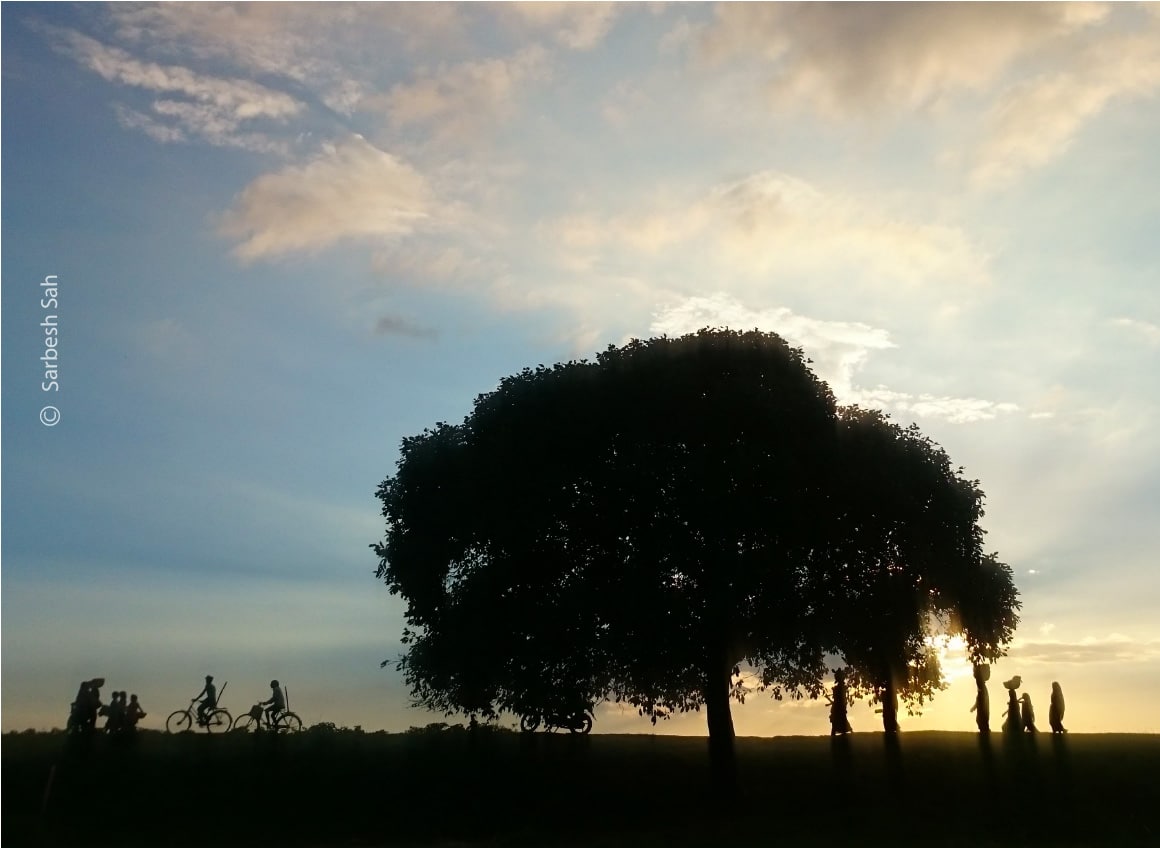
Dainik Yatra captures a poignant moment of reflection at a cherished sunset viewpoint in the Nepalese countryside, four kilometers from the photographer's home. This location served as a sanctuary where the photographer and old school friends would gather until nightfall, sharing stories of life, future visions, and personal growth under the moonlight. The image is award-worthy for its ability to transform a simple, nostalgic gathering spot into a universal meditation on the continuous, spinning journey of human existence. Through careful composition, the photographer elevates a personal memory into a visual narrative about the beauty found in shared human connection and the quiet transitions of nature.
Sarbesh Sah
Born in Nepal, Sarbesh Kumar Sah is a 33-year-old educator who balances a professional career in science teaching and educational counseling with a profound passion for photography. He finds beauty in every object and subject, driven by the belief that the essence of nature deserves to be preserved within a perfect frame. Currently based in Kathmandu, he maintains a dedicated practice of documenting the world around him, capturing the intricate details of his surroundings with a keen, observant eye.
Resonance Score Breakdown
Transparency Note: The resonance score (9.0/20) is calculated based on social engagement metrics collected before the award announcement.
Expert Photography Reviews · 8
The Unfolding Path
Seneca once reminded his friend Lucilius that life is a long journey, and we are all travelers who must eventually accept that the road is not a destination, but a state of being.
Read the reflection →The Geography of Belonging
We often mistake the city for its infrastructure—the roads, the transit lines, the zoning maps that dictate where we sleep and where we toil. But the true document of a city is found in the spaces between these mandates.
Read the reflection →Reviews & Comments
Share your thoughts about this award-winning photograph. Your reviews contribute to the community engagement score.
The light hits the horizon and the frame holds its breath. It’s a quiet transition, the kind of long take that makes you forget to blink. I’ve spent years watching frames flicker, but this one stops time entirely. The composition pulls you into that Nepalese dusk, where the shadows stretch like memories. It’s honest. I felt a sudden, sharp ache for my own lost school days. The cut would have been a mistake; it’s perfect.
You waited for the light to soften, and it shows. There’s a quiet ache in this frame that hits me right in the chest; it reminds me of the friends I’ve lost to time. You didn’t just photograph a sunset; you captured the weight of those conversations held under the moonlight. Because you were actually there, feeling the transition of the day, the camera finally caught the truth of the journey. It’s honest work. I respect that.
We look at this silhouette against the Rajbiraj sunset and we aren’t just seeing a traveler; we’re hearing the echoes of old friends. Sarbesh didn’t just point his lens; he listened to the ghosts of those evening conversations. It’s a quiet, spinning meditation on time that makes my chest ache with a sudden, sharp longing for my own childhood home. This is a photograph that asks to be returned to, again and again.
The horizon pulls the light thin. It’s a quiet tether between the earth and the coming dark. I feel a sudden, sharp ache for the friends I’ve lost to time. The vast, unburdened sky isn’t just background. It’s the weight of everything unsaid. Nothing here is accidental. The empty corner is not empty. It holds the breath of the journey. Sah trusts the silence. I’m grateful he didn’t crowd it.
f/5.6 at 1/200s, ISO 400, 35mm. A standard focal length for a standard perspective. The depth of field is sufficient, yet it doesn’t isolate the subject from the encroaching shadows. It’s technically competent but lacks the aggressive sharpness I’d prefer for such a nostalgic subject. I’ve spent years analyzing these settings, and honestly, the lack of contrast here bothers me. It’s a safe exposure. Sometimes, safety is just another word for missed potential.
Looking at this sunset, I’m struck by the absolute clarity of the horizon. Down where I work, light is a thief, stealing reds and oranges within meters. Here, the atmosphere holds onto that warmth, a luxury the deep ocean never grants. It’s a beautiful, dry stillness. I’ve spent my life fighting backscatter and refractive distortion, so seeing such crisp, undisturbed light feels like a strange, lovely gift. It’s a quiet, terrestrial grace I truly envy.
The light here doesn’t just fall; it lingers, heavy with the scent of Saptari’s cooling earth. I’ve spent enough evenings waiting for the sun to surrender to know that ache in his chest. He stood there as the shadows stretched, listening to the land exhale. It’s a quiet, spinning meditation. Looking at it, I feel a sudden, sharp longing for my own lost friends. He didn’t capture a sunset; he captured the rhythm of our shared, fleeting lives.
Sunset in Rajbiraj isn’t merely a transition of light; it’s a confrontation with the void. Sah understands that shadows are the architecture of memory. When I look at these silhouettes against the fading horizon, I’m struck by a sudden, sharp ache for the friends I’ve lost to time. It’s not a pretty picture. It’s a heavy, honest reckoning with the darkness that eventually claims every story we tell under the moon.