Colosseo Nights by Edward Jones
Captured from a vantage point above the bustling crowds on Via dei Fori Imperiali, this photograph masterfully documents the Colosseum under the cloak of night. By positioning himself away from the pedestrian flow, the photographer utilized a long exposure to transform passing vehicle lights into elegant, golden trails that guide the viewer’s eye toward the ancient monument. The contrast between the enduring stone of the Colosseum and the fleeting, modern energy of the city traffic creates a compelling narrative of time and place. This image is award-worthy for its technical precision in low-light conditions and its evocative, cinematic composition.
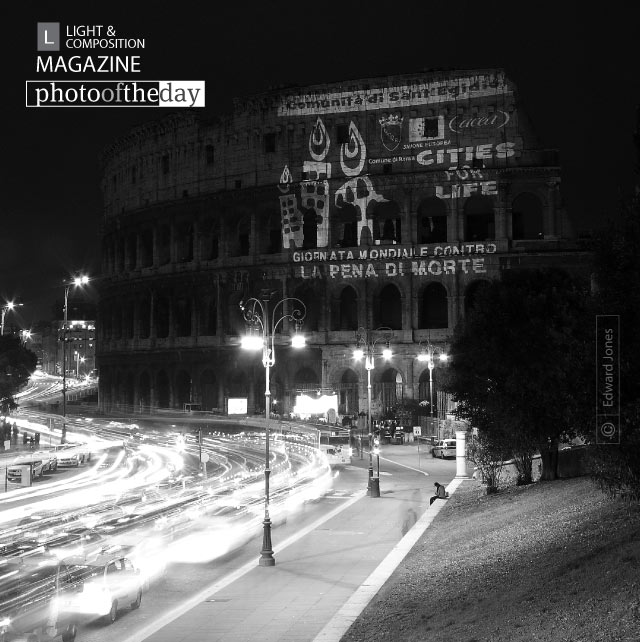
Exposure 20sec @ f/11 | ISO 200 | Focal Length 25mm
Edward Jones
Based in Chester, United Kingdom, Edward Jones is an emerging photographer currently exploring the diverse possibilities of his craft. His portfolio reflects a growing passion for cityscapes and landscapes, driven by a philosophy that prioritizes the enjoyment of the creative process. Through his work, Jones demonstrates a keen eye for the beauty found in quiet observation and a dedicated commitment to continuous learning and artistic development.
Resonance Score Breakdown
Transparency Note: The resonance score (9.4/20) is calculated based on social engagement metrics collected before the award announcement.
Expert Photography Reviews · 5
The River of Passing Ghosts
We are all just currents of light moving through a landscape that has forgotten how to be surprised by us. The city at night is a loom, weaving the frantic, golden threads of our departures and arrivals into a tapestry that stretches far beyond our own brief, flickering presence.
Read the reflection →The Hum of Ancient Stone
The smell of rain on hot asphalt always brings me back to the city at night, when the air turns thick with the metallic tang of exhaust and the cooling breath of old stone.
Read the reflection →Reviews & Comments
Share your thoughts about this award-winning photograph. Your reviews contribute to the community engagement score.
The Colosseum’s heavy massing usually demands a static gaze, but here, the long exposure dissolves the city’s pulse into mere light trails. It’s a clever trick, yet it flattens the threshold between the ancient stone and the modern street. I’m struck by how the fenestration loses its rhythm in the blur. It’s technically sharp, but I miss the tactile weight of the travertine. It’s a beautiful lie, but it doesn’t quite feel like Rome.
We look at these golden light trails and we’re watching the city’s heartbeat. Edward Jones didn’t just photograph stone; he listened to the rhythm of Rome’s restless transit. It’s a portrait of a monument that’s seen everything, yet remains silent while we rush past. I feel a strange, quiet loneliness looking at those streaks of light. It’s a photograph that asks to be returned to, reminding us that we’re only passing through the frame of history.
20sec at f/11, ISO 200, 25mm. The Canon 450D sensor struggles with this dynamic range, yet the choice of f/11 keeps the diffraction manageable while forcing the necessary duration for those light trails. It’s a calculated risk that pays off. I’ve seen enough blown-out highlights in Rome to appreciate this restraint. The exposure is technically sound, even if the sensor’s age shows in the shadows. It’s a precise execution of a standard long-exposure formula.
The golden streaks of light aren’t just traffic; they’re the city’s pulse, wrapping the Colosseum in a kinetic, modern shroud. I’m struck by how the ancient stone feels almost fragile against that relentless, blurred motion. It’s a portrait of Rome itself, where the architecture is the protagonist and the people are merely ghosts passing through. It’s haunting, really. When I look at those glowing trails, I don’t see cars; I see the city’s restless, eternal heartbeat.
The frame’s geometry relies on the golden light trails to anchor the Colosseum’s mass. It’s a calculated geometry, yet the lower quadrant feels cluttered. The long exposure doesn’t quite resolve the tension between the static stone and the kinetic blur. I’ve seen this perspective a thousand times, but the spatial weight here is undeniable. It’s technically sound, though the composition lacks the necessary rigor to truly command the picture plane. It’s almost perfect, but it doesn’t quite hold.