The Man in the Street by Willeke Tjassens
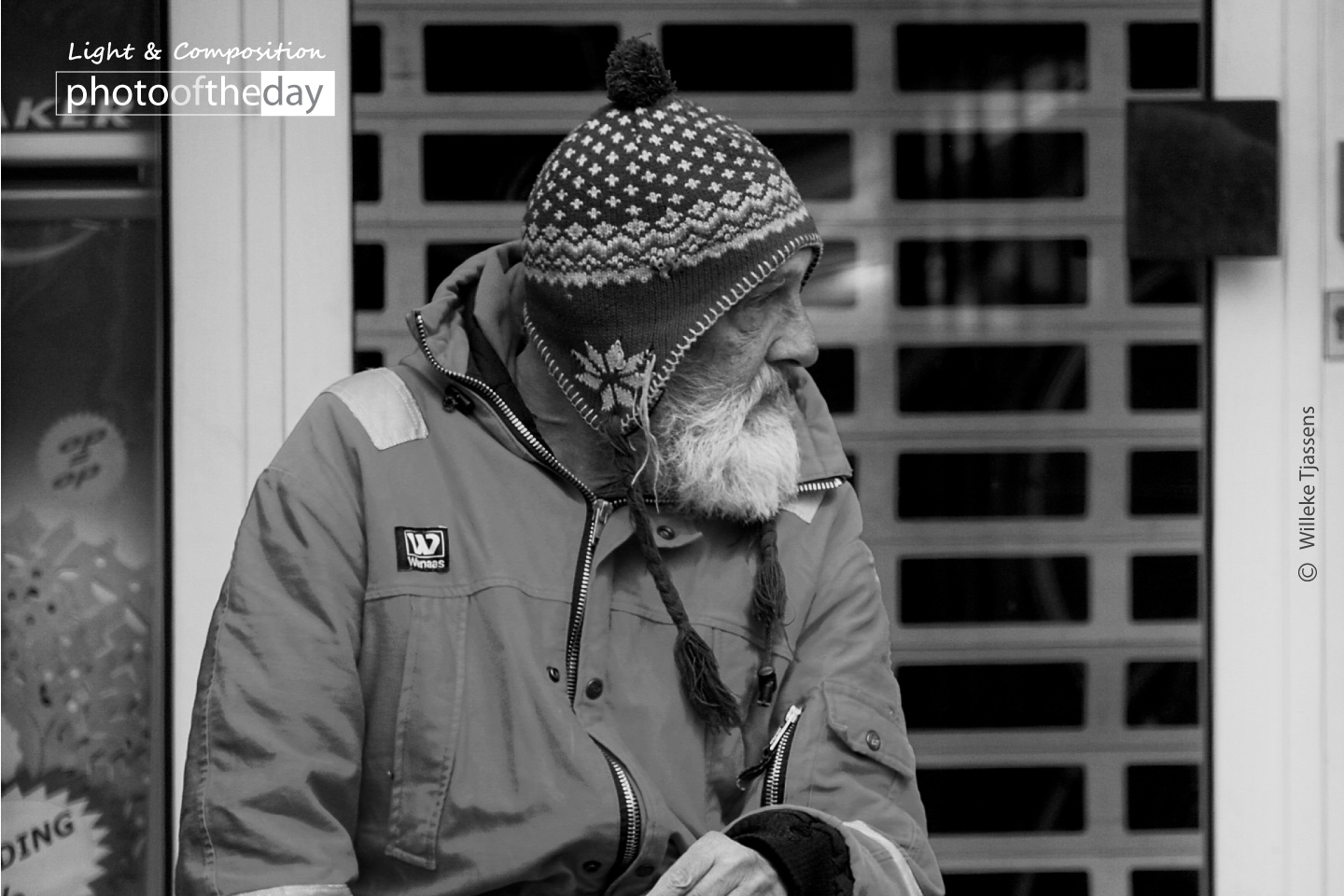
Captured during a routine morning commute, this candid portrait captures a man resting on a street chair while enjoying a beer. The photographer, committed to documenting authentic human moments, chose to observe the scene discreetly rather than staging the interaction. This approach allowed for a raw, unposed aesthetic that highlights the quiet solitude of the early morning. The image is award-worthy for its spontaneous composition and the photographer's ability to find profound, narrative-driven beauty in the mundane details of everyday urban life.
Willeke Tjassens
Born in 1972, Willeke Tjassens is a dedicated street photographer based in the Netherlands. Her practice is defined by extensive urban exploration and a rigorous selection process, where she captures hundreds of images to curate only the most compelling, original compositions. Having traveled extensively to locations such as Morocco, New York, and Egypt, she maintains a primary focus on the streets of Amsterdam, where she specializes in documenting candid human experiences with a keen eye for authenticity.
Resonance Score Breakdown
Transparency Note: The resonance score (9.9/20) is calculated based on social engagement metrics collected before the award announcement.
Expert Photography Reviews · 8
The Weight of a Morning
There is a particular grace in the way a person occupies a space when they believe no one is watching. We spend so much of our lives performing, adjusting our posture to fit the expectations of the street, the office, or the home.
Read the reflection →The Quiet Between Heartbeats
I’ve been trying to write you, but the words keep settling in the wrong places. We spend so much of our lives rushing toward the next thing, convinced that the value of a day is measured by how much we have conquered or how far we have traveled.
Read the reflection →Reviews & Comments
Share your thoughts about this award-winning photograph. Your reviews contribute to the community engagement score.
Before the eye identifies the man, a sudden stillness settles in the chest. It’s the weight of that morning beer, the quiet solitude of a street chair. I feel my own pulse slow, mirroring his stillness against the urban blur. When I return to this a year later, I’m still struck by the ache of his isolation. It’s a haunting, private anchor in a world that usually demands we keep moving. I can’t look away.
The street isn’t just a backdrop; it’s the datum against which this man’s stillness is measured. Tjassens captures how the urban void defines him. The light rakes across the brickwork, emphasizing the threshold between private repose and public transit. I’m struck by the way the fenestration creates a rhythm behind him, grounding his solitude in the city’s structure. It’s a rare, honest frame—it doesn’t flatten the space, it lets the architecture breathe around the subject.
You didn’t rush this. Most people would’ve walked past a guy having a beer at that hour, but you stopped. I can feel the stillness in his posture, that quiet weight of a morning spent alone. It’s not about the chair or the street; it’s about the man’s solitude. Honestly, looking at his face makes me miss the quiet corners of my own life. You waited, and you caught something real. That’s rare.
It’s jarring to see a subject so clearly defined by ambient light. Down here, we’re constantly fighting the refractive index and the relentless absorption of the red spectrum. I’m used to battling backscatter and murky depths, so seeing this man’s skin tones rendered with such crisp, unfiltered warmth feels almost alien. It’s a quiet, dry moment, and honestly, I find the lack of suspended particulate matter in the air quite refreshing. It’s a strange, beautiful stillness.
The man’s posture is all wrong for a peak moment. He’s slumped, gravity winning the battle against his spine. I’ve spent my life chasing the exact millisecond of tension, and here, there’s none. It’s just a guy with a beer. The timing doesn’t capture a narrative; it captures a pause. I’d have preferred a flicker of life in his eyes, but it’s just flat. Honestly, it makes me want to go for a run.
The cool, grey pavement of Arnhem anchors this scene, reflecting a morning light that feels almost Dutch-master crisp. That weathered chair isn’t just furniture; it’s a stage for his solitude. I’m struck by the quiet dignity in his posture, mirrored by the urban stillness around him. The beer bottle, catching a sliver of light, grounds the man in his reality. It’s a beautiful, honest dialogue between a person and the city that holds him.
Watching this man slumped with his beer, I’m struck by how rarely we afford humans the same ethical distance we owe a nesting bird. It’s a candid moment, sure, but did she ask? In the wild, I’d never crowd a subject’s solitude for a frame. It’s unsettling to see such raw vulnerability extracted without consent. I prefer the quiet dignity of a subject who doesn’t know they’re being hunted by a lens.
The frame’s geometry is compromised by the subject’s off-center placement. It’s a precarious balance. The chair’s rigid lines provide a necessary anchor, yet the negative space to the left feels hollow rather than intentional. I’m genuinely irritated by the lack of vertical alignment in the background architecture. It doesn’t hold. The composition demands a tighter fulcrum to justify the man’s solitude. Without that structural discipline, the narrative weight simply leaks out of the frame.