Chirping Tranquility by Shovan Acharyya
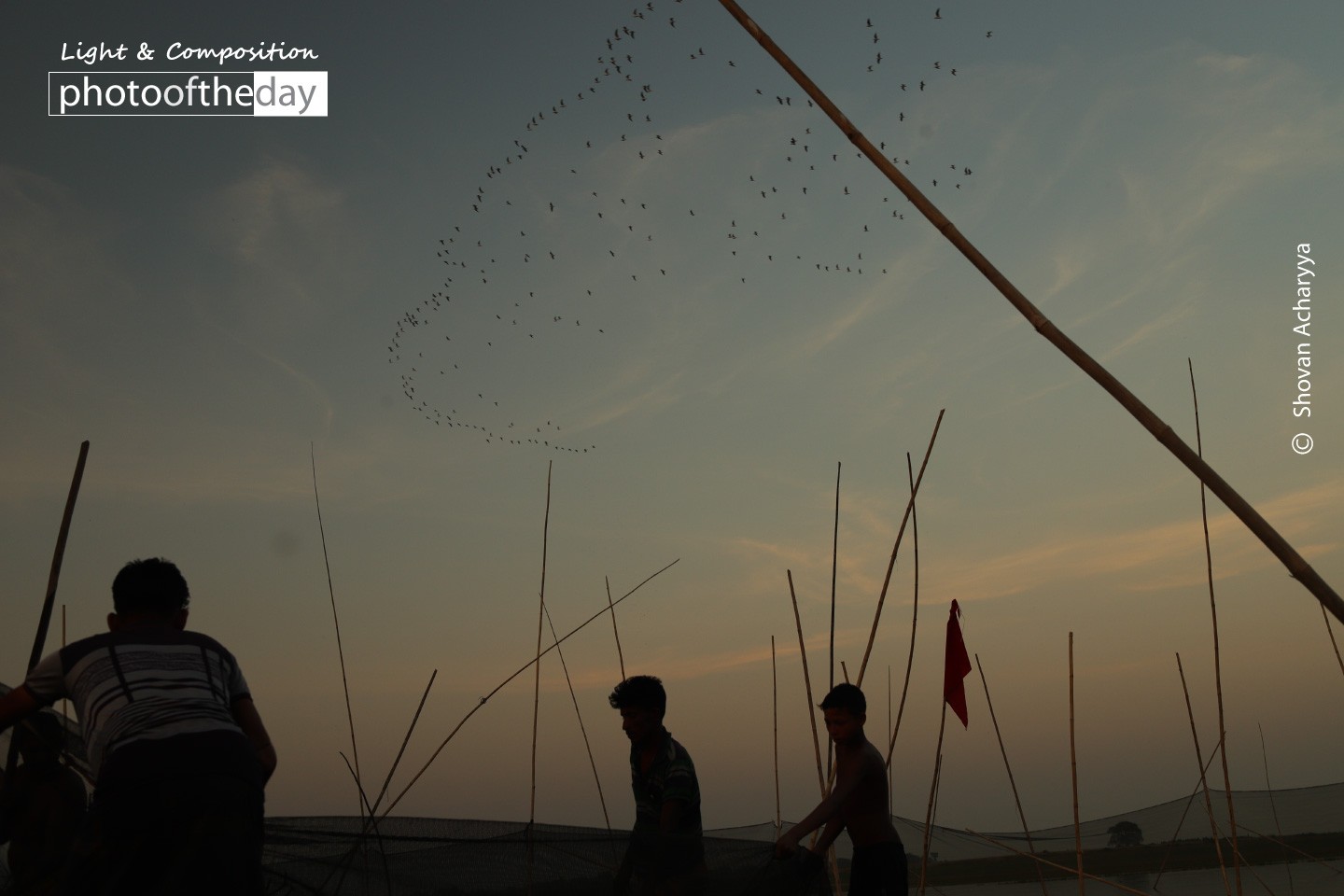
Captured during the monsoon season in the wetlands of Sunamgonj, this poignant documentary photograph reflects a moment of innocent joy amidst the uncertainty of lockdown. As the landscape transformed into a lush, rain-washed sanctuary, local children found solace in the rising waters, turning a time of school closures into an opportunity for play. The image masterfully balances the raw, fresh beauty of the natural environment with the resilient spirit of childhood. It is an award-worthy composition that serves as a hopeful metaphor for the Earth’s renewal and the enduring vitality of the next generation.
Shovan Acharyya
Born in the small town of Sunamgonj, Bangladesh, Shovan Acharyya is a dedicated photographer currently based in Dhaka. After earning a Master’s degree in Economics from the University of Chittagong, he pursued his creative passion through foundational training at Pathshala. Now working for a prominent literature and lifestyle magazine, he specializes in landscape, lifestyle, and wildlife photography, consistently striving to elevate his craft toward a full-time professional career.
Resonance Score Breakdown
Transparency Note: The resonance score (8.9/20) is calculated based on social engagement metrics collected before the award announcement.
Expert Photography Reviews · 8
The Architecture of Play
In the quiet hours of a Sunday morning, I often watch the way water finds its own level. It is a patient, persistent force, indifferent to the boundaries we draw on maps or the fences we build to keep our lives contained.
Read the reflection →The Weight of Water
I spent this morning trying to fix a leaky faucet in the kitchen. It was a small, persistent drip that had been driving me crazy for days. I kept thinking about how much water we waste without even noticing, just letting it slip away into the drain.
Read the reflection →Reviews & Comments
Share your thoughts about this award-winning photograph. Your reviews contribute to the community engagement score.
The boy is mid-leap, but his center of gravity hasn’t reached the apex of the arc. It’s a fraction early. I’ve spent my life watching bodies in flight; he’s still fighting the drag of the water. If the shutter had fired two frames later, his muscles would be fully extended, capturing that true weightless suspension. It’s a beautiful scene, but I’m left wanting that singular, perfect millisecond of total release. It’s almost there, but not quite.
Architecture isn’t just stone; it’s the threshold between human life and the elements. Here, the water acts as a fluid datum, erasing the boundary between solid ground and sky. I’m struck by how the children’s movement disrupts the stillness of the monsoon fenestration. It’s a rare, honest capture of space as a lived experience rather than a static object. I’ve spent years studying structures, but this raw, wet joy reminds me why we build at all.
In the rain-washed wetlands of Sunamgonj, we see childhood reclaiming its rhythm. These children aren’t just playing in the rising waters; they’re listening to the pulse of the monsoon. Shovan didn’t just look at them; he heard their laughter over the storm. It’s a quiet, soaking joy that makes my own heart ache with a sudden, sharp nostalgia. We look at their faces and realize that even when the world closes, life finds a way to bloom.
Before the eye identifies the children, something in the chest softens. It’s the sudden, cool weight of monsoon water against skin. I feel a phantom dampness, a quiet release of the lockdown tension I’ve carried for months. When I return to this, the joy doesn’t feel like a memory; it’s a pulse. It’s the way their laughter ripples through the frame, turning a stagnant, uncertain season into a sanctuary of pure, unburdened movement.
The monsoon’s heavy, silver light clings to the water, turning the wetlands into a vast, liquid mirror. It’s a scene of quiet saturation where the environment isn’t just setting the stage; it’s cradling the child. I’m struck by how the ripples echo the boy’s movement, blurring the line between his joy and the rising tide. He isn’t merely playing in the rain; he’s part of the landscape’s own renewal. It’s truly breathtaking to witness.
Watching these children splash through the Sunamgonj wetlands, I’m struck by how rarely we see such unforced, genuine interaction with a landscape. It’s a relief to find a frame where the subjects aren’t performing for a lens. They’ve simply integrated into the monsoon rhythm. I’ve spent weeks hiding in reeds to capture a single bird, yet here, the lack of intrusion is what makes it work. It’s earned, not extracted. A rare, honest moment.
The horizon line cuts the frame with surgical precision, anchoring the chaotic splash of the children against the stillness of the flooded plains. It’s a rigid geometry that keeps the scene from dissolving into mere sentiment. The negative space above the figures provides the necessary breath, preventing the composition from collapsing under its own weight. I’ve rarely seen such disciplined tension in a monsoon study. It’s a rare, cold clarity that actually holds my attention.
The monsoon light in Sunamgonj isn’t just illumination; it’s a heavy, silver breath. Shovan waited until the clouds softened, turning the wetlands into a mirror for these children’s laughter. I’ve stood in such humidity, feeling the air cling to my skin, and it’s humbling to see that stillness captured. They aren’t just playing; they’re reclaiming the water. It makes my chest ache with a quiet, sharp joy. He listened to the land, and it answered.