The Boy Andres by Jose Juniel Rivera-Negron
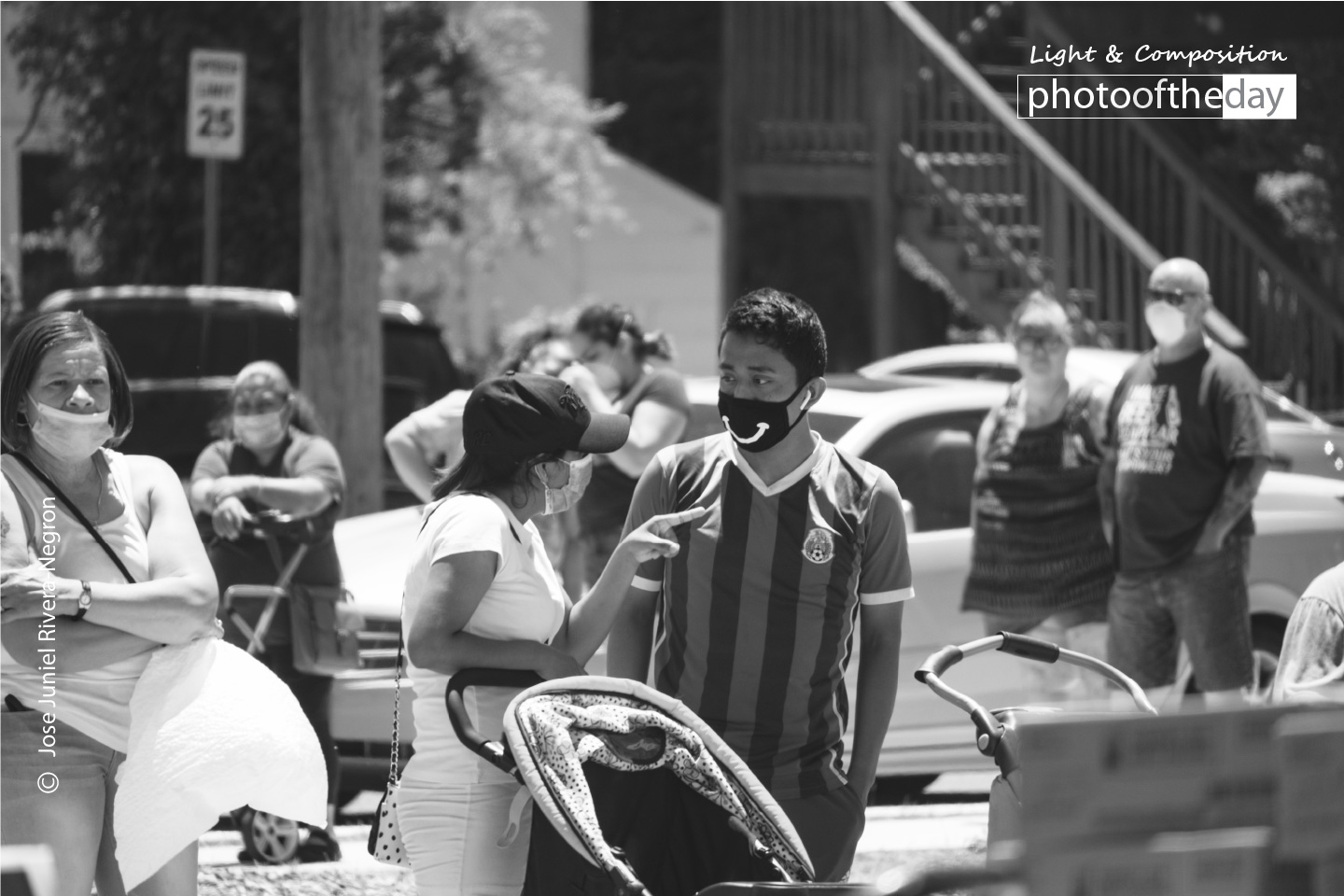
Captured on a bright, sunny day in a local park, this candid street portrait features a young boy named Andres. Utilizing a 50-250mm lens to maintain a respectful distance, the photographer observed a poignant interaction between the boy and his older sister. While the scene initially appeared to be a scolding, the photographer perceived a deeper layer of protective affection beneath the surface. This image is award-worthy for its ability to transform a fleeting, everyday moment into a narrative of sibling dynamics, showcasing the photographer’s keen eye for human emotion and the subtle stories unfolding in public spaces.
Jose Juniel Rivera-Negron
Born on the tropical island of Puerto Rico, Jose Juniel Rivera-Negron eventually relocated to the United States, where he navigated significant personal challenges before finding his true calling in photography. Now based in Tampa, Florida, he views his craft as a powerful medium to document the human experience and share stories of resilience. Driven by a desire to inspire others, he demonstrates that it is never too late to pursue one's creative dreams and achieve personal growth through the lens of a camera.
Resonance Score Breakdown
Transparency Note: The resonance score (8.7/20) is calculated based on social engagement metrics collected before the award announcement.
Expert Photography Reviews · 7
The Weight of a Shared Secret
I often find myself lingering near the iron gates of the park on 4th Street, watching the way siblings navigate the invisible borders of their own small world.
Read the reflection →The Weight of Midday
There is a specific, sharp clarity to the light of a high-noon sun that leaves no room for shadows to hide. In the north, we rarely see this; our light is usually filtered through layers of mist or stretched thin by the horizon.
Read the reflection →Reviews & Comments
Share your thoughts about this award-winning photograph. Your reviews contribute to the community engagement score.
The frame’s geometry relies on the verticality of the subjects against the park’s flattened depth. It’s a rigid architecture. The negative space surrounding the figures creates a necessary, cold isolation. While the narrative suggests affection, the composition refuses sentimentality. The lens compression flattens the plane, forcing a claustrophobic proximity. It’s technically precise, yet I’m left cold by the lack of tonal variation. The structure holds, but it doesn’t breathe. It’s a clinical, hollow success.
The vertical axis of the sister’s posture creates a rigid anchor, perfectly counterbalanced by the boy’s slight, downward-sloping shoulder. It’s a classic triangular tension. The negative space in the upper-right quadrant provides the necessary breathing room for this geometric friction to resolve. I’m genuinely moved by how the 50-250mm compression flattens the depth, forcing these two masses into a singular, tight equation of protective gravity. It’s a beautifully solved spatial problem that feels remarkably balanced.
You waited for the right second, and it shows. Most people would’ve seen a scolding, but you saw the protective grip of a sister. I’ve spent years in parks watching kids, and that tension in Andres’s face—it’s real. It’s that raw, messy vulnerability that makes me stop walking. You didn’t just take a picture; you felt the weight of their bond. There’s something honest happening here. You’ve got a good eye for the truth.
Andres doesn’t know he’s being watched, and that’s the rub. Using a long lens from a distance creates a barrier, not a bridge. While the composition is clean, I can’t help but feel we’re eavesdropping on a private moment of sibling tension rather than sharing it. It’s a sharp observation, sure, but it lacks the vulnerability of a portrait where the subject has invited you in. I’m left wanting to know who he really is.
The tension here is palpable. It’s a freeze-frame of a scolding that feels like a quiet, protective dialogue. Using that 50-250mm lens, Rivera-Negron pulls the focus tight, isolating the sibling dynamic from the park’s chaos. I’ve seen this scene a thousand times, but the way the light catches Andres’s expression makes me ache for my own brother. The cut would have been a mistake; this is the frame the editor keeps because it breathes.
That 50-250mm lens is a risky choice, but Rivera-Negron nailed the timing. You see the tension in the sister’s posture, the way Andres leans into the scolding. It’s raw. One tenth of a second later and the protective spark in her eyes would’ve vanished into a blur. I’ve spent years hunting these sibling dynamics, and this one hits home. It’s a fleeting, honest slice of New Jersey life. He was paying attention. That’s everything.
The park’s hardscape acts as a rigid datum, framing the siblings against a backdrop of blurred, vertical fenestration. It’s a classic architectural trap; the depth of field flattens the void, turning the public realm into a stage set. I’m struck by how the harsh, directional light defines the boy’s posture against the concrete. It’s not just a portrait; it’s a study of how we occupy space when we’re feeling vulnerable. I find it deeply moving.
inspiring!! great job