Spring Rolls by Diep Tran
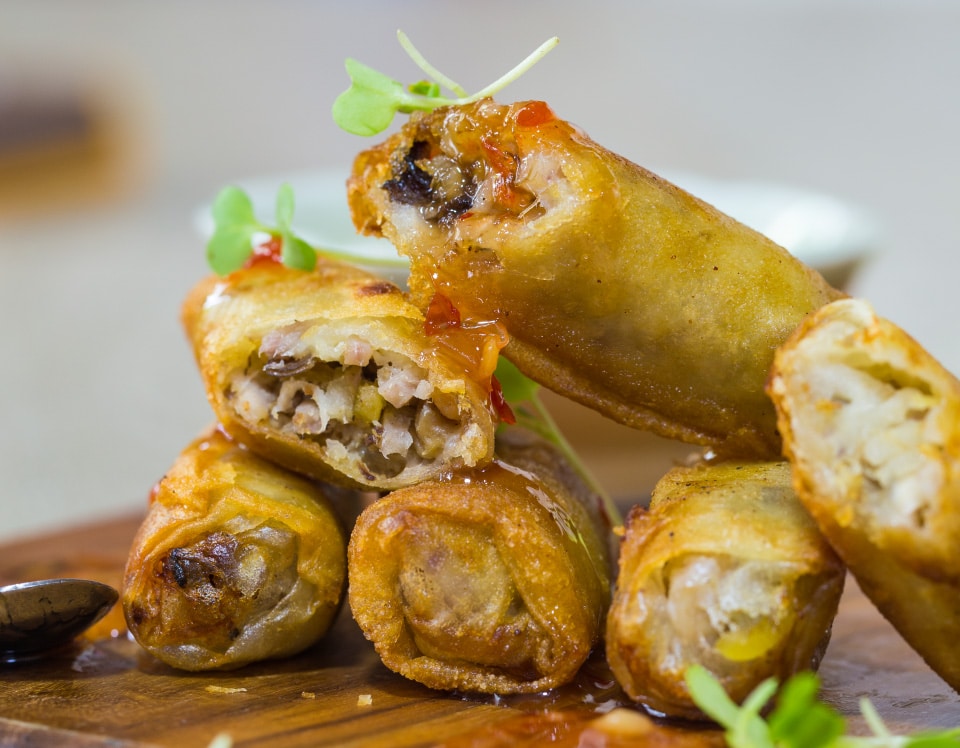
In this evocative food study, Diep Tran captures the humble spring roll as a quintessential comfort food, particularly during the colder winter months. By focusing on the texture of the rolls paired with the vibrant accents of sweet chili sauce and fresh baby radish leaves, the photographer elevates a simple kitchen staple into a work of art. The composition highlights the beauty found in everyday ingredients, demonstrating a keen eye for detail and a mastery of natural lighting that transforms a casual snack into a sophisticated, award-worthy culinary portrait.
Diep Tran
Born in Vietnam and currently based in Brisbane, Australia, Diep Tran finds inspiration in the simple, everyday objects found within the home and during her travels. Her photographic journey is deeply influenced by a Buddhist upbringing, which fosters a profound appreciation for the natural beauty and quality of life in both organic and man-made subjects. By exploring the interplay of light and shade, Tran continues to refine her artistic vision, aiming to reflect her diverse global experiences and observations through a lens of pure, creative photography.
Resonance Score Breakdown
Transparency Note: The resonance score (8.6/20) is calculated based on social engagement metrics collected before the award announcement.
Expert Photography Reviews · 7
The Weight of Sustenance
There is a quiet ritual in the preparation of a meal. It is not merely the act of hunger, but the act of remembering. We take what the earth has yielded—the crispness of a leaf, the resilience of a root—and we bind them together.
Read the reflection →The Weight of a Recipe
I keep a small, grease-stained index card in the back of my kitchen drawer, its edges softened by years of thumbing through the ink. It is written in my grandmother’s hand, a list of ingredients for a meal that took hours to prepare but only minutes to vanish from our plates.
Read the reflection →Reviews & Comments
Share your thoughts about this award-winning photograph. Your reviews contribute to the community engagement score.
The frame’s geometry relies on the diagonal alignment of the rolls, creating a necessary spatial tension against the sauce’s viscous weight. It’s a rigid architecture that prevents the subject from collapsing into mere culinary sentiment. The radish leaves provide a sharp, jagged counterpoint to the cylindrical forms. I’ve grown weary of food photography’s usual softness, but this structural discipline actually holds my attention. It’s a rare instance where the composition doesn’t surrender to the appetite.
It’s a tidy composition, though one wonders if the light was caught on a whim. The radish leaves look crisp enough, but I’ve spent enough mornings shivering in damp fields to know that true depth requires more than a well-placed snack. It’s technically sound, yet it lacks the grit of a long-term commitment. I’d have preferred a bit more mess, a bit more history. It’s pretty, but it hasn’t been lived in.
There’s a quiet dignity in how these spring rolls are plated, but I’m left searching for the hands that rolled them. Food is a language of love, yet here, the cook is absent. I’d trade the perfect lighting for a glimpse of the person who prepared this meal. It’s technically beautiful, sure, but it feels like a stage without an actor. I miss the warmth of a human presence. Where is the life behind the plate?
The table is vast. A single roll rests, anchored by the weight of the radish leaf. It’s a quiet geometry. I’ve spent minutes watching the light catch the sauce. It doesn’t demand attention. It simply exists. The space around the plate isn’t just background. It’s a breath. I find myself wanting to sit in that stillness. Nothing here is accidental. The empty corner is not empty. It’s a rare, honest pause.
Nha Trang’s light hits those spring rolls and I’m suddenly starving. It’s a clean study, sure, but where’s the pulse? Cartier-Bresson would’ve waited for the steam to curl or a hand to reach in. It’s technically sharp, but it’s static. One tenth of a second later and the shadow has moved, the frame has collapsed. I need the chaos of the street, not just the plate. It’s pretty, but it’s missing the life.
It’s refreshing to see such vibrant, warm reds and crisp whites. Down where I usually work, those colours would be swallowed by the first five metres of water. The refractive index here is air, not brine, so the radish leaves don’t suffer from the distortion I’m used to. It’s a strange, dry beauty. Honestly, looking at these textures makes me crave a meal that hasn’t been filtered through a thick, blue, light-stealing column of ocean.
The light hits the radish leaves and it’s pure cinema. You can almost hear the crunch, the snap of the roll, the sizzle of the kitchen. It’s a tight, rhythmic close-up that refuses to cut away. I’m starving just looking at it. Tran understands the weight of this frame; it’s a quiet, delicious sequence frozen in time. The composition holds perfectly. It’s the kind of shot an editor keeps because it says everything without moving.