Senior Citizen by Shri Chandra Satryotomo
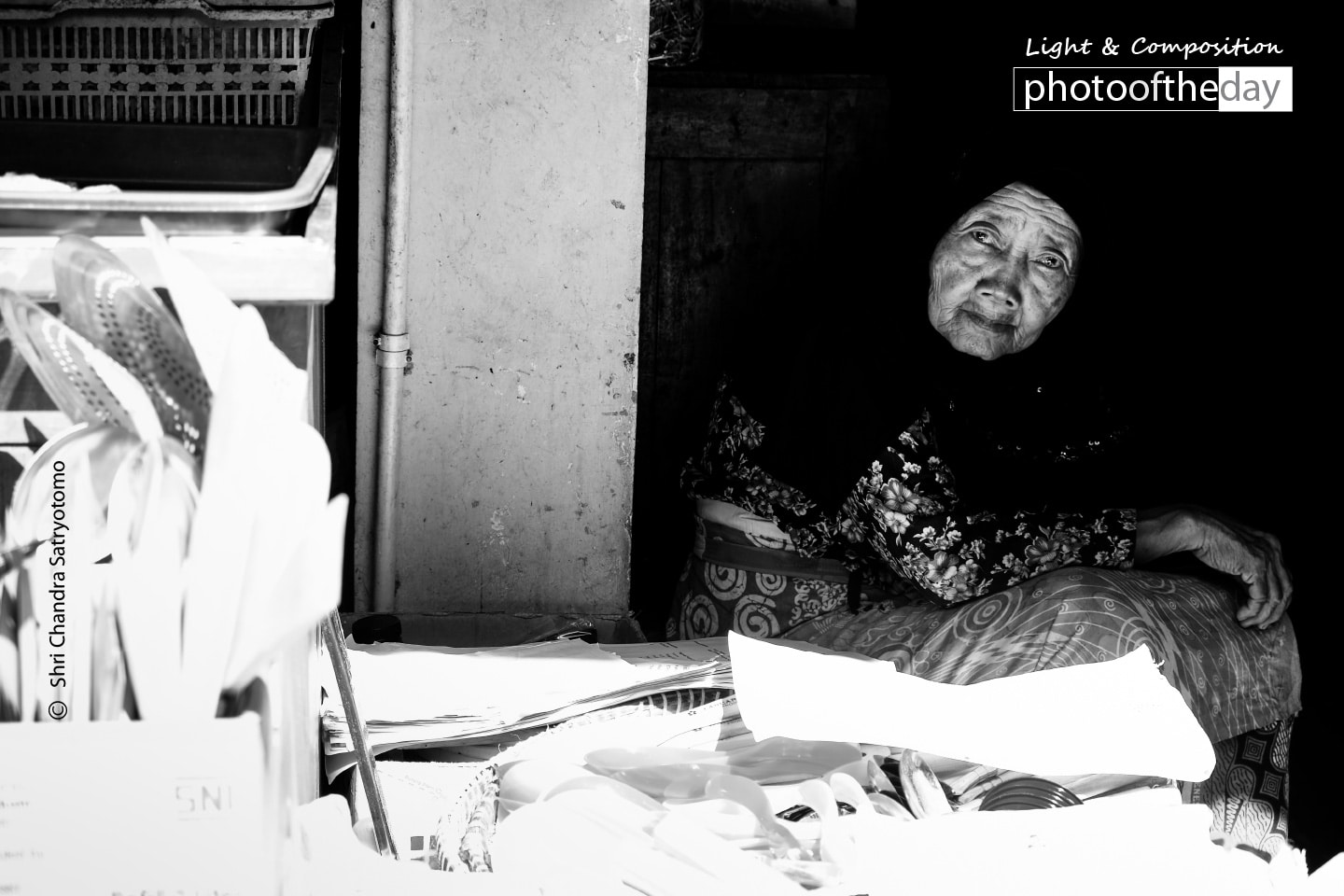
In the bustling traditional markets of Yogyakarta, Indonesia, the photographer captures a poignant moment with a local snack vendor. As the camera lens turns toward her, the elderly woman’s initial shock gives way to a charming, resilient smile. This candid portrait highlights the reality of senior citizens in Yogyakarta, many of whom sustain themselves through daily trade. The image is award-worthy for its authentic emotional connection and the photographer's ability to document the quiet dignity of a working life, transforming a fleeting street encounter into a compelling narrative of human spirit and cultural heritage.
Shri Chandra Satryotomo
Born and raised in Jakarta, Indonesia, Shri Chandra Satryotomo—known as Tommy—has been dedicated to the art of photography since 1983. With a professional background in architecture, he brings a refined sensibility for scale, composition, and proportion to his work. Currently based in Saint-Petersburg, Russia, he maintains a deep obsession with black and white photography, viewing it as an essential tool for capturing the world in its most honest and unadorned form.
Resonance Score Breakdown
Transparency Note: The resonance score (10.0/20) is calculated based on social engagement metrics collected before the award announcement.
Expert Photography Reviews · 8
The Weight of the Morning
I met a woman named Ibu Sari in a small alleyway in Yogyakarta. She was folding banana leaves with hands that looked like they had been carved from teak wood, steady and stained by years of work.
Read the reflection →The Weight of a Lifetime
Dear reader, I have been thinking about the way we carry our years. We often talk about age as if it were a burden, a slow accumulation of dust on the shelves of our lives.
Read the reflection →Reviews & Comments
Share your thoughts about this award-winning photograph. Your reviews contribute to the community engagement score.
The shutter fired a fraction too late. The woman’s smile is already settling, the muscles in her cheeks losing that initial, sharp spark of surprise. It’s a pleasant portrait, but it misses the physiological peak of the reaction. I’ve spent my life chasing that exact millisecond where instinct meets expression. This is just the aftermath. It’s a shame, really, because I’d have loved to see the raw, unfiltered jolt of that first recognition.
The weathered textures of the market stall frame her, the worn wood and scattered goods creating a tactile history of labor. It’s a chaotic, vibrant stage that grounds her existence. When I look at the way the light catches those simple wares, I’m moved by how they define her resilience. She isn’t just a face; she’s the culmination of this space. It’s a beautiful, honest dialogue between a life lived and the market that sustains it.
The gaze here echoes the unvarnished humanity of Dorothea Lange’s migrant portraits, yet it avoids the trap of mere sentimentality. Satryotomo captures that fleeting transition from surprise to grace with a precision that recalls the candid mastery of Henri Cartier-Bresson. It’s rare to find such genuine warmth in a street encounter; honestly, that smile caught me off guard. It’s a quiet, dignified dialogue with the history of the human document, and it’s truly refreshing to see.
In the markets of Yogyakarta, we find a woman whose life is etched in the lines around her eyes. She didn’t just pose; she shared a moment of startled grace. I’m moved by how her smile softens the weight of her daily trade. It’s a conversation captured in transit, a fleeting connection that lingers. We look at her and we understand that dignity isn’t given, it’s carried. This is a photograph that asks to be returned to.
You caught that transition perfectly. I’ve spent years in markets like Yogyakarta’s, and it’s rare to see that flicker of surprise melt into such genuine warmth. You didn’t just take a picture; you earned her trust in a split second. Because you waited, I can feel the weight of her long day and the resilience in that smile. It’s a quiet, honest moment. You didn’t intrude. You just shared space with her. That’s real work.
Darkness here doesn’t merely frame the vendor; it swallows the periphery, forcing us to confront the erosion of her labor. When I look at those deep, cavernous voids behind her, I feel a sudden, cold ache for the time she’s already surrendered to the market’s grind. Satryotomo understands that light is a thief. By pulling her smile from such heavy gloom, he’s not just documenting a life; he’s staging a desperate, beautiful resistance against oblivion.
Before the eye identifies the market stall, something in the chest tightens. It’s that sudden, sharp recognition of a life lived in the sun. When I look at her, my own breath hitches, mirroring the transition from her startled defense to that weary, resilient grin. It’s a visceral activation of empathy. I’ve returned to this face three times today; each time, her smile feels less like a performance and more like a quiet, enduring anchor.
The vendor’s smile feels forced by the lens, not the moment. Why does the curator romanticize her labor as dignity when it’s clearly survival? I feel a sharp pang of discomfort looking at her weathered hands. Does the photographer see a human, or just a prop for a cultural narrative? When we frame poverty as charm, we strip the subject of her agency. Who benefits from this aestheticized struggle? It’s a transaction, not a connection.