Mahabad Countryside by Bahar Rismani
Captured during a journey to the Kozani International Wetlands, this photograph emerged from a moment of serendipity following a heavy night of rain. The photographer, traveling by bus with a group of friends, was struck by the atmospheric conditions and the immediate visual appeal of the landscape along the route. By choosing a wide 20mm focal length, the image effectively frames the expansive, rain-washed countryside. This piece is award-worthy for its ability to transform a fleeting travel encounter into a compelling, moody nature study, demonstrating a keen eye for composition and the evocative power of natural light in the wake of a storm.
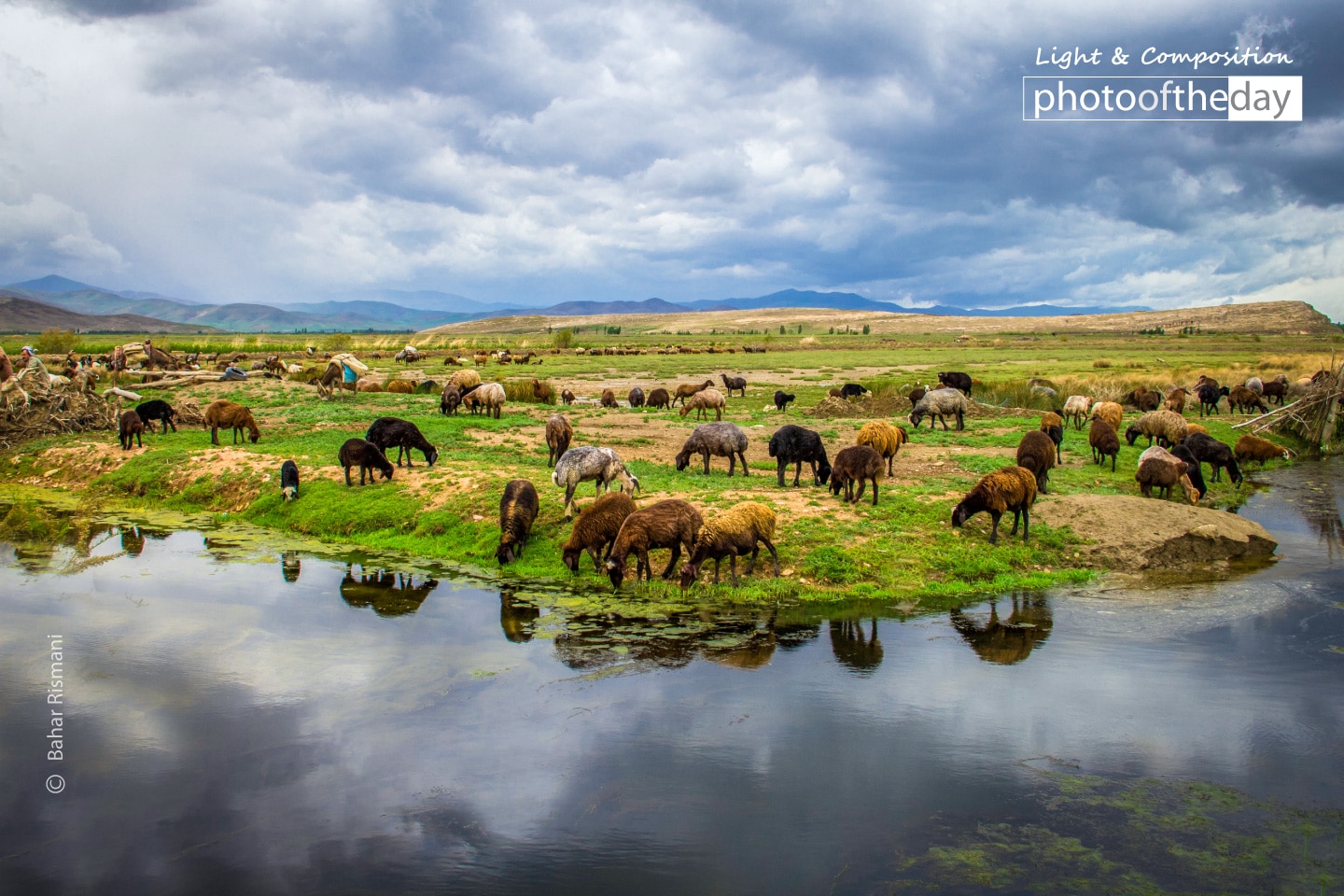
Exposure 1/200sec @ f/8 | ISO 100 | Focal Length 20mm
Bahar Rismani
Born in 1982 in the Kurdish city of Mahabad, Iran, Bahar Rismani is a dedicated photographer with a background in accounting. Over the past seven years, she has focused her artistic practice on portraiture, often traveling through diverse cities and villages to document the lives of women. Her work serves as a vital cultural archive, specifically aiming to preserve the heritage of ancient Kurdish clothing and traditions through evocative photography. Rismani’s commitment to capturing the intersection of culture and identity has become the hallmark of her creative journey.
Resonance Score Breakdown
Transparency Note: The resonance score (11.8/20) is calculated based on social engagement metrics collected before the award announcement.
Expert Photography Reviews · 5
The Scent of Wet Earth
There is a specific, heavy perfume that rises from the ground only after a long, hard rain. It is the smell of iron and ancient dust finally surrendering to the water, a scent that clings to the back of your throat like damp wool.
Read the reflection →The Weight of Washed Earth
There is a specific silence that follows a heavy rain, a kind of atmospheric exhaustion where the world seems to hold its breath, waiting for the soil to finish its long, slow drink.
Read the reflection →Reviews & Comments
Share your thoughts about this award-winning photograph. Your reviews contribute to the community engagement score.
The air here is heavy, wet, and still. It’s the silence right after the storm breaks. That 20mm lens pulls the horizon wide, stretching the Mahabad landscape until it feels like a tracking shot across a lonely set. I’ve spent hours staring at this, and I can almost hear the bus engine idling in the distance. It’s a perfect cut. The editor wouldn’t change a thing. It’s the frame that keeps the story breathing.
The horizon line bisects the frame at a precise 1:3 ratio, anchoring the heavy, saturated earth against the expansive, diffuse sky. It’s a masterclass in horizontal equilibrium. The receding road acts as a sharp vector, pulling the eye toward the vanishing point with mathematical inevitability. I’m genuinely struck by how the rain-slicked textures resolve into such clean, geometric planes. It’s a perfectly solved spatial equation that turns a fleeting bus ride into a rigid, beautiful structure.
The 20mm perspective here echoes the expansive, melancholic vistas of Fay Godwin’s British uplands, yet the rain-washed light feels distinctly Iranian. It’s a quiet, atmospheric study that avoids the trap of mere travelogue. I’ve spent decades cataloging such landscapes, but the way the light clings to the damp earth in this frame genuinely caught my breath. It’s not just a snapshot; it’s a conversation with the romantic tradition, updated with a sharp, modern clarity.
The rain-washed hills of Mahabad are beautiful, but I find myself searching for a pulse in this landscape. It’s a technically sound frame, yet it feels like a view from a bus window rather than a conversation with the land. I’m left wanting the grit of the soil or the weight of the air. Where are the people who live here? I’d trade this wide, distant perspective for one face that’s actually chosen to be seen.
At f/8, the 20mm focal length avoids the diffraction limit, keeping the distant horizon razor-sharp. The sensor’s capture of the post-rain moisture creates a refractive index across the landscape that’s truly mesmerizing. I’m genuinely moved by how the light clings to the wet earth; it’s a tactile, optical feast. While the Canon 60D’s sensor struggles with dynamic range here, the way the lens resolves those subtle atmospheric transitions is, in the strictest physical sense, extraordinary.