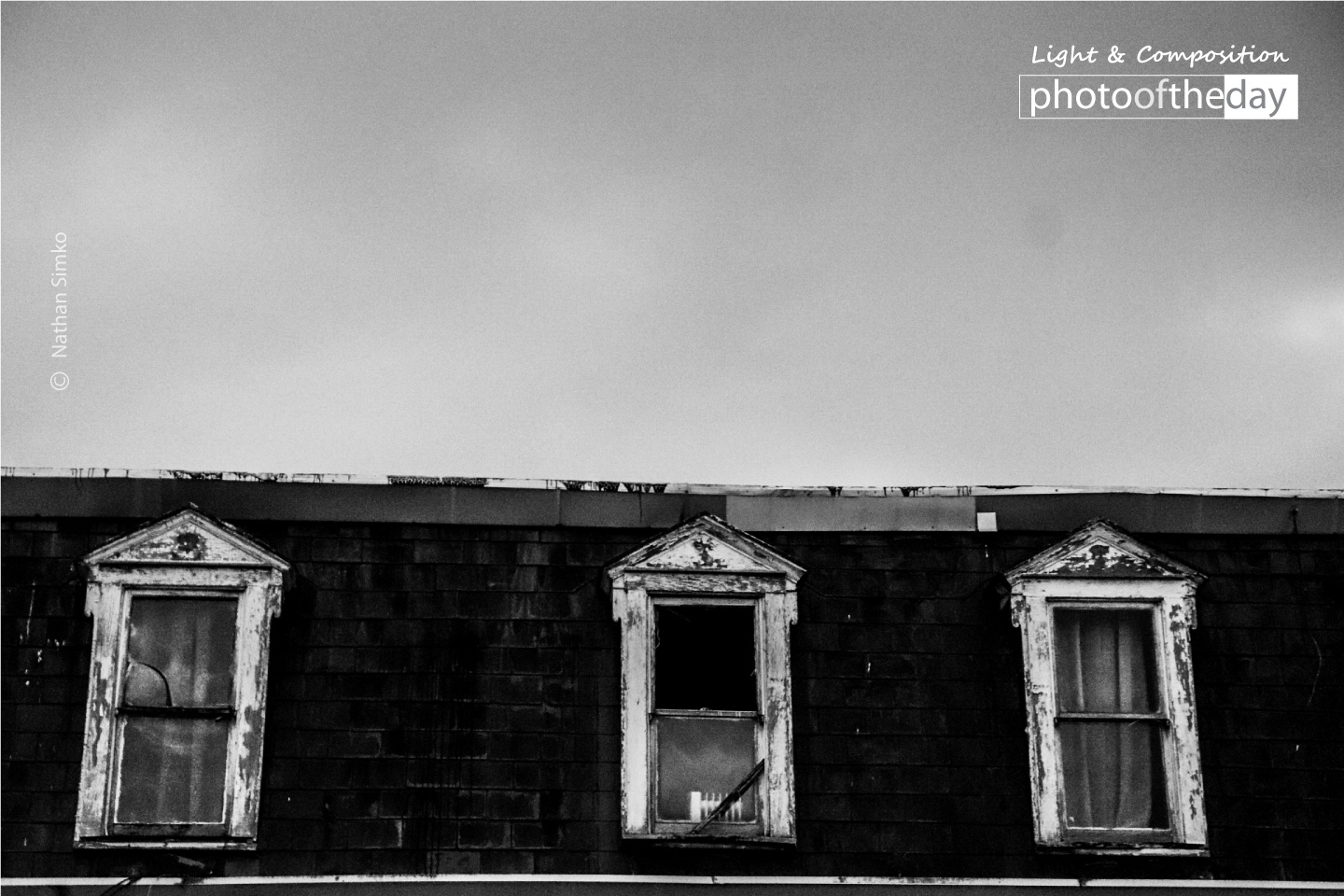
Windows Before Dusk by Nathan Simko
Captured in the quiet moments before a storm, this photograph depicts an abandoned storefront in the photographer’s hometown—a structure that has stood vacant for decades. The overcast late afternoon light casts a somber, dramatic mood, perfectly framing the weathered architecture against a backdrop of looming, heavy clouds. The photographer’s deliberate choice to stand across the street highlights the building’s isolation and historical weight. This image is award-worthy for its evocative composition and the way it transforms a forgotten local relic into a poignant study of time, decay, and the atmospheric tension of an approaching tempest.
Ahmed Sabbir
Based in Dhaka, Bangladesh, Ahmed Sabbir is a dedicated travel photographer who balances his professional life as a musician with a deep-seated passion for exploration. His work is driven by the belief that travel is essential for broadening one's perspective, fostering cultural understanding, and experiencing the world's natural beauty to the fullest. Through his lens, he captures the quiet, human moments found in remote corners of his country, reflecting a life lived with curiosity and a profound appreciation for the diverse communities he encounters.
Resonance Score Breakdown
Transparency Note: The resonance score (10.7/20) is calculated based on social engagement metrics collected before the award announcement.
Expert Photography Reviews · 7
The Weight of Grey
There is a specific, heavy stillness that descends when the sky turns the colour of wet slate, just before the first rain begins to fall. In the north, we call this the waiting light.
Read the reflection →The Weight of Empty Rooms
I keep a rusted skeleton key in a velvet-lined box, one that no longer fits any lock in my life. It is cold to the touch, heavy with the phantom weight of a door I haven't opened in twenty years.
Read the reflection →Reviews & Comments
Share your thoughts about this award-winning photograph. Your reviews contribute to the community engagement score.
The jury’s obsession with clarity here feels stifling. Why demand the storefront’s decay be rendered with clinical, high-resolution precision? I’d have preferred a long-exposure blur, turning those looming clouds into a smear of atmospheric pressure. It’s closer to Sugimoto’s theatres than traditional landscape work. What did Simko choose not to resolve? I’m genuinely frustrated by the missed opportunity to dissolve the architecture into the storm. It’s technically competent, but it’s playing it far too safe.
We look at these hollowed windows and we hear the town’s silence. Nathan didn’t just photograph a building; he listened to the ghosts of Blairsville before he clicked. The heavy clouds press against the glass, waiting for a story that’s long been forgotten. It’s lonely, isn’t it? I feel a strange, aching ache in my chest looking at it. It’s a portrait of a place that’s still waiting for someone to come home.
The storefront’s geometry anchors the frame, forcing a rigid dialogue between the vertical mullions and the encroaching sky. It’s a study in structural exhaustion. The negative space above the roofline provides a necessary fulcrum, balancing the heavy, decaying facade. I’ve rarely seen such a brutal refusal of sentimentality in a landscape. The composition doesn’t just hold; it commands the eye to acknowledge the architecture’s final, silent collapse. It’s cold, precise, and entirely necessary.
The air in Blairsville must have been heavy, thick with the scent of ozone. He stood there in the cooling hour, waiting for the light to lose its edge. It’s a lonely frame, yet I feel a strange, quiet peace looking at those vacant windows. They aren’t just glass; they’re eyes watching the storm arrive. I’ve spent enough hours in such stillness to know he didn’t just take this—he let the building breathe.
The storm clouds gathering over Blairsville feel like the cosmic dust clouds I usually track through a telescope. It’s a quiet, heavy stillness. While I’m used to light that’s traveled millions of years, there’s something unsettling about this local decay. It’s a different kind of time, isn’t it? I find myself holding my breath, waiting for the shutter to click before the sky breaks. It’s a lonely, beautiful reminder that everything eventually fades into the dark.
Blairsville’s decay feels heavy, but I’m unsettled by the distance Simko keeps. Why choose this detached, voyeuristic vantage point? By framing the storefront from across the street, he turns a community’s loss into a sterile aesthetic exercise. It’s technically sharp, yet it lacks the intimacy of someone who actually lives with this ruin. Does the storm belong to the building, or is it just a convenient backdrop for a photographer playing with light? I’m left feeling cold.
The storm clouds are gathering, but the shutter tripped a fraction too late. I’m looking for the atmospheric pressure that precedes the first drop, the exact millisecond the air turns heavy. Instead, it’s just a building sitting in the gray. It’s technically sound, but it lacks that kinetic snap. I wanted to feel the impending strike, yet the timing feels like a runner who missed the starting gun. It’s quiet, but it’s not alive.