Enjoy the Moment by Pavel Yudin
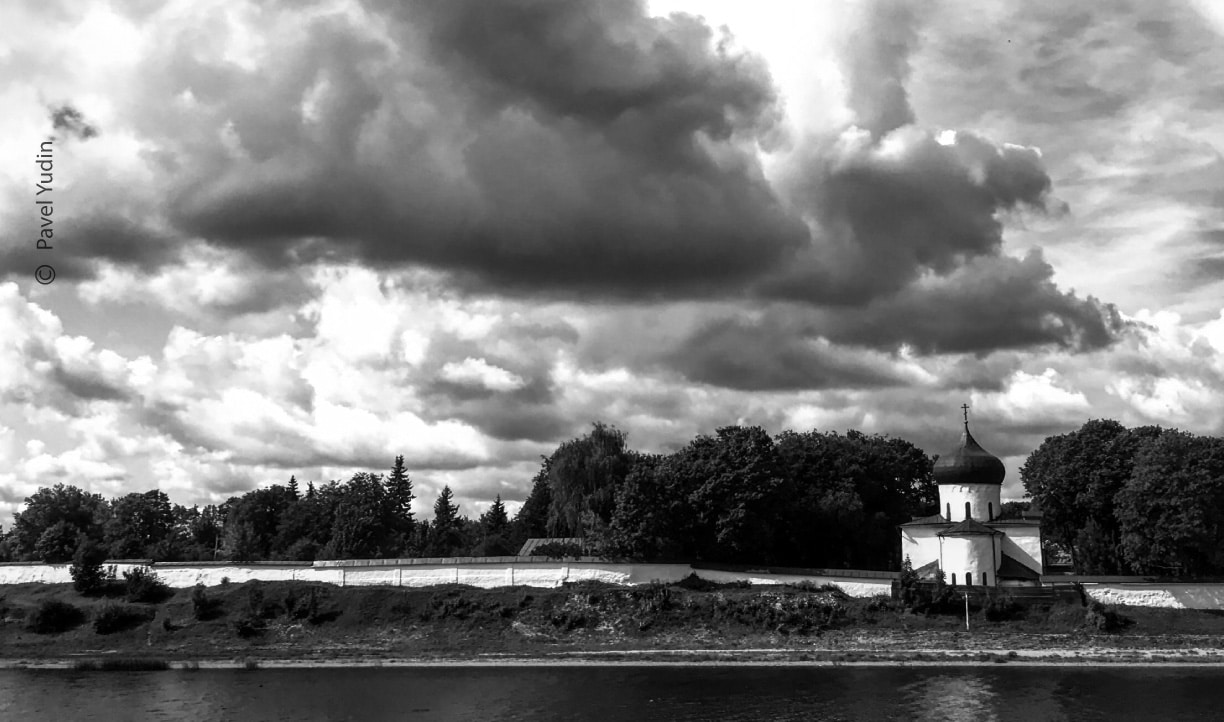
Captured in the historic city of Pskov, Russia, this photograph frames the serene beauty of the Mirozhsky Monastery against a dramatic sky. The photographer carefully composed the shot to highlight the juxtaposition between the soft, expansive white clouds and the ancient, enduring white walls of the 12th-century cathedral. By focusing on the architectural heritage and the natural atmosphere of the Mirozh River, the image invites viewers to contemplate the weight of history preserved within these pre-Mongol frescoes. The composition is award-worthy for its ability to balance historical significance with a tranquil, timeless aesthetic that captures the essence of the Russian landscape.
Pavel Yudin
Hailing from the vibrant city of St. Petersburg, Russia, Pavel Yudin balances a distinguished career in engineering and IT with a profound dedication to the photographic arts. A recipient of the State Prize of the Russian Federation for his scientific contributions, Yudin channels his analytical precision into a creative pursuit of capturing the fleeting beauty of life. His work serves as a personal visual diary, documenting his travels and the connections he forms with the world around him through a lens of love, dreams, and discovery.
Resonance Score Breakdown
Transparency Note: The resonance score (9.7/20) is calculated based on social engagement metrics collected before the award announcement.
Expert Photography Reviews · 7
Stone, Sky, and Silence
We often mistake the city for a collection of buildings, but it is really a collection of claims. Every wall, every spire, and every paved path is a physical manifestation of a value system—a record of who was deemed important enough to be remembered in stone.
Read the reflection →The Weight of Quiet Stone
When I was seven, my grandmother took me to the old stone church at the edge of our village. I remember the way the walls felt against my palm—cold, damp, and impossibly solid, as if they had been there since the beginning of time.
Read the reflection →Reviews & Comments
Share your thoughts about this award-winning photograph. Your reviews contribute to the community engagement score.
The white wall meets the sky. It’s a quiet collision. I’ve spent minutes watching the clouds drift against the stone. There’s a weight in that expanse. It doesn’t ask for attention. It simply exists. The space between the monastery and the horizon is where the history lives. It’s not empty. It’s full of breath. I feel a sudden, sharp ache for that stillness. Nothing here is accidental. The empty corner is not empty.
The Mirozhsky Monastery’s stark geometry echoes the formal rigor of early architectural surveys, yet it lacks the tectonic weight I’d expect from such ancient stone. While the clouds evoke the dramatic skies of Gustave Le Gray, the composition feels strangely detached from the site’s brutal, pre-Mongol history. It’s technically competent, sure, but I’m still waiting for a contemporary eye to truly grapple with these frescoes. I’ve seen this tranquility before; I’m craving something more visceral.
Most entries in this category rely on heavy contrast to force drama, but Yudin’s work succeeds through restraint. The way the Mirozhsky Monastery’s white stone echoes the clouds creates a quiet, rhythmic continuity that feels eternal. It’s rare to see architecture breathe like this. I’ve stared at this for weeks, and honestly, it still makes me want to stand in that silence. It’s a piece that will hold its own long after the digital noise fades away.
It’s a tranquil scene, but I find myself searching for a pulse. Where’s the life? The Mirozhsky Monastery sits perfectly still, yet the surrounding landscape feels hollow. I’ve spent weeks in blinds waiting for a single bird to break the silence of a riverbank, and this sterile composition lacks that hard-won intimacy. It’s technically precise, sure, but it’s an extraction of architecture, not a record of a relationship with the wild. It’s just too quiet.
Pskov’s sky is heavy, but the frame feels static. I’m looking for the pulse of the street, the human friction that makes a place breathe. Where’s the life? It’s a postcard of ancient stone, not a decisive moment. I want to see the river move or a shadow break the silence. One tenth of a second later and maybe something actually happened. It’s technically clean, sure, but it doesn’t make my heart race.
Stripped of pigment, one finds the Mirozhsky Monastery’s monochromatic palette isn’t a void, but a symphony of silver-grey light, reminiscent of a Morandi study where the absence of hue forces the eye to worship the texture of ancient stone. It’s haunting how the clouds mirror the cathedral’s chalky, calcified white; I’ve felt a sudden, sharp ache in my chest, as if the very air of Pskov were pressing against my own weary, modern skin.
You’ve captured the weight of those ancient walls, but I’m looking for the pulse of the place. The clouds are beautiful, sure, but where’s the life? I’ve stood in spots like that Mirozhsky Monastery, and it’s the silence of the people that hits you hardest. You’ve got the architecture down, but I’m still waiting to feel the human breath in the frame. It’s a clean shot, but it’s missing the soul. Keep digging deeper.