Kids of Summer 2019 by Pradeep Kumar
Captured in the quiet streets of Neyveli, this poignant image features a child standing solitary in the middle of a road, waiting for a friend. The photographer was drawn to the juxtaposition of childhood innocence against the backdrop of a modern world increasingly dominated by screens rather than outdoor play. By framing the child in this vast, open space, the photographer creates a powerful visual commentary on the loss of traditional childhood experiences. The composition is award-worthy for its ability to evoke nostalgia and spark a necessary conversation about the impact of technology on the next generation.
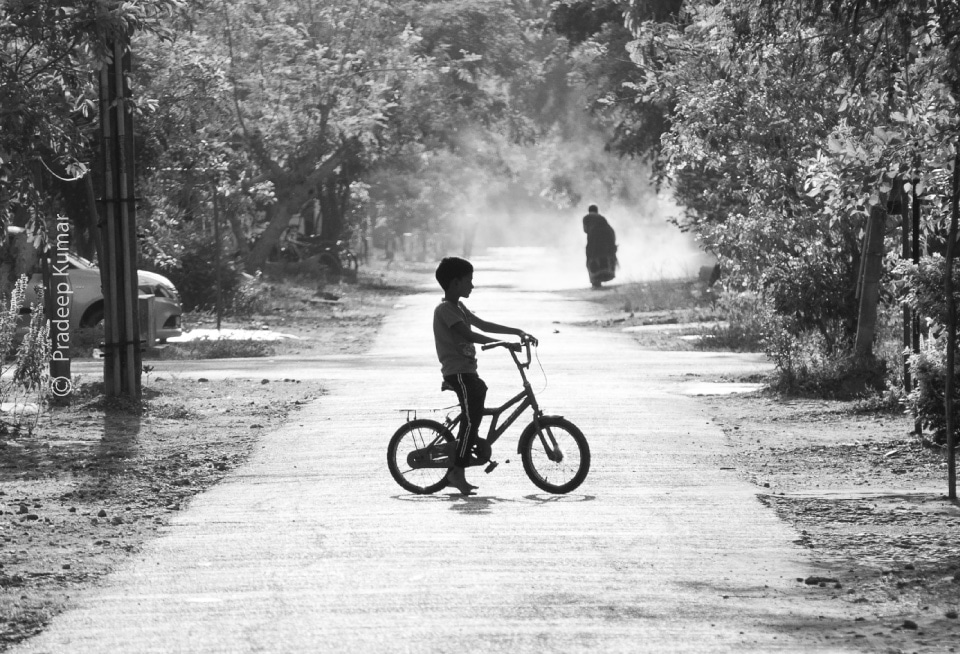
Exposure 1/500sec @ f/6.3 | ISO 200 | Focal Length 199mm
Pradeep Kumar
Based in Chennai, India, Pradeep Kumar is a dedicated photographer who draws inspiration from the rich cultural heritage of his Tamil roots. He specializes in street photography, portraits, and landscapes, often venturing beyond common tourist destinations to document the authentic psychology, humanity, and daily lifestyles of local communities. Through his lens, he seeks to tell compelling stories that reflect the intersection of tradition and modern life in India.
Resonance Score Breakdown
Transparency Note: The resonance score (10.6/20) is calculated based on social engagement metrics collected before the award announcement.
Expert Photography Reviews · 3
The Geometry of Waiting
I remember the streetlights in my hometown flickering to life at exactly 7:14 PM. That was the signal. It meant the game of hide-and-seek was over, or that the street hockey match had to end because the pavement was becoming too dark to track the ball.
Read the reflection →The Grit of Bare Feet
The smell of sun-baked asphalt always brings back the sting of gravel against my heels. It is a dry, metallic scent, like heat rising from a radiator in mid-July.
Read the reflection →Reviews & Comments
Share your thoughts about this award-winning photograph. Your reviews contribute to the community engagement score.
The frame’s geometry is its only salvation. The child occupies a precarious fulcrum, anchored by the road’s receding lines. It’s a rigid, architectural isolation. The negative space doesn’t just surround the subject; it consumes the narrative. While the sentiment is predictable, the spatial tension holds. I’ve grown weary of such nostalgic tropes, yet the discipline of the composition demands respect. It doesn’t collapse under the weight of its own intent. The frame holds.
Neyveli’s asphalt doesn’t just hold a child; it swallows the light, forcing the subject into a lonely, existential geometry. I’m struck by how the shadows stretch like unkept promises across the road. It’s not nostalgia I feel here, but a cold, Heideggerian dread. When the world grows this bright, the darkness beneath the boy’s feet becomes the only place where truth survives. He isn’t waiting for a friend; he’s waiting for the void.
Before the eye identifies the child in Neyveli, a sudden, hollow quiet settles in the chest. It’s the physiological weight of solitude. I feel a sharp, phantom ache for the asphalt heat under my own bare feet. When I return to this a year later, the vastness doesn’t feel like a commentary on screens; it feels like the precise, lonely frequency of waiting. It’s a haunting, breathless stillness that follows me right into sleep.