Staying Hydrated by Dipsankar Saha
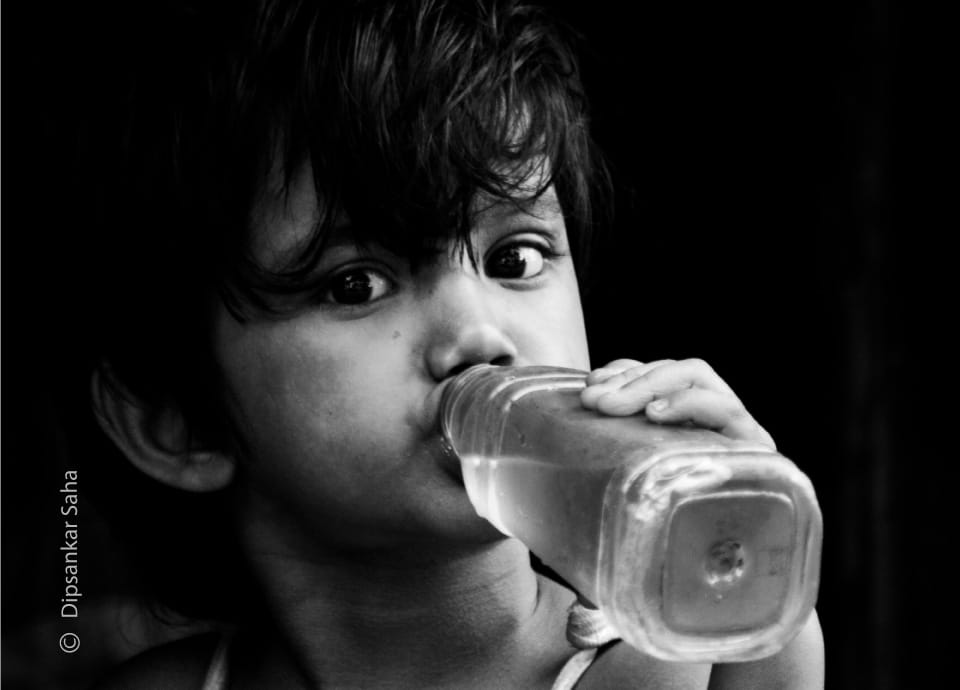
Captured amidst the sweltering 42°C heat of a Kolkata summer, this poignant street portrait highlights the universal necessity of hydration. The photographer was drawn to a young girl whose expressive demeanor perfectly embodied the struggle against the oppressive climate. By focusing on her candid, charming pose, the image transcends a simple street scene to become a powerful commentary on resilience and human vulnerability. This photograph is award-worthy for its ability to transform a fleeting moment of daily life into a compelling narrative, showcasing the photographer’s keen eye for emotional storytelling and his ability to connect with subjects in the vibrant, bustling streets of Kumartuli.
Dipsankar Saha
Born and based in the vibrant city of Kolkata, India, Dipsankar Saha is an avid explorer who uses photography as a lens to deepen his engagement with the world. His work is driven by a lifelong passion for travel and a desire to interact with diverse cultures, turning every journey into an opportunity for discovery. Through his lens, Saha seeks to make his experiences more intense, capturing the raw, human moments that define the streets he calls home.
Resonance Score Breakdown
Transparency Note: The resonance score (11.5/20) is calculated based on social engagement metrics collected before the award announcement.
Expert Photography Reviews · 8
The Weight of a Sip
I spent this morning trying to fix a leaky faucet in the kitchen. It was one of those small, nagging tasks that I had been putting off for weeks, and the constant drip was starting to feel like a countdown.
Read the reflection →The Architecture of Thirst
When the soil in a watershed dries, the mycelium beneath the surface enters a state of dormancy, pulling its energy inward to wait for the inevitable return of moisture. It is a quiet, radical act of preservation—a refusal to wither entirely when the environment turns hostile.
Read the reflection →Reviews & Comments
Share your thoughts about this award-winning photograph. Your reviews contribute to the community engagement score.
The vertical orientation anchors the subject against a chaotic, blurred background, creating a necessary spatial tension. The girl’s gaze acts as the fulcrum, pinning the viewer to the picture plane. It’s a disciplined arrangement of mass that prevents the frame from collapsing into mere sentiment. I’ve grown tired of street photography that relies on pathos, but this composition holds its own. The geometry of the water bottle provides the only structural relief. It’s sharp, precise, and entirely sufficient.
Kumartuli’s narrow, crumbling thresholds usually frame the artisan’s craft, but here, the architecture recedes into a blurred, rhythmic datum of shadow and sun-bleached brick. The girl’s presence anchors the void, her posture softening the harsh, vertical fenestration behind her. It’s a rare, honest capture of how light suffocates and sustains simultaneously. I’ve walked these humid alleys, and seeing her small, desperate grip on that glass—it actually makes my own throat feel parched. It’s hauntingly spatial.
It’s refreshing to see such clarity without the constant battle against backscatter or the refractive index of water. Down here, we’re always fighting to keep the reds from vanishing into the blue abyss, but Saha’s Kolkata heat is searing, unfiltered, and honest. I’m genuinely struck by the girl’s expression; it’s as vivid as a nudibranch’s warning colors. He’s captured a thirst that feels just as desperate as a reef fish gasping in a drying tide pool.
Kumartuli’s heat vibrates through this frame, echoing the raw, unvarnished humanism of early Magnum reportage. Saha’s compression at 300mm flattens the space, recalling the way Henri Cartier-Bresson utilized geometry to isolate the individual from the chaos of the street. It’s a familiar trope, yet the girl’s gaze possesses a startling, modern immediacy that genuinely caught me off guard. She isn’t just a subject; she’s a participant in a dialogue that’s been unfolding since the first calotypes.
The ochre dust of Kumartuli clings to the girl’s skin like the sun-baked pigments of a Morandi still life, yet it’s the startling, electric cobalt of her vessel that truly arrests one’s gaze. It’s a sharp, cooling dissonance against the oppressive, amber-hued heat of the Kolkata air. I’ve found myself breathless before this chromatic tension; it’s a visceral, aching reminder that beauty doesn’t merely exist, but survives, shimmering defiantly amidst the relentless, suffocating gold of summer.
Kumartuli’s heat is undeniable, yet I’m unsettled by how we consume this girl’s thirst. Does her vulnerability exist for our aesthetic pleasure, or is it a genuine encounter? Saha uses a 300mm lens, keeping a clinical distance that feels predatory rather than intimate. Why does her struggle become our “charming” narrative? It makes me wince. We’ve turned a child’s basic survival into a trophy. Is this really empathy, or just another way to frame poverty?
Most street photography from Kolkata is just noise, but this shot hits differently. The way she grips that plastic bottle, eyes locked on the lens, captures a raw, humid exhaustion that’s almost tactile. I’ve seen thousands of portraits, yet I keep coming back to the tension in her fingers. It’s not just a snapshot; it’s a document of survival. In thirty years, we’ll still feel that heat. It’s a rare, honest piece of history.
Kolkata’s heat is a physical weight, but Saha caught the exact instant the girl’s thirst met the frame. That tilt of the head, the water bottle—it’s perfect. If he’d clicked a fraction later, the tension would’ve evaporated. I’ve spent years hunting that specific look of raw, unvarnished survival. It’s honest. It’s sharp. Seeing her expression makes me want to hand her a glass myself. He didn’t blink. He was ready. That’s the street.