The Stem by Siew Bee Lim
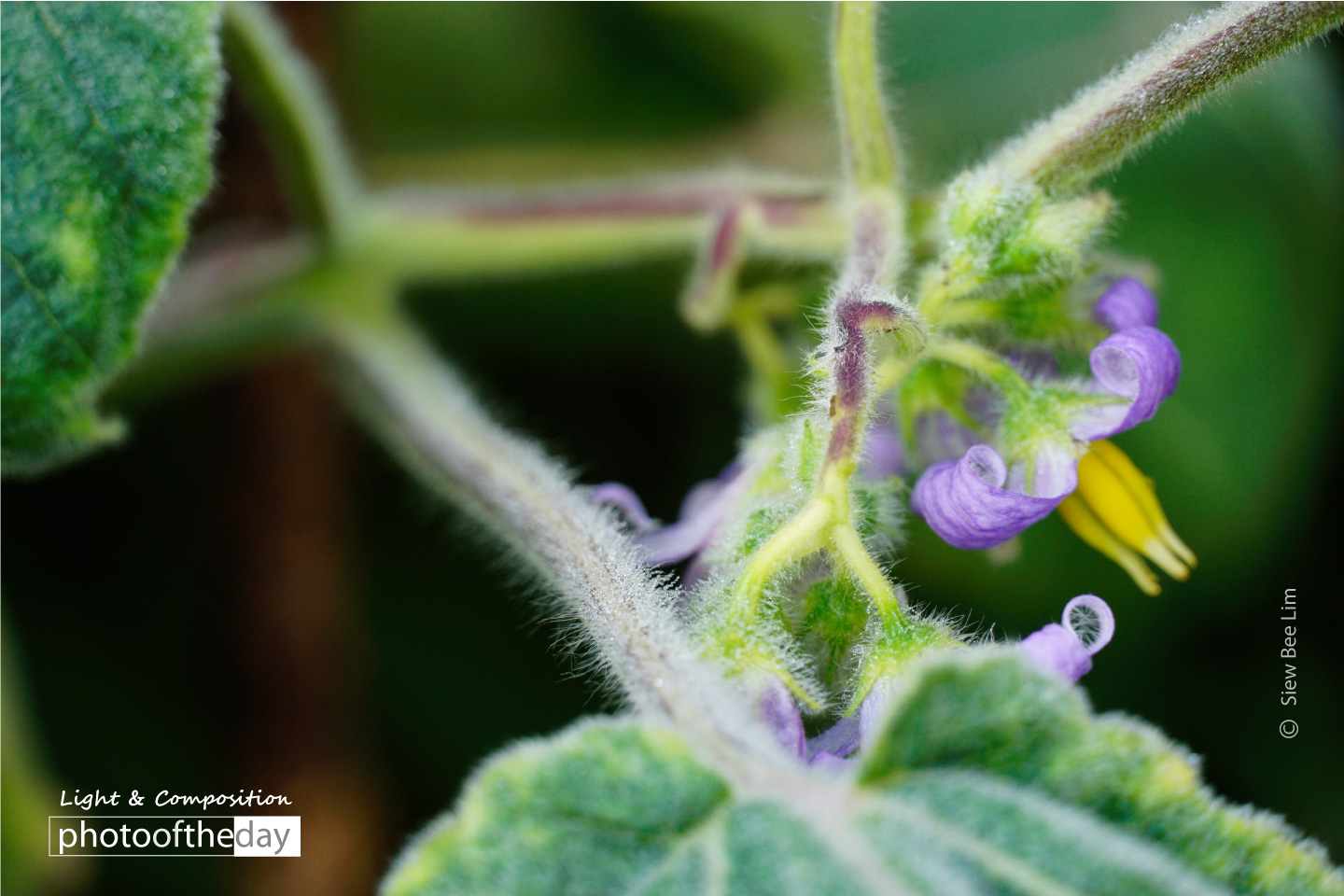
Captured in February 2019, this close-up study of a Solanum undatum plant highlights the intricate textures of nature. The photographer was drawn to the geometric interplay between the stem, a young leaf, and the flower, specifically identifying a triangular composition within the organic forms. By shifting the focus away from the flower itself, the image emphasizes the depth and dimension of the plant's structural elements. This deliberate choice to highlight texture over traditional floral beauty demonstrates a keen eye for abstract detail, earning recognition for its unique perspective and technical execution in close-up photography.
Siew Bee Lim
Born in Singapore in 1965, Siew Bee Lim is a dedicated photographer who rediscovered her passion for the craft later in life. After an early career as a programmer and a brief initial foray into darkroom photography, she has committed herself to formal study through the Light & Composition platform. Drawing inspiration from her lifelong appreciation for Chinese painting and a desire to cultivate her artistic vision, she continues to refine her technical skills and creative approach to capturing the natural world.
Resonance Score Breakdown
Transparency Note: The resonance score (11.6/20) is calculated based on social engagement metrics collected before the award announcement.
Expert Photography Reviews · 6
The Architecture of Growth
I remember sitting in a small garden in Kyoto, watching an elderly man prune a single branch for nearly an hour. He wasn't looking for the bloom; he was looking for the tension in the wood, the way the stem held itself against the weight of the air.
Read the reflection →The Weight of the Unseen
We spend our lives looking for the bloom. We wait for the color, the opening, the moment of display. But the strength is not in the petal.
Read the reflection →Reviews & Comments
Share your thoughts about this award-winning photograph. Your reviews contribute to the community engagement score.
Looking at this Solanum, I’m struck by the absence of the usual optical struggle. Down where I live, light is a thief; red vanishes in meters, and backscatter ruins every close-up if your strobe angle isn’t perfect. Here, the clarity is almost jarring. It’s refreshing to see such crisp, dry textures without fighting the refractive index of water. I’d love to see this level of geometric precision applied to a nudibranch’s mantle. It’s truly elegant work.
There’s a quiet, structural honesty in these thorns that I find deeply compelling. While I usually look for the light in a human eye, here, the plant’s rigid geometry demands a different kind of attention. It’s a study of survival, not sentiment. I’ve spent my life chasing the truth in faces, but looking at these sharp, defensive edges, I feel a strange, cold respect for the way this life protects itself. It’s beautifully guarded.
It’s refreshing to see a close-up that rejects the clinical obsession with macro sharpness. By pulling focus from the flower, Lim forces us to confront the raw, structural geometry of the Solanum stem. I’m genuinely moved by the way the blur softens the thorns, turning a defensive mechanism into a painterly smear. It’s closer to Sugimoto’s blurred horizons than botanical documentation. Why resolve the detail when the tension of the composition tells the real story?
At f/5.6, the E 18-135mm resolves the trichomes on this Solanum stem with startling clarity. The focal plane is razor-thin, isolating the geometric tension between leaf and stalk while the bokeh, a function of that aperture, renders the background into a soft, chromatic wash. I’m genuinely moved by how the light catches those fine, crystalline hairs. It’s a rare moment where the lens pushes past human perception to reveal the architecture of the plant itself.
It’s easy to overlook the quiet architecture of a Solanum undatum, but Siew Bee Lim didn’t. She stood there, listening to the way the light grazed those thorns, finding a geometry that feels almost sacred. I’ve spent hours waiting for such stillness in the field, and it’s humbling to see it captured here. She’s ignored the obvious bloom to honor the stem’s resilience. It’s a rare, patient gaze that finds such profound grace in the structural dark.
Karl Blossfeldt’s taxonomic rigor haunts this frame, yet Lim rejects his clinical, studio-bound isolation. By framing the Solanum undatum’s geometry against the chaotic depth of a Singaporean garden, she echoes the structural obsession of Edward Weston’s pepper studies while grounding it in a living, breathing ecosystem. I’m genuinely struck by how the stem’s prickles disrupt the expected softness of floral macro work. It’s a sharp, tactile departure from the sentimental botanical tradition I’ve spent decades cataloging.