Cactus by Siew Bee Lim
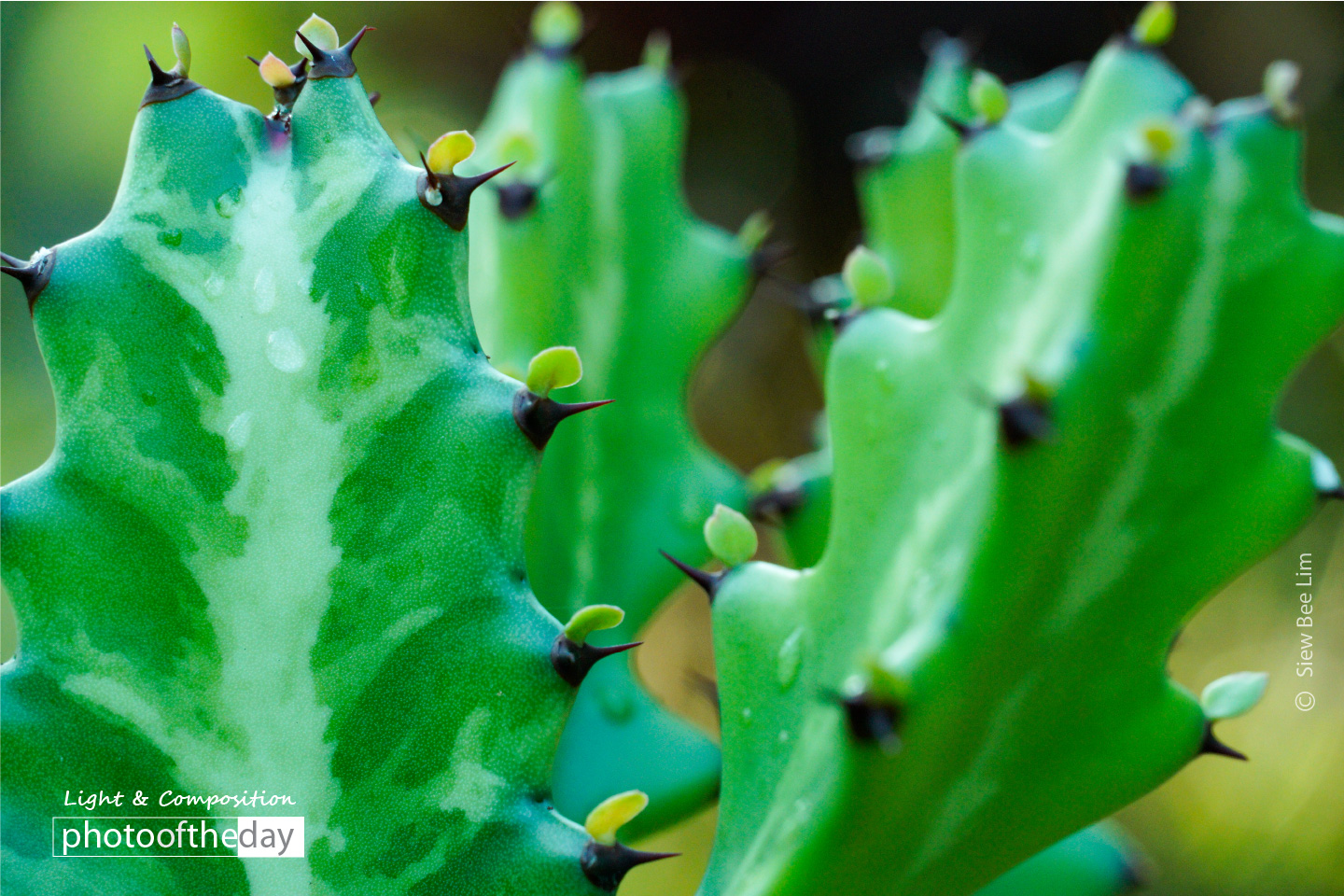
Captured in the soft, diffused light of early morning, this close-up study of a cactus highlights the delicate, ephemeral beauty of nature. The photographer focused on the intricate textures of the plant, capturing a fleeting moment where dew clings to the surface before the sun rises. The image is particularly poignant as it documents a transient state; when the photographer returned days later, the small, fragile leaves had already vanished. This work is award-worthy for its keen observational skill, transforming a common desert plant into a compelling narrative on the impermanence of life and the quiet wonders found in one's immediate environment.
Siew Bee Lim
Born in Singapore in 1965, Siew Bee Lim is a dedicated photographer who transitioned from a career in programming to the visual arts. Though she initially explored photography as a young adult, her formal journey has been revitalized through a commitment to continuous learning and artistic growth. Drawing inspiration from her lifelong appreciation for literature and traditional Chinese painting, she now seeks to refine her technical and creative voice, proving that a passion for capturing the world is a pursuit that transcends time and background.
Resonance Score Breakdown
Transparency Note: The resonance score (10.2/20) is calculated based on social engagement metrics collected before the award announcement.
Expert Photography Reviews · 5
The Architecture of Thirst
There is a specific silence left behind when the morning dew evaporates. It is not merely the absence of water, but the absence of the weight that water gave to the world.
Read the reflection →The Architecture of Thirst
We often mistake endurance for a lack of feeling, assuming that to survive the heat is to become as hardened as the ground itself. But look closer at the spine, the rib, the hidden fold of a leaf.
Read the reflection →Reviews & Comments
Share your thoughts about this award-winning photograph. Your reviews contribute to the community engagement score.
The frame holds its breath. It’s a tight, macro sequence where the dew acts as the lead actor, catching light before the cut that never comes. I’m struck by the stillness here; it’s a quiet, fragile tension that makes me want to reach out and touch the glass. Lim understood the rhythm of this transient moment perfectly. The editor keeps this shot because it’s the only one that tells the whole story of the morning.
The frame’s geometry is tight, almost claustrophobic. Lim’s focus on the cactus needles creates a rigid grid, forcing the eye into a repetitive, rhythmic scan. It’s a disciplined exercise in spatial tension. The dew drops act as necessary fulcrums, breaking the harsh linearity of the spines. I’ve rarely seen such a clinical dissection of texture. It doesn’t need the narrative of impermanence to justify its existence. The structure holds its own weight perfectly well.
Technical perfection is such a bore. Lim’s cactus is sharp, sure, but it’s trapped in the clinical sterility of a Sony sensor. I’m craving the ghost of the plant, not its anatomy. Why resolve every spine when you could have let the dew dissolve into light? It’s technically competent, but it lacks the courage to fail. I’d trade this resolution for a single, blurry, lumen-printed impression. It’s safe, and frankly, that’s its biggest flaw.
Most close-ups of succulents are clinical, but this one breathes. I’ve seen thousands of botanical studies, yet the way those dew drops cling to the spines here feels fragile, almost desperate. It’s the tension between the sharp, defensive needles and the soft, fleeting moisture that makes me stop. It’s a quiet, aching reminder of how quickly beauty evaporates. I’m genuinely moved by its humility; it doesn’t demand attention, yet it’s the only thing I remember today.
There’s a quiet ache in these dew-slicked needles. I’ve spent my life chasing the human gaze, but Siew Bee Lim finds a different kind of intimacy here. It’s not a portrait of a person, yet it feels like a secret shared. I find myself holding my breath, worried the light might shift and break the spell. It’s a fragile, fleeting gift. This cactus has a whole life in it, even if it doesn’t have eyes.