Old Transportation in a Modern City by Fabrizio Bues
Captured in the historic Asakusa district of Tokyo, this photograph masterfully juxtaposes the rapid pace of modern life with the enduring presence of tradition. Amidst a crowd preoccupied with smartphones, the photographer identified a poignant moment: an elderly man navigating the streets with his rickshaw, appearing as a relic of a bygone era. By utilizing a wide-angle perspective, the image highlights the stark contrast between the subject's manual labor and the surrounding urban sprawl. This award-worthy shot succeeds through its narrative depth, turning a fleeting street encounter into a powerful commentary on the intersection of technology and heritage.
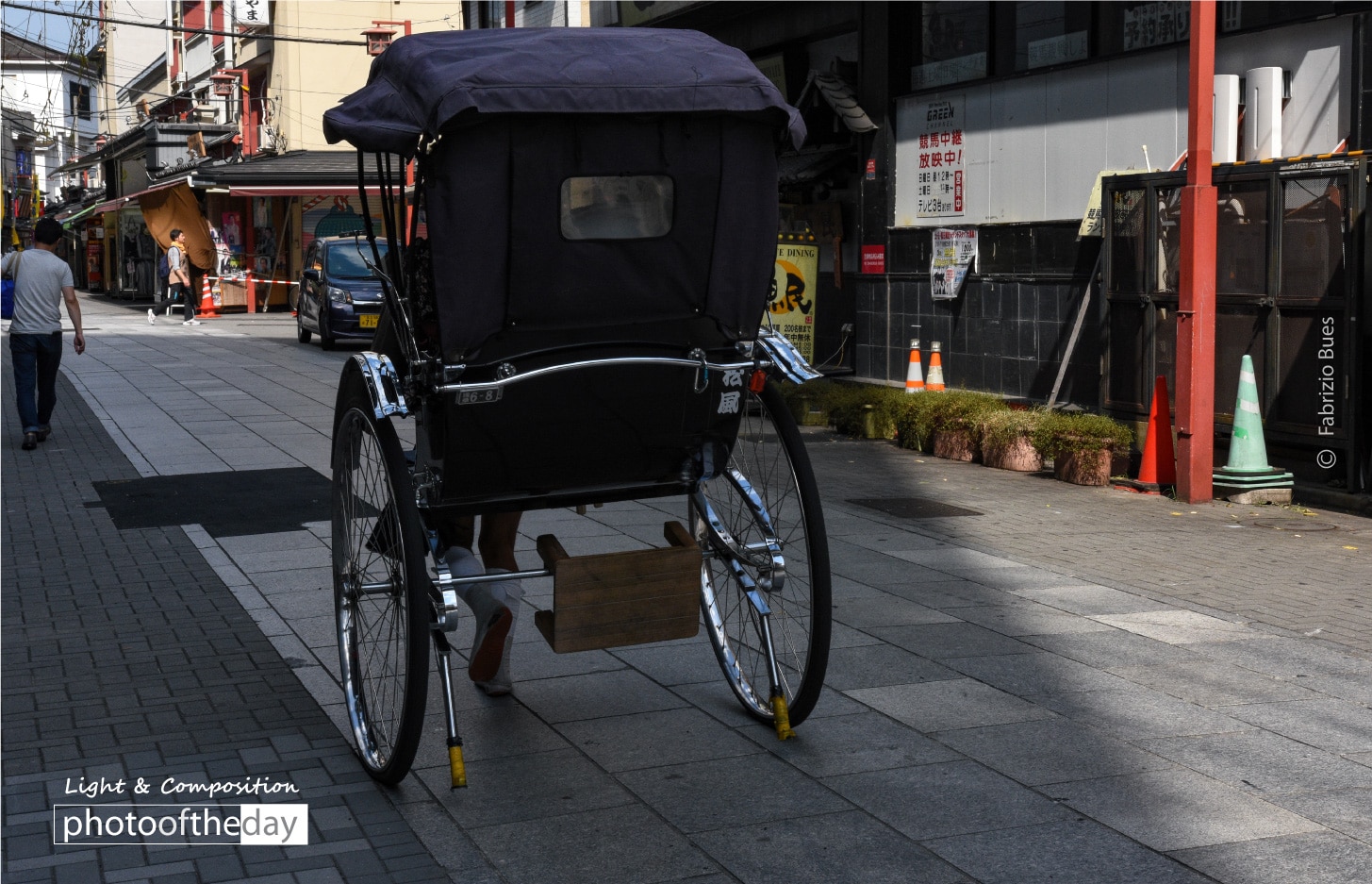
Exposure 1/640sec @ f/14 | ISO 800 | Focal Length 32.7mm
Myfanwy Gloster
Born in Wales, Myfanwy Gloster lives in Porthmadog North Wales by the coast. Currently running a cermaics business and shop alongside her husband who is the on site potter. Myfanwy has a keen interest in handmade craft and has recently discovered a new interest in photography, particularly persuing both product and food photography which is particularly useful for the business. Current Location United Kingdom Instagram https://www.instagram.com/mrsgloster/ Best Achievements & Exhibitions None Award Winner Photo of the Day Camera Olympus Pen E-PL8 Lenses and Gears lumix 50mm
Resonance Score Breakdown
Transparency Note: The resonance score (10.6/20) is calculated based on social engagement metrics collected before the award announcement.
Expert Photography Reviews · 5
The Echo of Footsteps
Why do we insist on measuring progress by the speed at which we leave our shadows behind? We live in an age that worships the velocity of the present, treating the past as a heavy coat to be discarded at the first sign of summer.
Read the reflection →The Echo of Iron Wheels
There is a particular rhythm to a city that refuses to be hurried by the ticking of a digital clock. I often find myself wandering the backstreets of Asakusa, where the pavement seems to hold the memory of wooden sandals and the quiet drag of iron wheels against stone.
Read the reflection →Reviews & Comments
Share your thoughts about this award-winning photograph. Your reviews contribute to the community engagement score.
Juxtaposing the rickshaw against Tokyo’s digital sprawl echoes the tension in Berenice Abbott’s Changing New York, yet Bues lacks her structural rigor. While the wide-angle distortion attempts to capture the frenetic pace, it feels derivative of mid-century street tropes. I’ve seen this collision of eras a thousand times, but that elderly man’s weary posture genuinely caught me off guard. It’s a familiar story, but he carries the weight of history in a way the composition doesn’t quite earn.
There’s a heavy distance here. While the rickshaw driver is the focus, he’s treated as a prop in a wider urban narrative rather than a man with a story. I don’t see a conversation; I see a photographer hunting for a contrast. It’s a clean shot, but it lacks the intimacy that turns a subject into a human being. My heart sinks a little—this face has a whole life in it, yet he’s just scenery.
The rickshaw driver isn’t a relic; he’s a service provider in a tourist trap. Why do we insist on framing his labor as a quaint historical footnote? It makes me wince to see him reduced to a prop against the backdrop of modern Tokyo. Does the photographer see a man, or just a convenient aesthetic contrast? By exoticizing this worker, Bues ignores the reality of his daily grind. Whose heritage are we actually consuming here?
The rickshaw’s arc creates a powerful vector, slicing the frame into a 1:2 ratio of historical weight against modern chaos. The vertical axis of the man’s posture anchors the composition, countering the horizontal blur of the crowd. It’s a beautifully solved spatial equation. I’m genuinely struck by how the wide-angle distortion pulls the background into a tight, claustrophobic geometry. It’s not just a street scene; it’s a calculated collision of eras held in perfect, rigid tension.
Asakusa is a collision of eras, and Bues caught the friction. That rickshaw man isn’t just a relic; he’s the anchor in a sea of digital distraction. I love the tension here. One tenth of a second later and the crowd’s rhythm would’ve swallowed him whole. The frame holds because he clicked exactly when the man’s posture cut through the noise. It’s sharp, it’s honest, and it’s damn lucky he was paying attention. Winogrand would’ve nodded.