A Lonely Cow Boy by Fabrizio Bues
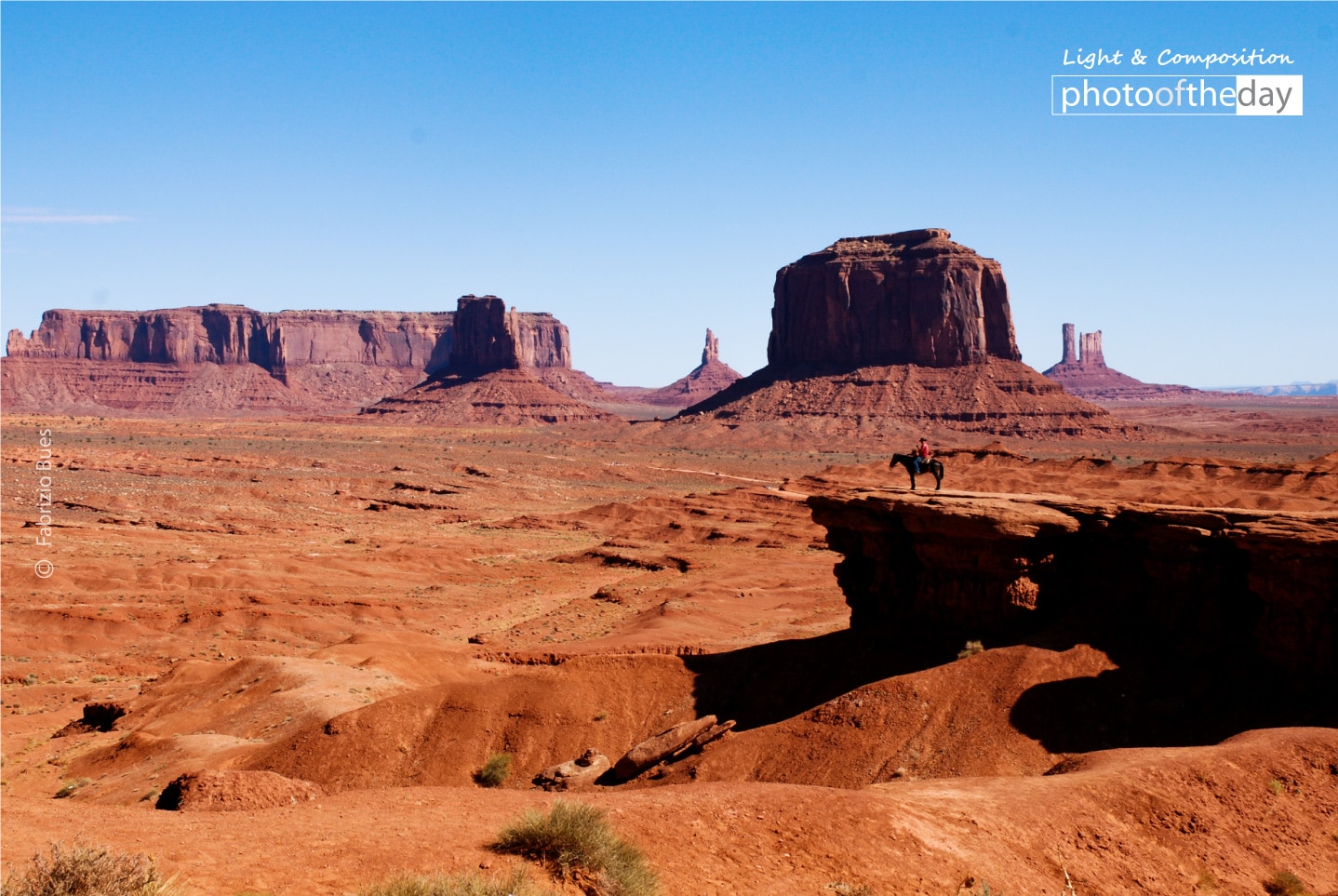
Captured at the iconic John Ford Point, this photograph evokes the cinematic grandeur of Monument Valley. The image depicts a solitary cowboy on horseback, framed against the vast, rugged expanse of the American West. By choosing a wide perspective, the photographer emphasizes the profound silence and historical weight of the landscape, where the echoes of the past seem to linger in the air. This award-winning shot succeeds through its masterful composition, which perfectly balances the scale of the natural environment with the poignant, quiet presence of the rider, creating a timeless narrative of solitude and exploration.
Fabrizio Bues
Born in Turin, Italy, in 1972, Fabrizio Bues balances a professional career as a Project Manager for an American corporation with a deep passion for photography. His frequent international travels provide the inspiration for his work, which he continuously refines through his dedication to the Light and Composition curriculum. Based in his hometown of Turin, he strives to elevate his technical proficiency, viewing every journey as an opportunity to capture the world through his lens and further his artistic development.
Resonance Score Breakdown
Transparency Note: The resonance score (10.1/20) is calculated based on social engagement metrics collected before the award announcement.
Expert Photography Reviews · 3
The Weight of the Horizon
There is a particular kind of silence that only exists in places where the earth has been allowed to speak for itself, uninterrupted by the hum of electric wires or the frantic rhythm of a subway train.
Read the reflection →The Grit of Silence
The taste of dry earth always lingers at the back of my throat when the wind picks up. It is a metallic, ancient flavor, like iron filings mixed with sun-baked stone.
Read the reflection →Reviews & Comments
Share your thoughts about this award-winning photograph. Your reviews contribute to the community engagement score.
The horizon line bisects the frame with clinical indifference. It’s a rigid geometry that forces the rider into the lower third, creating a precarious spatial tension against the monoliths. The negative space above is vast, almost oppressive. It’s technically sound, yet the composition doesn’t quite resolve the rider’s isolation. I’ve seen this framing a thousand times, and it’s exhausting. The architecture is precise, but the lack of dynamic weight makes the frame feel hollow.
We look at this rider at John Ford Point and we don’t just see a cowboy; we hear the silence of the valley. Fabrizio Bues didn’t just point his lens; he waited for the land to speak first. It’s a quiet, heavy conversation between man and horizon. I feel a sudden, aching loneliness when I trace that silhouette against the red dust. It’s a portrait of a soul finding its place in a story much older than ourselves.
The horizon line bisects the frame at a precise one-third interval, anchoring the massive sandstone monoliths against the negative space of the sky. The cowboy sits at the intersection of the lower-left golden ratio, creating a vector that pulls the eye across the arid expanse. It’s a perfect spatial equation. I’m genuinely struck by how the rider’s verticality disrupts the horizontal sedimentary layers; it’s a brilliant, calculated tension that makes the silence feel heavy.