Vagabond by Eshank Kanojia
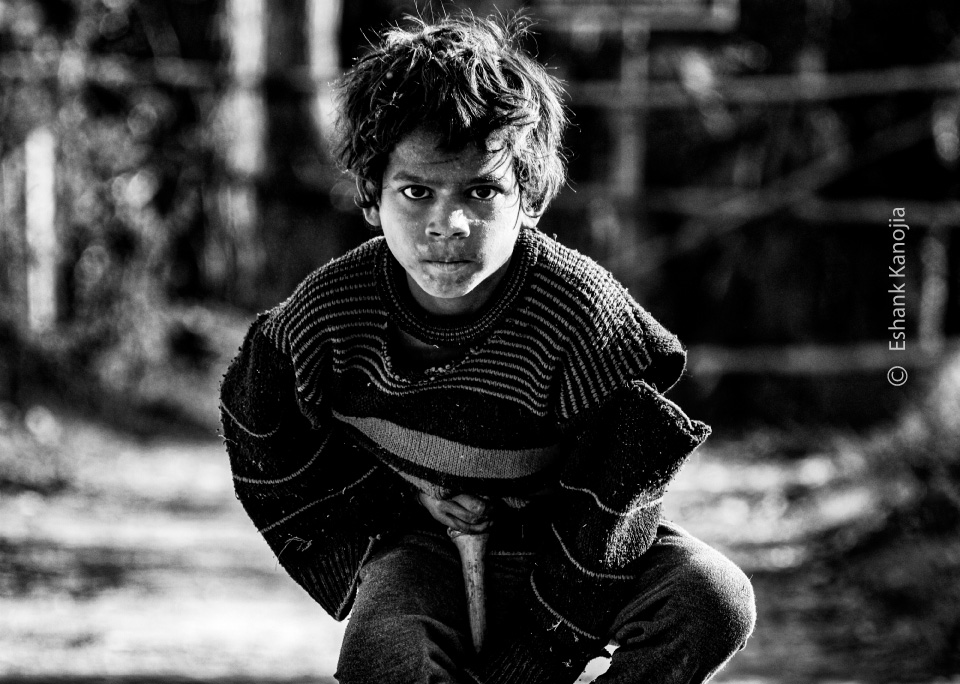
In 'Vagabond,' Eshank Kanojia captures a poignant reflection on the human condition, focusing on the lives of those often overlooked by society. The image serves as a visual manifesto against neglect, highlighting the dignity and vibrant spirit of individuals living on the margins. By documenting the stark reality of unoccupied dwellings and desolate landscapes, Kanojia elevates his subject from a mere bystander to a powerful symbol of resilience. The photograph is award-worthy for its raw emotional honesty and the photographer's ability to transform a narrative of hardship into a compelling, evocative portrait that challenges the viewer's perception of worth and belonging.
Eshank Kanojia
Born in Lucknow and currently based in Mumbai, India, Eshank Kanojia is a dedicated visual storyteller who honed his craft through a diploma in professional photography and fine arts at the Pearl Academy in Delhi. His work is deeply rooted in emotional connection, driven by a desire to traverse diverse landscapes and capture the fleeting, poignant moments of human experience. Kanojia’s practice is defined by a commitment to narrative-driven imagery, reflecting his background and his profound empathy for the subjects he documents.
Resonance Score Breakdown
Transparency Note: The resonance score (11.5/20) is calculated based on social engagement metrics collected before the award announcement.
Expert Photography Reviews · 6
The Weight of Empty Rooms
There is a specific silence left behind by a coat that no longer hangs on the hook. It is not merely the absence of wool or fabric; it is the absence of the person who moved through the world wearing it, the one who carried the scent of rain and tobacco into the hallway.
Read the reflection →The Weight of Grey
There is a particular quality to the light on a day when the clouds refuse to break, a flat, heavy silver that presses against the skin like damp wool.
Read the reflection →Reviews & Comments
Share your thoughts about this award-winning photograph. Your reviews contribute to the community engagement score.
It’s a stark, lonely frame, but I can’t help but feel a chill looking at the subject’s isolation. In the wild, I’d demand to know how close the lens sat to that weary face. Was this moment earned through quiet presence, or was it just another extraction of someone’s vulnerability? I’ve spent weeks hiding in brush to avoid disturbing a single bird; I wish street photographers practiced that same, necessary restraint.
Dust settles on the concrete. A single figure sits, anchored by the vast, gray expanse of the wall. It’s quiet here. I’ve spent minutes just breathing in the stillness of that corner. The void isn’t a lack of subject. It’s a weight. Kanojia doesn’t crowd the frame. He lets the silence settle. Nothing here is accidental. The empty corner is not empty. It’s a pause that holds everything. I feel a strange, heavy peace.
It’s a stark, dry world, isn’t it? Looking at these desolate Delhi landscapes, I’m struck by the total absence of the refractive index I’m so used to. There’s no backscatter here, no light-starved blues to fight. It’s strange, seeing human resilience without the constant, crushing pressure of the deep. I’ve spent my life chasing colour through water, yet there’s a haunting clarity in this grit that makes me feel strangely exposed, almost breathless.
There’s a heavy silence in this frame. I’ve spent enough time on the streets to know when a subject is being used as a prop for a narrative of poverty. Here, the distance feels cold. The subject’s gaze doesn’t meet the lens; it drifts, disconnected. It’s a beautifully composed scene, but it lacks the intimacy of a shared moment. Honestly, it makes my chest ache to see such isolation treated as a mere aesthetic choice.
Most street photography in Delhi leans on the crutch of hyper-sharpness, but here, the motion blur feels like a deliberate erasure of the subject’s static identity. It’s closer to Hiroshi Sugimoto’s long-exposure theatres than to conventional reportage. I’m genuinely moved by the way the figure dissolves into the architecture. Why resolve the face when the environment is already consuming them? It’s a brave rejection of clarity that finally lets the atmosphere breathe.
Before the eye identifies the dust or the hollowed-out architecture, something in the chest tightens. It’s a sudden, sharp intake of air. Kanojia’s frame doesn’t just document a Delhi street; it forces a physiological recognition of absence. I’ve returned to this print three times today, and each time, the silence of that empty doorway feels heavier, like a secret I’m not supposed to keep. It’s a haunting, visceral reminder of the spaces we choose not to inhabit.
Awesome…… One of the unique photography Ishank. Keep up ?
A great shot with great timing and really good with the editing
Great shot, depth and creativity, keep it up.
Great perspective,sublime and crisp.All the very best and keep it up.
Beautifully captured.
I just love your work. ❣️
Incredible work… Kudos…
Best.
Exceptional ✨
Great work brother
Amazing in single word good luck bruh?
Super click.. Very good. All the very best
You did a great job, as always… Just awesome..
Good work all the best .
Photographer with a unique perspective!
Deep meaning conveyed …u have a good vision?
Keep it up!!?
Awesome
Awesome
Super click good work all the best
Wonderful
Awesome
Great job
Great