Healthy Diet for Kids by Juhi Saxena
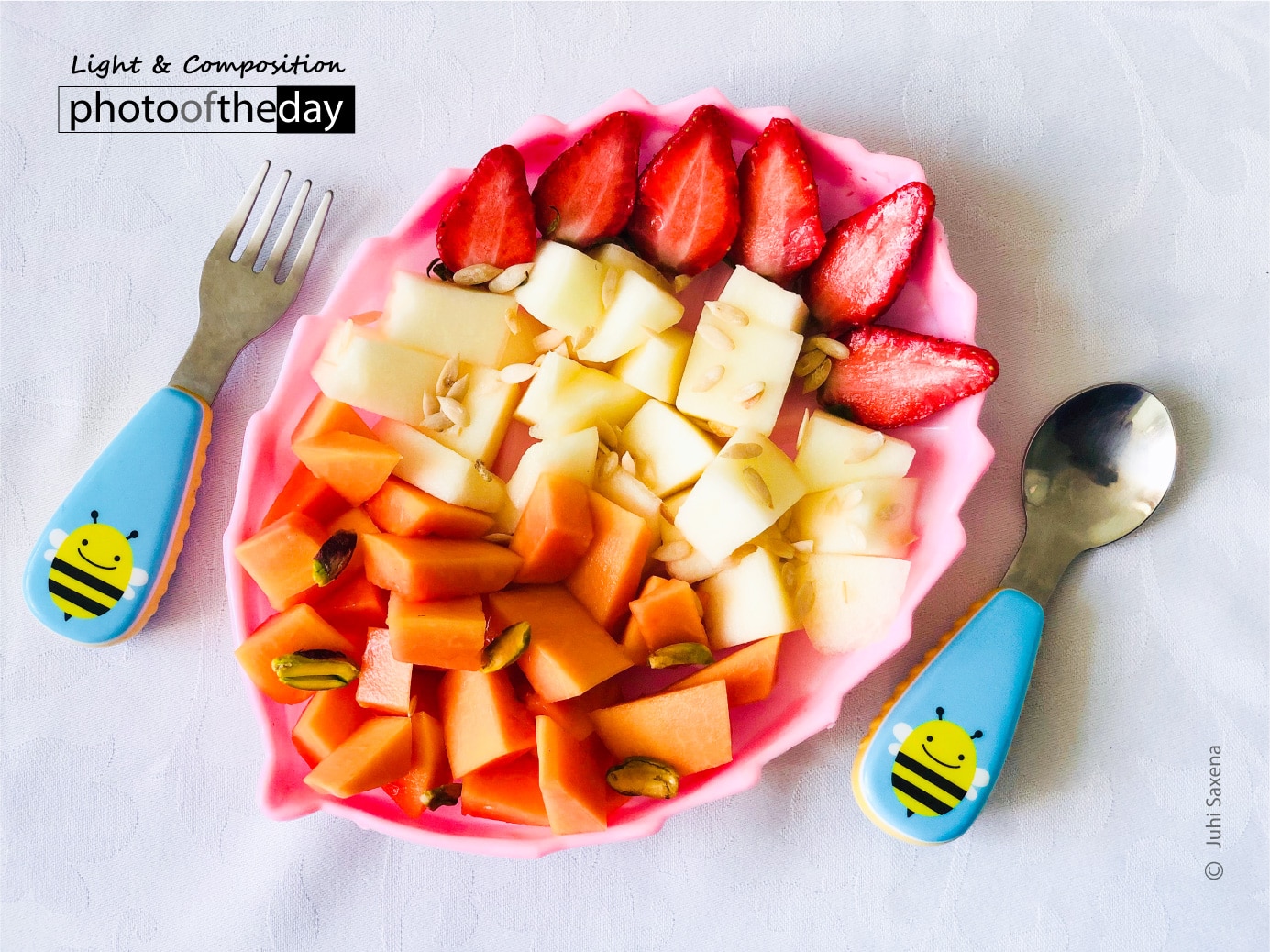
This vibrant photograph captures a carefully arranged fruit platter, serving as a visual testament to the importance of healthy eating habits for children. The photographer meticulously composed the shot to highlight the natural textures and vivid colors of fresh produce, aiming to inspire parents to prioritize nutrition over processed alternatives. By focusing on the aesthetic appeal of wholesome ingredients, the image transforms a simple daily meal into an inviting culinary display. Its award-worthy quality lies in the clean, bright lighting and the intentional arrangement that makes healthy eating appear both accessible and delightful for young audiences.
Juhi Saxena
Originally from India, Juhi Saxena is a Singapore-based photographer and dedicated mother of two. Transitioning from a career in IT, she began exploring the art of food photography in 2019 to document and share nutritious meal ideas for children. Through her blog and photography, she strives to promote healthy eating habits, combining her passion for culinary creativity with a growing professional focus on the food industry.
Resonance Score Breakdown
Transparency Note: The resonance score (10.3/20) is calculated based on social engagement metrics collected before the award announcement.
Expert Photography Reviews · 6
The Clarity of Morning
There is a particular quality to the light in mid-July, just after the sun has cleared the horizon but before the heat begins to warp the air. It is a sharp, honest light that refuses to hide the texture of a leaf or the dust on a windowsill.
Read the reflection →The Colors of Care
I spent an hour this morning trying to convince my nephew that a sliced apple is somehow more interesting than a bag of crackers. He looked at me like I was speaking a foreign language, his small hand reaching instinctively for the crinkly plastic.
Read the reflection →Reviews & Comments
Share your thoughts about this award-winning photograph. Your reviews contribute to the community engagement score.
Most food photography today is just glossy, over-processed clutter. Of the thousands I’ve reviewed, this one succeeds because it doesn’t try to be a magazine ad. The iPhone X captured the crisp, honest geometry of the sliced dragon fruit and berries without the usual digital artifice. It’s refreshing. I’d hang this in a kitchen thirty years from now because it captures the simple, tactile joy of feeding a child. It’s clean, intentional, and genuinely human.
It’s clean, sure. But where’s the pulse? I’m looking for the chaos of the street, not a studio setup. Cartier-Bresson hunted for the geometry of life, not fruit on a plate. This feels static, curated, safe. I crave the grit of a child grabbing that apple, the messy reality of a Singapore afternoon. One tenth of a second later and the fruit is gone, the moment is alive. This? It’s just breakfast. I’m bored.
The frame snaps open with the crisp, high-key energy of a morning sequence. It’s a tight, rhythmic edit of textures. The fruit doesn’t just sit there; it pulses. I’m genuinely hungry looking at the way the light hits those berries—it’s a clean, decisive cut. The composition holds its own, refusing to clutter the narrative. It’s the kind of shot an editor keeps because it tells the whole story without needing a single frame more.
It’s a tidy arrangement, certainly. One suspects the fruit didn’t require much coaxing to look presentable under that bright, clinical light. I’ve spent enough mornings shivering on a mountainside to find this lack of friction unsettling. It’s technically proficient, I suppose, but it lacks the grit of a struggle. I prefer my subjects to put up a fight. Still, the composition is crisp enough that I’d almost consider eating a grape. Almost.
The composition relies on a circular distribution of mass, creating a rhythmic, radial symmetry that anchors the frame. The berries and sliced fruit function as discrete geometric nodes, balancing the negative space of the white plate. I’m genuinely delighted by how the diagonal placement of the banana slices disrupts the circular flow, preventing visual stagnation. It’s a precise, calculated equilibrium. The geometry doesn’t just organize the fruit; it solves the spatial problem of making nutrition feel perfectly balanced.
There’s a quiet, honest stillness in how these fruits catch the light. It’s not the dramatic glow of a mountain sunrise, but a soft, domestic radiance that feels like a slow Sunday morning. I’ve spent hours waiting for light to settle just like this on a stone wall. Juhi’s captured that same patience here. It makes me hungry, not just for the fruit, but for the simple, unhurried peace she’s found in this kitchen.