The Balinese Ledge by Ryszard Wierzbicki
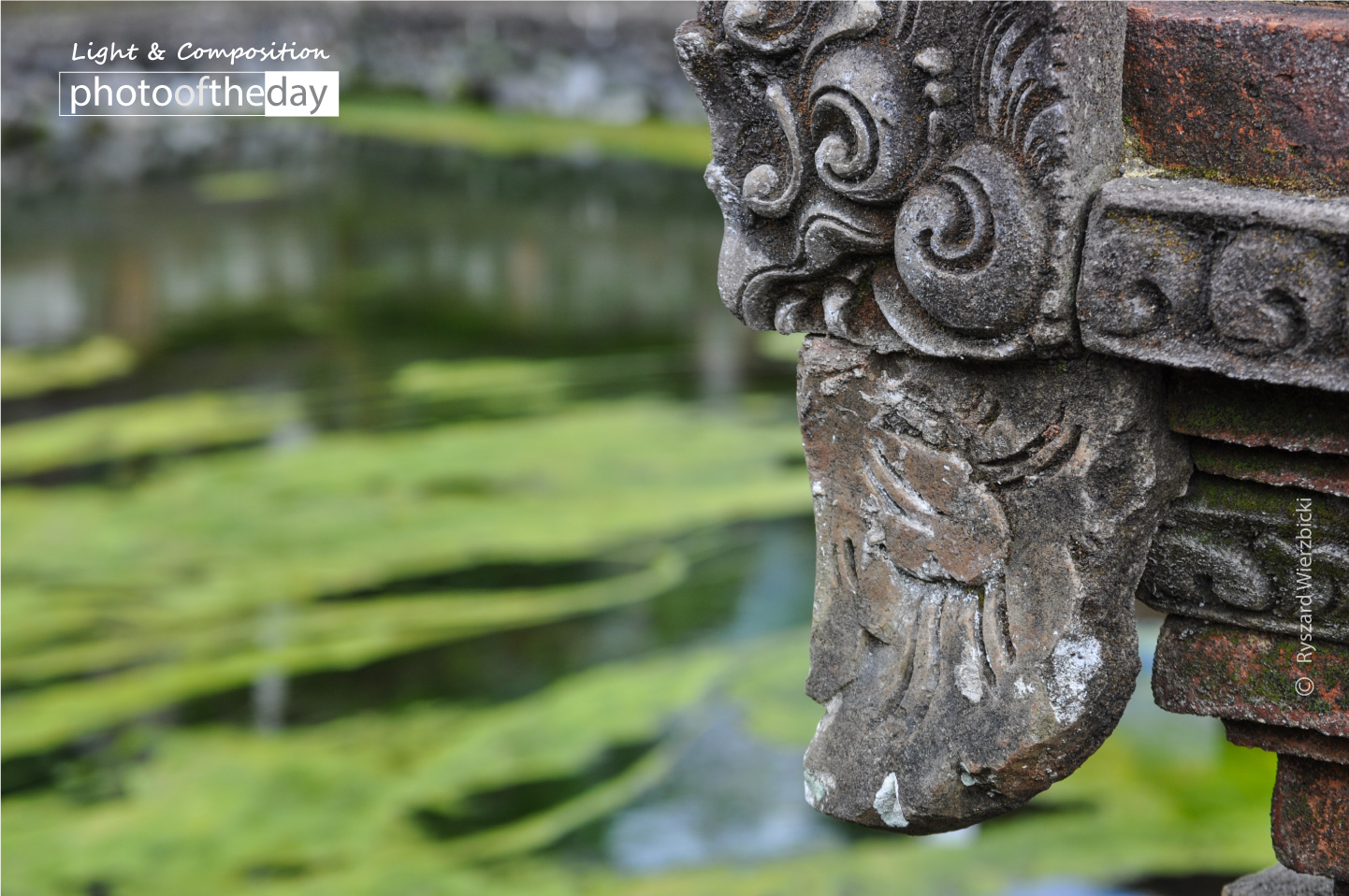
The Balinese Ledge captures a serene moment at Pura Tirta Empul, one of Bali’s most sacred sites. The photographer focused on the intricate stone architecture where holy spring water flows into the koi-filled pools, a place of deep spiritual significance for local worshippers. By isolating a specific stone ledge, the image invites viewers to contemplate the intersection of ancient ritual and natural beauty. This photograph is award-worthy for its ability to transform a bustling religious landmark into a quiet, meditative study of texture and light, highlighting the profound cultural heritage of the temple through a precise and thoughtful lens.
Ryszard Wierzbicki
Born in 1963 and a graduate of the University of Gdańsk, Ryszard Wierzbicki transitioned from a diverse career in education and marketing to a life dedicated to travel and photography after moving to the UK in 2006. His work is deeply influenced by his extensive explorations of South-East Asia and his commitment to humanitarian efforts with orphanages in Thailand and Burma. As the founder of the travel and photography forums Instant Travelling and World Around, Wierzbicki balances his professional life as a marketing advisor with a profound passion for documenting the world's cultural and natural landscapes.
Resonance Score Breakdown
Transparency Note: The resonance score (11.7/20) is calculated based on social engagement metrics collected before the award announcement.
Expert Photography Reviews · 3
The Weight of Stillness
Seneca once remarked that it is not the man who has too little, but the man who craves more, who is poor. We spend our lives in a state of frantic accumulation, gathering experiences, possessions, and anxieties as if they were armor against the inevitable passage of time.
Read the reflection →The Weight of Still Water
I spent this morning trying to fix a leaky faucet in my kitchen. It was a small, persistent drip that had been driving me crazy for days. I kept turning the wrench, tightening the metal, but the water just kept finding its way out, steady and rhythmic.
Read the reflection →Reviews & Comments
Share your thoughts about this award-winning photograph. Your reviews contribute to the community engagement score.
By isolating this ledge, Wierzbicki ignores the temple’s kinetic ritual, yet he captures the weight of the stone perfectly. The light raking across the mossy texture reveals the material’s age, grounding the void of the water against the solid masonry. I’ve walked these pools, and the way the light hits that damp surface—it’s visceral. It’s a quiet lie, omitting the crowds, but it’s a beautiful, honest study of how architecture anchors the spirit.
Wierzbicki’s focus on the stone ledge is technically competent, yet it feels stifled by an obsession with clarity. Why resolve every pore of the rock when the water’s kinetic energy is the real story? I’d have preferred a long exposure to dissolve that koi-filled pool into a ghostly, ethereal blur. It’s a bit too safe for my taste. This approach is closer to conventional architectural documentation than the experimental, transformative potential of Pura Tirta Empul.
Stone doesn’t merely hold water here; it holds the weight of centuries. Wierzbicki’s ledge isn’t a surface, but a threshold where the light dies, surrendering to the deep, obsidian silence of the pool. I’ve stared at these shadows until my own pulse slowed, feeling the cold dampness of the temple against my skin. It’s a haunting refusal of clarity. He understands that what we cannot see is precisely what demands our most desperate, silent attention.