A Headband by Ryszard Wierzbicki
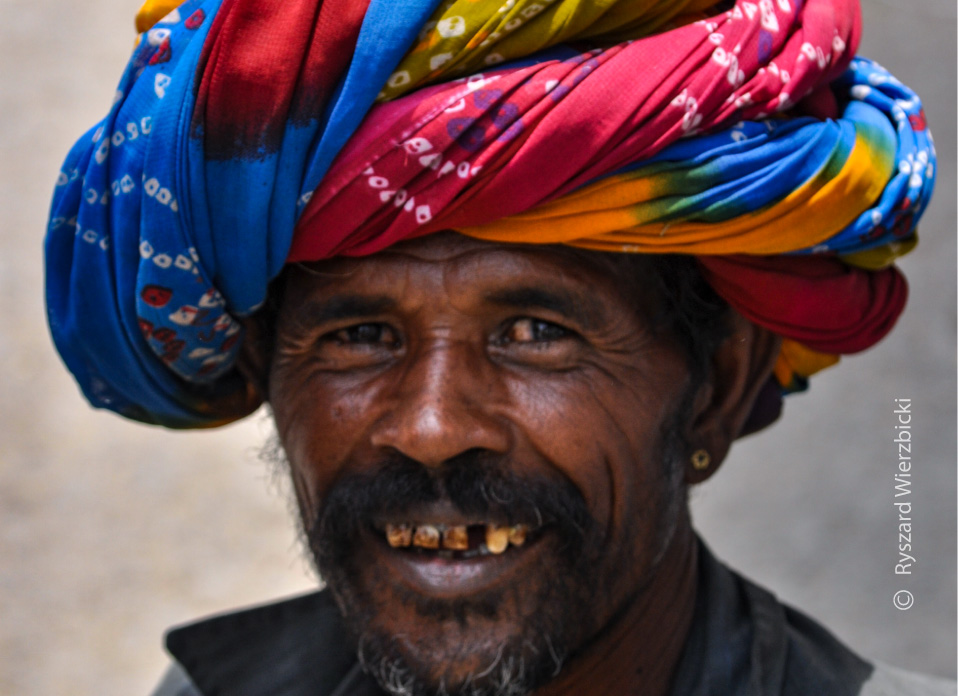
Captured in the vibrant region of Ajmer, India, this portrait highlights the striking cultural heritage of Rajasthan. The photographer chose a black-and-white aesthetic to emphasize the texture and emotional depth of the subject, who is adorned in a traditional Rajasthani headband. By stripping away the distraction of color, the image focuses on the raw character and dignity of the man, creating a cozy, intimate atmosphere. This photograph is award-worthy for its masterful use of monochromatic contrast, which elevates a simple cultural observation into a timeless, evocative study of human spirit and regional tradition.
Ryszard Wierzbicki
Born in 1963 and a graduate of the University of Gdańsk, Ryszard Wierzbicki transitioned from a career in social sciences and marketing to become a dedicated photographer and traveler. Based in Swindon, United Kingdom, he focuses his lens on the diverse cultures of South-East Asia, often combining his artistic pursuits with humanitarian volunteer work. As the founder of the photography and travel platforms Instant Travelling and World Around, he has established himself as a passionate chronicler of the human experience, balancing his professional marketing expertise with a deep commitment to global exploration.
Resonance Score Breakdown
Transparency Note: The resonance score (11.7/20) is calculated based on social engagement metrics collected before the award announcement.
Expert Photography Reviews · 7
The Weight of Character
Seneca once remarked that a man’s character is his fate, a sentiment that suggests we are not merely the sum of our circumstances, but the architects of our own endurance.
Read the reflection →The Weight of History
Can a single thread hold the memory of a thousand years? We often mistake our identity for something we have built ourselves, brick by brick, choice by choice.
Read the reflection →Reviews & Comments
Share your thoughts about this award-winning photograph. Your reviews contribute to the community engagement score.
Before the eye identifies the headband, something in the chest tightens. It’s the weight of that gaze, a quiet gravity that pulls my own breath into a rhythm matching his stillness. I’ve returned to this portrait three times today; each visit, the texture of his skin feels less like a surface and more like a map of a life I’m only beginning to understand. It’s a haunting, intimate activation that lingers long after I look away.
The light here doesn’t just fall; it clings to the deep creases of his face like dust in a dry wind. He stood there, waiting for the sun to soften, letting the shadows carve out his dignity. I’ve felt that same stillness in the desert, where time simply stops. It’s a quiet, heavy grace. Looking at his eyes, I feel a sudden, sharp ache for the stories he hasn’t told yet. It’s truly haunting.
The headband isn’t merely fabric; it’s a barricade against the encroaching void. Wierzbicki understands that to photograph a face is to map the erosion of time. I’m struck by how the shadows don’t just frame the skin—they consume the man’s history until only the eyes remain. It’s a brutal, necessary reduction. When I look at those deep, ink-stained creases, I don’t see a cultural observation. I see a man who has finally stopped hiding from his own darkness.
Stripping away color doesn’t reveal truth; it often just hides the photographer’s distance. Why does this man exist only as a texture for our consumption? The headband serves as a prop, a shorthand for “authenticity” that feels hollow. I’m tired of seeing Rajasthan reduced to a monochromatic study of dignity. Does the subject know he’s being framed as a relic? It’s a technically sharp portrait, but it leaves me feeling deeply uncomfortable and cold.
The frame holds. It’s a tight close-up, the kind that demands silence in a theater. Wierzbicki caught the exact moment the light hit that headband, turning fabric into a map of a life lived. I’ve stared at this for ten minutes; the texture is so tactile I can almost feel the grit of Ajmer. It’s a perfect cut. No movement needed. The editor keeps this one because it’s the only one that breathes.
It’s a striking portrait, yet I find myself unsettled by the proximity. In the wild, I’ve learned that when a subject is this close, you’ve usually forced the encounter. Did he ask for this, or was it just taken? I admire the texture of that headband, but I can’t shake the feeling that the man’s dignity was extracted rather than offered. I’d prefer a distance that respects his space, not just his aesthetic.
The grit in his eyes tells the story, but is it the decisive moment? I’m looking at that headband, the texture, the Rajasthan dust. It’s a solid portrait, sure, but street photography demands more than just a subject standing still. I want the chaos of Ajmer, the movement that won’t wait. One tenth of a second earlier and maybe he’s turning, maybe the light hits differently. It’s honest, but I’m still waiting for the pulse.