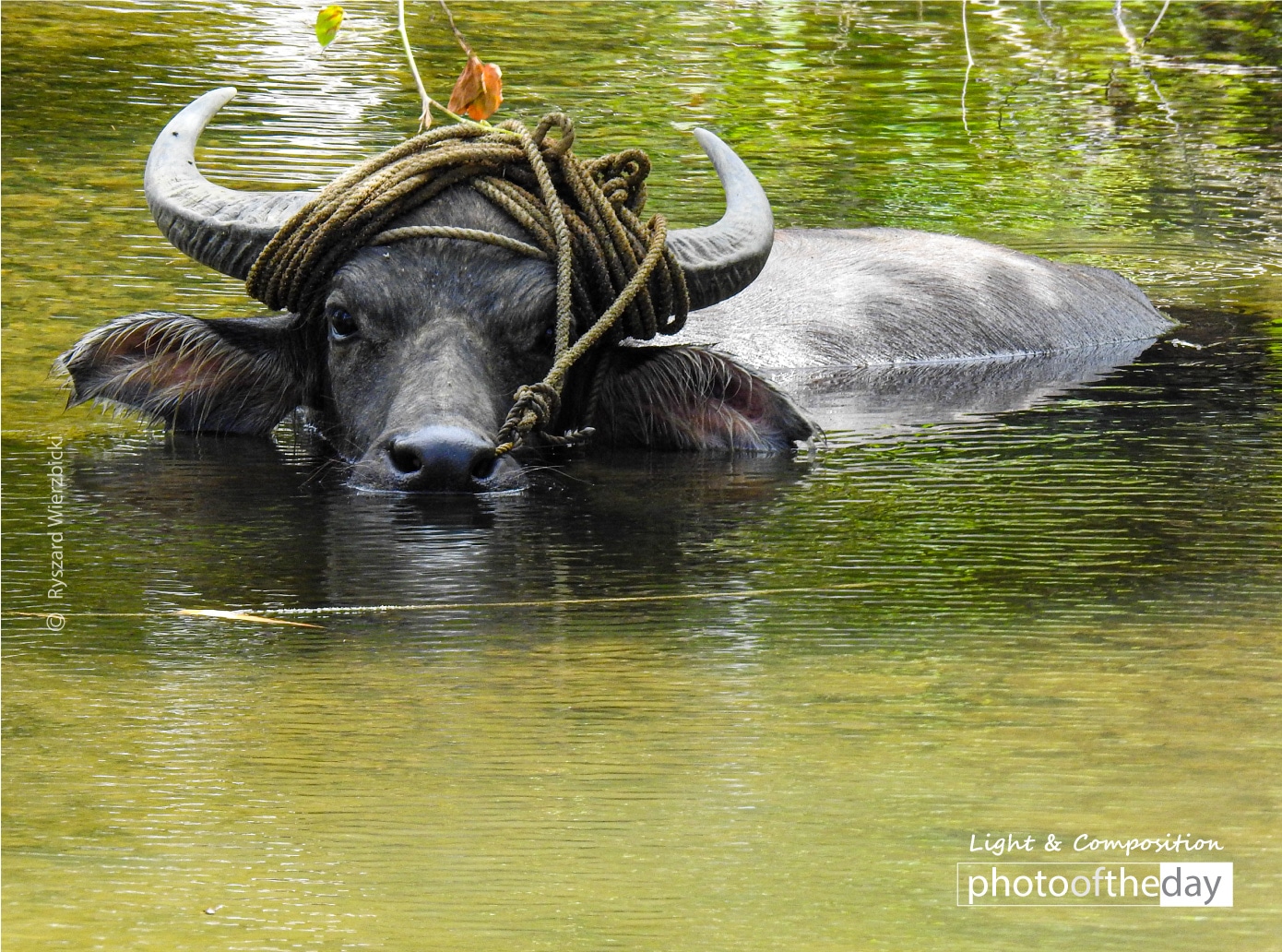
Water Buffalo by Ryszard Wierzbicki
Captured in the rural landscapes of El Nido, Palawan, this photograph highlights the iconic Carabao, or water buffalo, a cornerstone of Filipino provincial life. The image documents the animal in its natural environment, where it serves as an essential companion for plowing fields and local transportation. By focusing on this ubiquitous yet vital creature, the photographer offers an intimate glimpse into the rhythms of village life in the Philippines. The composition is award-worthy for its authentic portrayal of rural culture, capturing the quiet dignity of a beast that remains the lifeblood of the local agricultural community.
Ryszard Wierzbicki
Born in 1963 and a graduate of the University of Gdańsk, Ryszard Wierzbicki transitioned from a diverse career in education and marketing to a life dedicated to travel and photography after moving to the UK in 2006. An avid explorer of South-East Asia, he balances his professional work as a marketing advisor with a deep commitment to charitable causes and the documentation of global cultures. His photographic journey is driven by a passion for discovery, leading him to establish platforms that connect active travelers and photographers worldwide.
Resonance Score Breakdown
Transparency Note: The resonance score (10.7/20) is calculated based on social engagement metrics collected before the award announcement.
Expert Photography Reviews · 4
The Weight of Quiet
I spent this morning trying to fix a wobbly chair in the kitchen. I kept tightening the screws, but the wood just seemed tired, shifting under my weight no matter what I did. Eventually, I just stopped.
Read the reflection →The Weight of Quiet Earth
Why do we assume that silence is an absence of language? We spend our lives constructing complex architectures of thought, convinced that our words are the only things that tether us to reality.
Read the reflection →Reviews & Comments
Share your thoughts about this award-winning photograph. Your reviews contribute to the community engagement score.
Before the eye identifies the heavy, wet hide of the buffalo, something in the chest slows. It’s a rhythmic, humid stillness. I feel the weight of those horns pressing against the quiet air of Palawan. When I return to this frame, I don’t see a beast of burden; I feel the exhaustion of the earth itself. It’s a strange, grounding ache. I’ve found myself breathing in sync with its slow, deliberate gaze long after closing my eyes.
The frame holds its breath. That heavy, wet hide against the lush, blurred green of Palawan—it’s a masterclass in stillness. I’ve spent hours watching the light hit these beasts, and Wierzbicki caught the exact second the rhythm slows to a crawl. The composition doesn’t need a cut; it’s a perfect, lingering close-up. Honestly, I felt a sudden, sharp ache for the quiet of that field. It’s the shot the editor keeps, the one that refuses to move.
The beast’s hide absorbs the tropical glare, yet it’s the encroaching gloom beneath the foliage that truly anchors the frame. Ryszard doesn’t just document a buffalo; he traps the heavy, humid silence of the Palawan mud. I’ve stared at those dark, unblinking eyes until I felt the animal’s ancient, weary patience pressing against my own chest. It’s a somber meditation on labor. When light fears the shadow, art dies. Here, the darkness finally breathes.
The jury’s obsession with clarity here feels stifling. Wierzbicki’s Carabao is trapped in a sharp, clinical stillness that ignores the humid, kinetic energy of a Palawan field. I’d have preferred a long exposure, letting the beast’s heavy, rhythmic breath dissolve into the landscape. Why resolve every hair when you could capture the animal’s spirit? It’s technically competent, sure, but I’m bored. This approach is closer to a taxidermy catalog than Hiroshi Sugimoto’s evocative, blurred theatres.