A Nepalese Novice Monk by Ryszard Wierzbicki
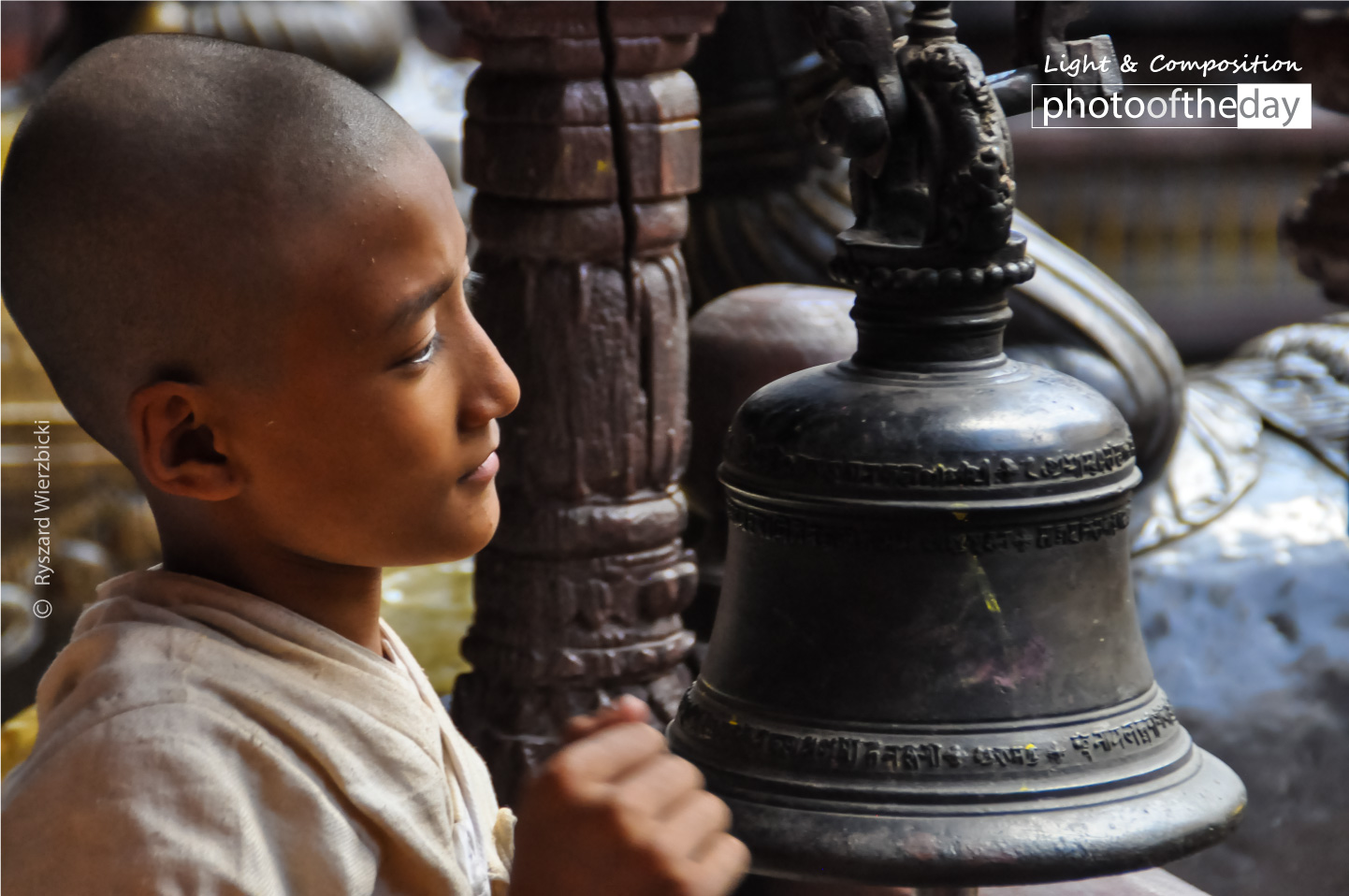
In the vibrant Thamel district of Kathmandu, the photographer encountered a young novice monk serving at a local monastery. Tasked with the daily maintenance of the temple grounds, the monk also provided insightful guidance to visitors exploring the area's Buddhist heritage. This portrait captures the quiet dignity and youthful curiosity of the subject amidst the spiritual backdrop of the city. The image is award-worthy for its authentic connection between the photographer and the subject, highlighting the intersection of tradition and daily life through a sensitive, well-composed lens that honors the monk’s humble role.
Ryszard Wierzbicki
Born in 1963, Ryszard Wierzbicki is a Polish-born photographer and educator who transitioned from a career in social sciences and marketing to a life of global exploration. After relocating to the United Kingdom in 2006, he dedicated himself to documenting his travels through South-East Asia, often volunteering with organizations supporting orphans. A passionate scuba diving instructor and tour organizer, Wierzbicki balances his professional marketing expertise with a deep commitment to capturing the human experience, sharing his unique perspective through his travel forums and dedicated photography portfolio.
Resonance Score Breakdown
Transparency Note: The resonance score (12.6/20) is calculated based on social engagement metrics collected before the award announcement.
Expert Photography Reviews · 7
The Weight of Saffron
I keep a small, frayed ribbon of saffron-colored silk in a wooden box, a remnant from a garment that long ago lost its shape. It is thin, worn soft by years of aimless touching, yet it holds the color of a morning sun that has not shone for decades.
Read the reflection →The Weight of Silence
I remember sitting in a small tea shop in Leh, watching a young boy help his grandfather sweep the dust from the prayer wheels. He couldn't have been more than ten, his robes a little too long, his movements deliberate and slow.
Read the reflection →Reviews & Comments
Share your thoughts about this award-winning photograph. Your reviews contribute to the community engagement score.
The focal plane here is razor-thin, isolating the novice’s gaze with surgical precision. At this aperture, the lens resolves the fine texture of his skin against a soft, creamy bokeh that’s a function of pure optical geometry. I’m genuinely moved by how the light catches the moisture in his eyes; it’s a level of detail that feels almost invasive. It’s rare to see a sensor capture such profound humanity without succumbing to the diffraction limit.
You caught him in a moment of genuine stillness, and it’s that quiet curiosity in his eyes that hits me. I’ve spent enough time in monasteries to know that look; it’s the weight of tradition meeting a young soul. You didn’t force the frame. You waited until the noise of Thamel faded away. There’s something honest happening here. You weren’t just taking a picture; you were listening to him. That’s why this works.
The monk’s saffron robes anchor the frame, but it’s the weathered timber threshold behind him that truly grounds the space. The light rakes across the wood grain, articulating a depth that architecture often loses in two dimensions. I’m struck by how the fenestration creates a soft, diffused datum, framing his stillness against the chaotic urban void of Kathmandu. It’s a rare, honest capture; you can almost feel the cool, heavy silence of the monastery walls.
The monk sits. The frame breathes around him. I’ve spent minutes watching the way the light touches his robe, leaving the rest to shadow. It’s a quiet geometry. The wall behind him isn’t just stone; it’s a pause. I feel a sudden, sharp ache for that stillness. Nothing here is accidental. The empty corner is not empty. It’s a vessel for the silence he carries. He doesn’t need to fill the space. He is enough.
The boy’s face emerges from the gloom like a truth long buried in the monastery’s stone. Wierzbicki doesn’t just light the novice; he allows the darkness to press against his skin, defining the boundary between the sacred and the mundane. It’s haunting. I’ve stared at those eyes for an hour, feeling the weight of a silence that refuses to be filled. When shadows hold this much gravity, the light isn’t just illumination—it’s an interrogation.
That novice monk’s gaze hits you like a freight train. It’s the stillness in his eyes that kills me; I feel like I’m standing right there in the dust of Thamel. Wierzbicki caught him before the curiosity faded. One tenth of a second later and the light shifts, the connection breaks, and the frame collapses into just another tourist snap. He didn’t hesitate. He saw the soul of the moment and grabbed it. Pure, honest timing.
The frame’s geometry hinges on the monk’s gaze, anchoring the verticality of the robe against the blurred architecture. It’s a precise alignment of mass. The negative space doesn’t collapse; it breathes, providing the necessary distance for the subject to exist. I’m genuinely struck by how the diagonal fold of the fabric disrupts the stillness. It’s a rare instance where the composition doesn’t just hold—it commands the eye to remain within the disciplined, quiet center.