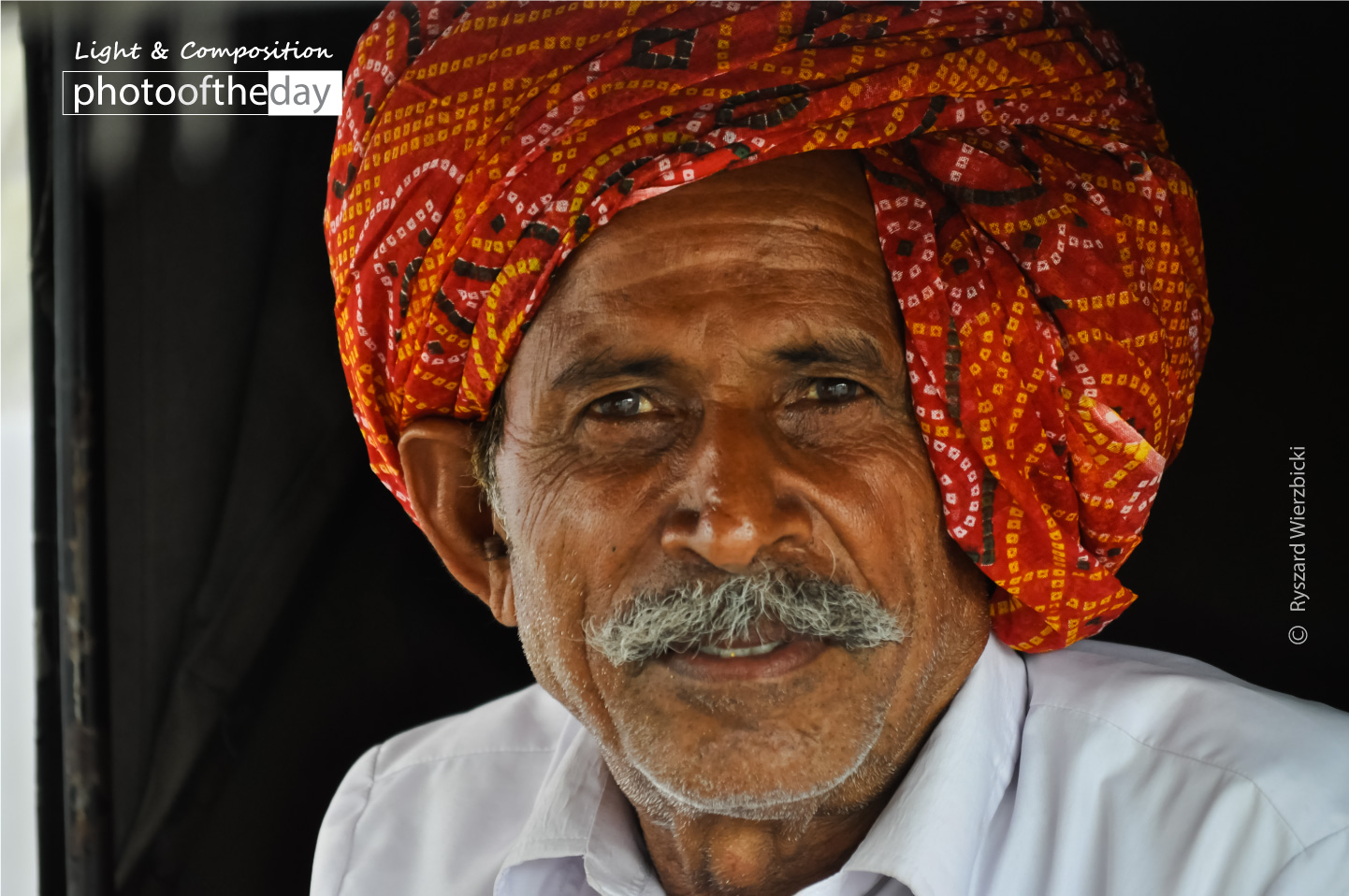
A Maharashtra Man by Ryszard Wierzbicki
This portrait captures the regal essence of the Pheta, a traditional turban that serves as a cornerstone of wedding attire in Maharashtra. By focusing on the intricate folds and the cultural significance of this headpiece, the photographer highlights the intersection of heritage and fashion. The image is award-worthy for its respectful documentation of Indian customs, capturing the dignity of the subject through a lens that emphasizes both the texture of the fabric and the solemnity of the tradition. It serves as a vivid window into the vibrant, enduring rituals that define the social fabric of the region.
Ryszard Wierzbicki
Born in 1963, Ryszard Wierzbicki is a Polish-born photographer and educator who transitioned from a career in social sciences to a life of global exploration. After relocating to the United Kingdom in 2006, he dedicated himself to documenting the cultures of South-East Asia and beyond, often balancing his photographic pursuits with humanitarian work for orphanages. As a seasoned traveler and marketing advisor, Wierzbicki utilizes his diverse background to capture authentic human experiences, sharing his passion for discovery through his photography and his dedicated travel forums.
Resonance Score Breakdown
Transparency Note: The resonance score (11.4/20) is calculated based on social engagement metrics collected before the award announcement.
Expert Photography Reviews · 8
The Weight of History
There is a specific quality to the light in late afternoon that seems to demand a certain gravity from everything it touches. It is not the sharp, inquisitive light of midday, nor the soft, forgiving haze of the blue hour.
Read the reflection →The Weight of Heritage
There is a quiet dignity in the way a person carries the history of their ancestors.
Read the reflection →Reviews & Comments
Share your thoughts about this award-winning photograph. Your reviews contribute to the community engagement score.
You didn’t just photograph a turban; you caught the weight of a man’s history resting on his brow. I’ve seen plenty of portraits that treat culture like a costume, but you actually looked at him. There’s a quiet gravity in his eyes that stopped me cold. You waited for the stillness, and it shows. It’s not just about the fabric’s texture. It’s about the man wearing it. You felt his dignity, and I feel it too.
The saffron of that Pheta isn’t merely pigment; it’s a searing, solar heat that vibrates against the skin like a Turner sunset caught in the dust of Pune. I’m breathless at how the ochre shadows deepen into the bruised violet of a Morandi still life, grounding the subject’s regal gravity. It’s a chromatic dialogue where the warmth doesn’t just sit on the surface—it’s an atmospheric weight that makes one’s own pulse quicken in sympathy.
The Pheta is undeniably intricate, but I’m left wondering why the man beneath it remains a prop for the fabric. Does his dignity belong to him, or is it merely a costume piece for the viewer’s consumption? I feel a sharp discomfort in how the frame reduces a living tradition to a static aesthetic object. Whose heritage are we actually celebrating here? It’s a beautiful texture, sure, but it’s a hollow gaze.
The Pheta’s intricate folds are undeniably striking, yet I find myself searching for the man beneath the fabric. In my field, we learn that proximity without connection is merely theft. Did Wierzbicki sit with him, or did he just extract a portrait? It’s technically sharp, but it feels hollow. I’ve spent weeks waiting for a bird to trust me; I wish I felt that same earned intimacy here. It’s a beautiful mask, but is it honest?
Most portraits of traditional attire feel like museum catalog entries, but this one breathes. Of the thousands of submissions I’ve reviewed, few capture the weight of a Pheta with such tactile authority. The way the fabric’s folds catch the light against his weathered skin creates a visual history of the man himself. It’s the quiet dignity in his eyes that truly gets to me. Thirty years from now, we’ll still be looking at this man’s gaze.
The frame holds a silence that’s almost deafening. It’s a tight close-up, the kind where the director cuts away from the noise to let the character breathe. I’m struck by the weight of that Pheta; it’s not just fabric, it’s history sitting heavy on his brow. The focus is razor-sharp, a deliberate choice that keeps the gaze locked. It’s the shot the editor keeps because any movement would’ve ruined the gravity of the man’s stare.
Before the eye identifies the Pheta’s intricate folds, something in the chest tightens. It’s the weight of history resting on a brow. I find myself holding my breath, mirroring the subject’s stillness. When I return to this a year later, the fabric’s texture feels less like silk and more like a pulse. It doesn’t just document a tradition; it demands a quiet, internal reverence that stays with me long after I’ve turned away.
The Pheta’s geometry dictates the frame. Its concentric folds create a rhythmic, architectural weight that anchors the subject’s gaze. There’s a sharp, clinical tension between the fabric’s intricate texture and the negative space surrounding the head. It’s a disciplined arrangement of mass. I’m genuinely unsettled by how the turban’s sharp apex disrupts the verticality of the background. The frame holds, but only just. It’s a rare instance where the structure doesn’t collapse under the subject’s gravity.