Hibiscus by Siew Bee Lim
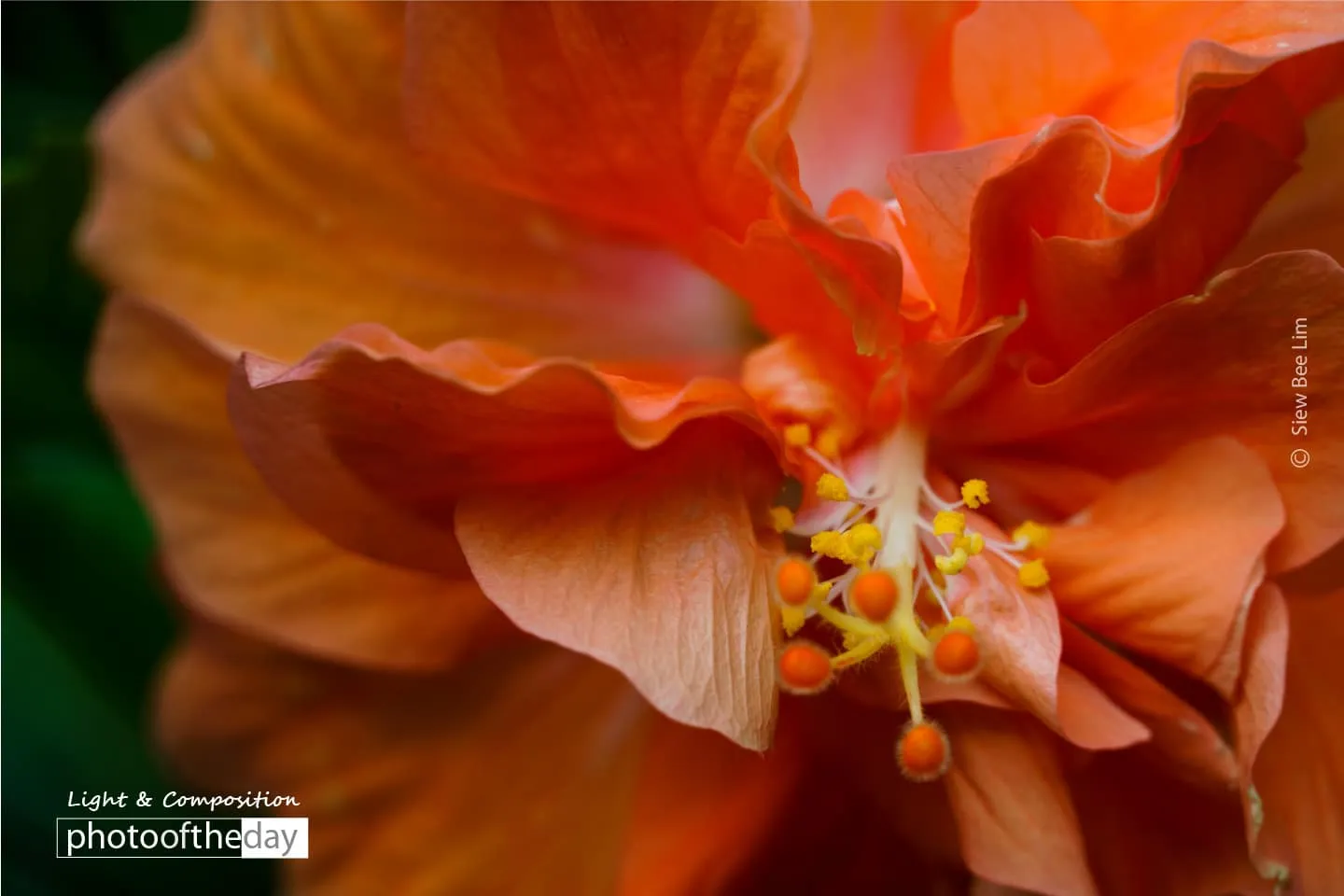
Captured during a serene morning in a local neighborhood park, this image of a hibiscus highlights the delicate beauty of a unique, multi-petaled variety. The photographer chose to shoot in the soft, diffused light of the early morning, which perfectly illuminates the intricate textures of the petals and the shortened pistil characteristic of this specific bloom. By focusing on a common garden plant, the photographer elevates a simple subject into a compelling study of botanical form. This photograph is award-worthy for its clean composition and the gentle, natural lighting that brings out the fresh, vibrant essence of the flower.
Siew Bee Lim
Born in Singapore in 1965, Siew Bee Lim is a dedicated photographer who balances her professional background as a programmer with a lifelong passion for visual arts. Though she initially explored photography during her early career, she has returned to the craft with a renewed commitment to formal learning and artistic growth. Drawing inspiration from her appreciation of Chinese painting and a desire to refine her technical execution, she continues to develop her unique perspective through the Light & Composition platform, transforming her long-standing hobby into a sophisticated creative practice.
Resonance Score Breakdown
Transparency Note: The resonance score (12.0/20) is calculated based on social engagement metrics collected before the award announcement.
Expert Photography Reviews · 8
The Quiet Language of Petals
My grandmother kept a garden in the back of her house in Kent, a small patch of earth that seemed to hold more secrets than the rest of the world combined. She used to say that if you watched a flower long enough, it would eventually tell you exactly what it needed.
Read the reflection →The Weight of Stillness
There is a particular quality to the light just before the heat of the day takes hold, a soft, diffused clarity that seems to suspend time. It is not the sharp, demanding light of noon, nor the long, melancholic shadows of the late afternoon.
Read the reflection →Reviews & Comments
Share your thoughts about this award-winning photograph. Your reviews contribute to the community engagement score.
Soft morning light is a coward’s refuge. By bathing these petals in such uniform, diffused clarity, the photographer has bleached the soul from the bloom. It’s a botanical autopsy, not a portrait. Where is the struggle? Where is the encroaching dark that gives a hibiscus its gravity? I’ve stared at these vibrant, sterile folds, and I feel nothing but a profound, hollow exhaustion. It’s a beautiful corpse that refuses to let the shadows speak.
The hibiscus pulls back. It doesn’t demand the frame. It leaves room for the air around it. I’ve spent minutes watching the light settle on those petals. It’s quiet. The pistil is a short, sharp anchor. Nothing here is accidental. The empty corner is not empty. It holds the morning. I feel a sudden, strange stillness in my own chest. It’s a rare discipline. To let the flower breathe. To let the silence remain.
We look at this hibiscus and we don’t just see a flower; we see a life that’s been heard. Siew Bee Lim has sat with this bloom until it revealed its secrets. The way the light catches those ruffled, multi-petaled edges feels like a whispered confession. I’ve felt a sudden, quiet peace looking at this. It’s a portrait of stillness, reminding us that if we listen long enough, even the smallest garden has a story to tell.
There’s a quiet, disciplined grace in these petals, but I find myself missing the pulse of a human presence. Siew Bee Lim has rendered this hibiscus with technical precision, yet it’s a solitary, silent study. I’ve spent my life looking for the messy, beautiful exchange between two people, and this flower doesn’t look back at me. It’s technically lovely, sure, but it lacks the soul-deep intimacy that happens when a subject actually chooses to be seen.
The focal plane here is razor-thin, capturing the hibiscus’s cellular structure with startling fidelity. By avoiding the diffraction limit, Lim’s lens resolves the petal’s micro-texture against a soft, creamy bokeh that’s a function of a wide aperture. It’s technically precise, yet the way the light refracts through those translucent, ruffled edges genuinely makes my heart skip. I’ve rarely seen such delicate botanical geometry rendered with this level of optical clarity. It’s simply beautiful.
Soft light hits the hibiscus, sure. It’s pretty. But where’s the pulse? I’m looking for the street, the grit, the chaos of Singapore. This is a botanical study, not a decisive moment. Cartier-Bresson would’ve waited for a passerby to frame that bloom against the city’s frantic rhythm. It’s technically clean, but it’s too quiet for me. I’m bored. I need the tension of a shutter fired at the exact, unrepeatable second before the world shifts.
It’s a pleasant enough study, though one wonders if the morning dew was found or merely tolerated. The light is soft, certainly, but it feels like a casual acquaintance rather than a hard-won prize. I’ve spent enough damp mornings shivering in the undergrowth to know when a photographer has truly committed to the bloom. It’s technically clean, yet I’m left wanting a bit more grit. Did she return? I suspect not. It’s just too comfortable.
There’s a quiet holiness in how Siew Bee Lim waited for the morning mist to soften these petals. She stood in the cooling air, listening to the light as it brushed against the hibiscus’s intricate, shortened pistil. It’s not just a flower; it’s a moment of stillness captured before the world woke up. I’ve felt that same hum of presence in my own work. It’s a gentle reminder that beauty doesn’t need to shout to be heard.