The Ox Herder by Lavi Dhurve
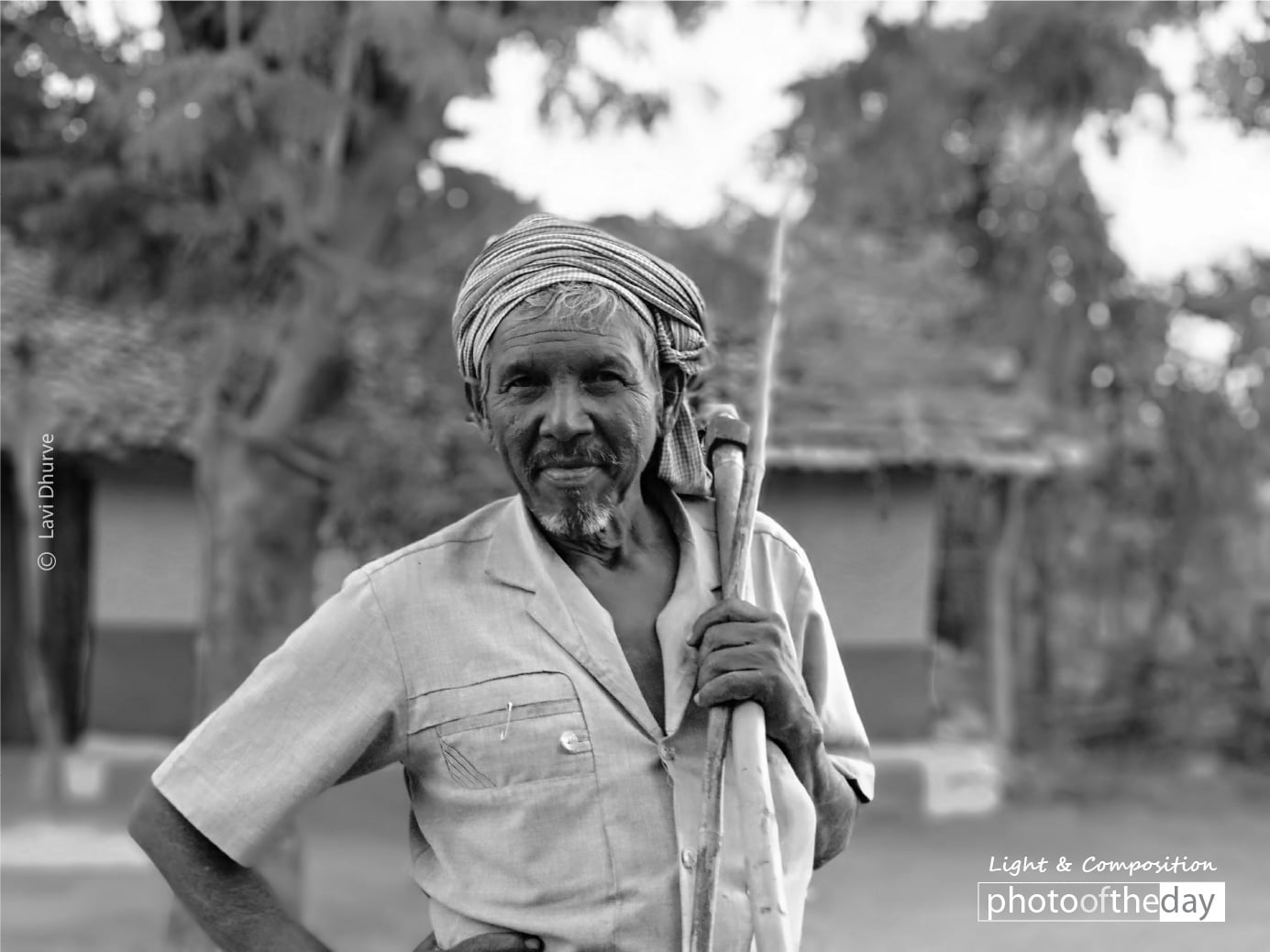
Captured on a crisp January morning, this portrait documents a quiet, intimate moment as an uncle returns from grazing his oxen in the grasslands of Madhya Pradesh. The photographer, struck by his unusually joyful demeanor, sought permission to capture his spirit, resulting in a candid reflection of rural life. The image is award-worthy for its authentic emotional resonance and the genuine connection between the subject and the lens, transforming a simple daily routine into a timeless study of character and contentment within the heart of India.
Lavi Dhurve
Hailing from a small village in Madhya Pradesh, Lavi Dhurve finds profound inspiration in the simplicity and beauty of rural life. Her photographic practice is deeply rooted in a passion for art, culture, and the human experience, with a particular focus on capturing the essence of people and the natural splendor of her surroundings. Through her lens, she seeks to document the quiet wonders of daily existence, from the golden light of sunrise to the authentic faces of her local community.
Resonance Score Breakdown
Transparency Note: The resonance score (12.7/20) is calculated based on social engagement metrics collected before the award announcement.
Expert Photography Reviews · 8
The Unmapped Labor
We often mistake the periphery for the empty. In our rush to define the city by its verticality and its commerce, we overlook the vast, horizontal networks that sustain it.
Read the reflection →The Weight of the Day
There is a specific silence that follows a long day of labor. It is not the silence of an empty room, but the silence of a body that has finally found its rest.
Read the reflection →Reviews & Comments
Share your thoughts about this award-winning photograph. Your reviews contribute to the community engagement score.
Most critics obsess over the clarity of the herder’s gaze, but I’m drawn to the way the motion blur softens the edges of the oxen. It’s not a technical failure; it’s a rhythmic pulse. Why resolve the background into static detail when the dust and movement tell the real story? It’s closer to a painterly impression than a standard portrait. I’d trade that sharp focus for this kinetic, fleeting honesty any day. It’s genuinely refreshing.
The horizon here acts as a rigid datum, grounding the subject against the vast, unbuilt void of the grasslands. It’s a rare moment where the architecture of the landscape dictates the human scale. I’m struck by how the morning light rakes across his skin, revealing a texture that feels as weathered as stone. It’s a quiet, honest threshold between man and nature. I’d love to know what’s just out of frame, shifting our reading of this space.
You didn’t just take a portrait; you caught a man’s quiet joy in the middle of a workday. I’ve spent enough time in the field to know that look isn’t for the camera—it’s for the life he’s living. And it’s infectious. Looking at his face, I felt my own shoulders drop. You waited for the right moment, and because you did, the humanity here is undeniable. It’s a rare, honest piece of work.
We look at this face and we understand something about the rhythm of the grasslands. Lavi didn’t just point a camera; he waited for the uncle’s joy to settle. It’s in the crinkle of his eyes, a quiet contentment that feels earned. I’ve spent my life listening to stories, and this one feels like a soft, morning prayer. It’s a photograph that asks to be returned to, reminding us that true dignity lives in the daily walk.
The light hits his face like a key light on a soundstage, carving out that grin. It’s a perfect tracking shot frozen in the tall grass. I’ve spent years watching frames that try too hard, but this one just breathes. The rhythm of the morning is right there in his eyes. It’s honest, unforced, and frankly, it makes me miss the quiet of the field. The cut would’ve been a mistake; the shot holds.
There’s a rare, quiet dignity in how this man holds his oxen. I’ve spent enough time in the field to know that animals don’t settle this calmly around strangers unless the photographer has earned their place in the landscape. It’s not an extracted portrait; it’s a shared breath. I find myself genuinely moved by the trust in those beasts’ eyes. It’s clear Lavi didn’t rush the moment, and that patience makes all the difference.
The focal plane here is razor-thin, isolating the ox herder’s weathered skin against the soft, buttery bokeh of the Madhya Pradesh grasslands. It’s a masterclass in aperture control; the lens resolves every pore and crease, pushing past what the naked eye registers. I’m genuinely moved by how the light catches the moisture in his eyes. It’s not just a portrait; it’s a precise optical capture of human contentment, rendered with such startling, microscopic clarity.
The subject’s smile feels disarming, yet I’m left wondering about the power dynamic behind this “candid” request. Does the uncle’s joy belong to him, or is it a performance curated for the lens? I find myself unsettled by the romanticization of his labor in these grasslands. Why do we crave this specific brand of rural contentment? It’s a beautiful frame, but I can’t shake the feeling that we’re consuming his life as a picturesque commodity.