Fly Like an Eagle over the Sea by Rasha Rashad
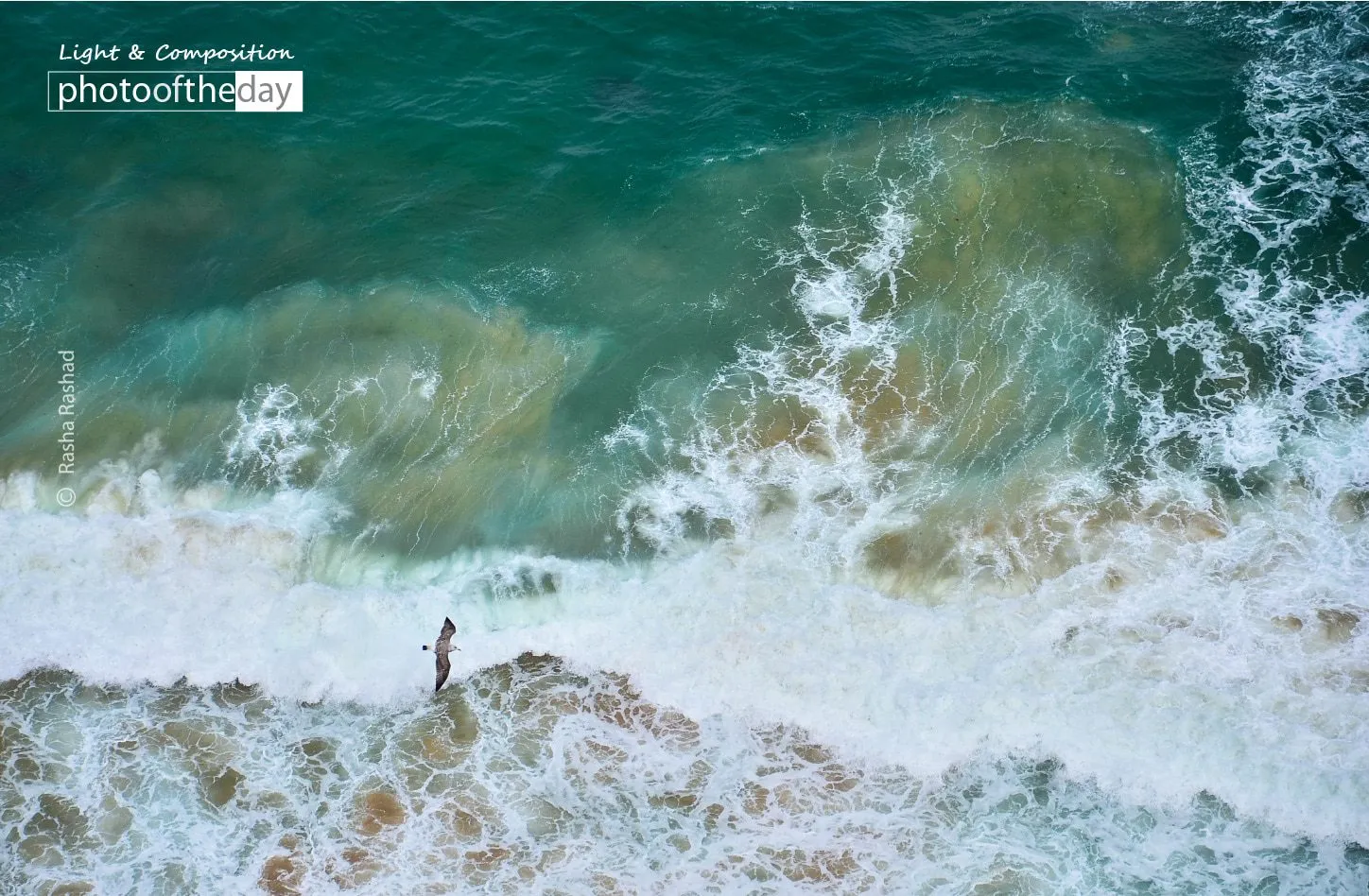
Captured at the historic Cabo da Roca during a sweltering August afternoon in 2013, this photograph immortalizes the dramatic intersection of the Atlantic Ocean and the rugged European coastline. The photographer was drawn to the raw energy of waves crashing against the cliffs, finding a profound connection between the landscape and the eagles soaring above. By framing the scene at the edge of the world, the image evokes a sense of timeless exploration. Its award-worthy quality lies in the masterful balance of natural movement and the stark, imposing beauty of the coastal terrain.
Rasha Rashad
Hailing from Alexandria, Egypt, Rasha Rashad is a dedicated wanderer and explorer with a deep passion for discovering new cultures and people. After transitioning from a corporate career to pursue photography full-time, she has cultivated a distinct artistic voice centered on street photography and culinary imagery. Her work is heavily influenced by her love for literature and classic cinema, reflecting a narrative-driven approach that seeks to capture the essence of her travels across the globe.
Resonance Score Breakdown
Transparency Note: The resonance score (12.3/20) is calculated based on social engagement metrics collected before the award announcement.
Expert Photography Reviews · 6
The Edge of Breath
There is a specific silence that lives at the edge of a cliff. It is not the absence of sound, but the absence of ground. I remember standing on a precipice years ago, watching the way the air seemed to thin, as if the world were losing its grip on itself.
Read the reflection →The Edge of Breath
We are drawn to the precipice. Not to fall, but to see where the solid world finally admits defeat. There is a specific silence that lives where the earth meets the salt.
Read the reflection →Reviews & Comments
Share your thoughts about this award-winning photograph. Your reviews contribute to the community engagement score.
Before the eye identifies the cliffs, a sudden, sharp intake of breath occurs. It’s the vertigo of the drop, the way the Atlantic’s white foam pulls at the nerves. I’ve felt that specific, hollow ache in my chest before, standing where the land simply gives up. Returning a year later, the eagles don’t feel like birds anymore; they’re just flickers of movement in a vast, indifferent blue that demands I finally let go.
At Cabo da Roca, the Atlantic doesn’t just crash; it interrogates the cliff’s permanence. Rashad’s frame captures the eagle, yet I’m drawn to the deep, bruised shadows clinging to the rock face. It’s here the photograph thinks, refusing the easy brightness of a summer afternoon. I feel a sudden, cold vertigo looking at those dark crevices. It’s a reminder that we’re merely guests on this precipice, staring into a void that doesn’t care if we fly.
Cabo da Roca is a lonely place, and Rasha’s shot captures that isolation perfectly. I’ve spent my life looking for the human pulse in a frame, but here, the eagles are the only ones with a story to tell. It’s technically sharp, sure, but I find myself aching for a person to anchor this vast, crashing Atlantic. Without a human face to read, it’s just a beautiful, empty stage. I’m left feeling quite cold.
Cabo da Roca is a brutal datum where land meets the void. Rashad’s frame captures the sheer scale of the cliff’s mass, yet it’s the light hitting those jagged surfaces that truly arrests me. I feel a dizzying vertigo looking at that drop. It’s a clean, honest composition, though I wonder what the wind sounds like there. It’s a rare moment where the photograph doesn’t just document geology; it actually conveys the terrifying weight of the edge.
The Atlantic doesn’t roar here. It waits. I’ve spent minutes watching the white foam dissolve against the granite. It’s a quiet violence. The eagle is a speck, a punctuation mark in a vast, blue sentence. I feel a sudden, sharp ache in my chest looking at that horizon. Nothing here is accidental. The empty corner is not empty. It’s the weight of the wind. It’s the pause before the tide turns. It’s enough.
Cabo da Roca in August is a tourist’s furnace, yet here the air feels thin and sharp. One wonders if Rasha waited for the thermal currents to align or simply got lucky with a passing bird. It’s a clean composition, though I’ve spent enough hours on those cliffs to know the wind there usually bites. I’d have preferred a bit more grit in the spray, but I’ll admit, the perspective makes me miss the salt.