The Observer by Ryszard Wierzbicki
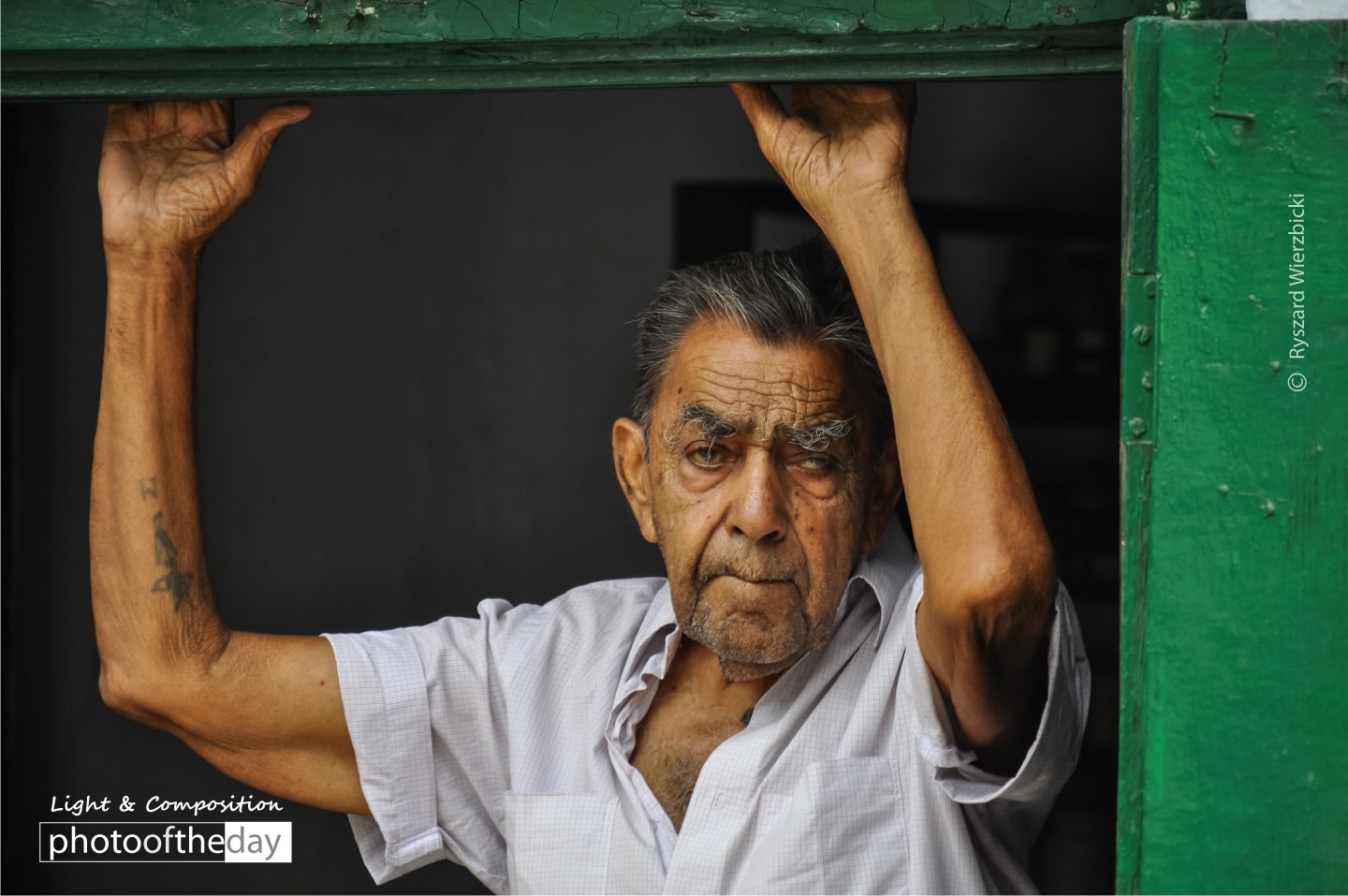
Captured in the vibrant streets of Ajmer, India, during a summer journey in 2011, this candid portrait captures a moment of genuine human connection. The photographer encountered a local man whose curious gaze offered a compelling subject, reflecting the openness and cooperation of the people he met during his travels. By choosing to document this fleeting interaction, the photographer highlights the quiet dignity of his subject. The image is award-worthy for its authentic storytelling and the respectful, observant approach that preserves the raw, unposed essence of life in Rajasthan.
Ryszard Wierzbicki
Born in 1963, Ryszard Wierzbicki is a Polish-born photographer and traveler currently based in Swindon, United Kingdom. After a diverse career spanning social sciences, education, and marketing, he transitioned into a life dedicated to exploration, scuba diving, and photography. Since moving to the UK in 2006, he has focused his lens on the cultures of South-East Asia and beyond, often combining his creative pursuits with charitable work for orphans. Through his photography forums, he actively fosters a community for fellow travelers and visual storytellers.
Resonance Score Breakdown
Transparency Note: The resonance score (10.7/20) is calculated based on social engagement metrics collected before the award announcement.
Expert Photography Reviews · 8
The Architecture of Attention
The mycelial network beneath a forest floor functions as a silent, subterranean nervous system, connecting individual trees through a vast web of fungal threads that trade nutrients and warnings in total darkness.
Read the reflection →The Weight of a Glance
In the quiet corners of a bustling market, there is often a stillness that defies the surrounding chaos. We tend to think of observation as a predatory act—a taking of information, a cataloging of features.
Read the reflection →Reviews & Comments
Share your thoughts about this award-winning photograph. Your reviews contribute to the community engagement score.
The wall behind him isn’t just a backdrop. It’s a weight. A heavy, textured silence that presses against his shoulder. He looks out, but he’s really looking inward. I’ve spent minutes just watching that shadow stretch across the plaster. It’s a pause in the chaos of Ajmer. Nothing here is accidental. The empty corner is not empty. It’s a breath held. I feel a sudden, sharp ache for that stillness. It’s rare. It’s enough.
It’s easy to snap a tourist’s portrait in Ajmer, but Wierzbicki clearly didn’t just pass through. He’s earned that gaze. There’s a weight in the subject’s eyes that only comes when the camera stops being an intrusion and starts being a companion. I’ve spent enough afternoons in the heat to know that look isn’t given to strangers. It’s a quiet, hard-won intimacy. One suspects he sat there for a very long time indeed.
Street portraiture in Rajasthan often risks falling into the trap of the colonial gaze, yet Wierzbicki avoids the exoticism that plagued early travelers. The subject’s direct, unvarnished stare recalls the psychological intensity of August Sander’s typologies, though softened by the humid, chaotic light of Ajmer. It’s a rare, quiet intersection of humanity. I’ve spent decades wading through travel photography, but the vulnerability in those eyes genuinely stopped me. It’s a profound, necessary addition to the canon.
Most street portraits from Rajasthan are cluttered with cheap, saturated color. What separates this from the field is the restraint. Wierzbicki didn’t chase the chaos; he waited for the man’s eyes to anchor the frame. That singular, piercing gaze makes me feel like I’m the one being studied, not the other way around. It’s a quiet, dignified exchange that will still hold weight in thirty years because it captures a human soul, not just a costume.
The ochre of the Rajasthan dust doesn’t merely coat the subject; it sings in a dusty, sun-bleached harmony with the man’s weathered skin, evoking the quiet, muted stillness of a Morandi study. I’m breathless at how the light catches that singular, piercing warmth, turning a candid moment into a visceral, chromatic ache. It’s a rare, golden resonance that feels like it’s been pulled directly from the heat-hazed canvases of Turner’s most fevered, sun-drenched dreams.
The focal plane sits precisely on the subject’s iris, where the lens resolves micro-contrast that the naked eye simply misses. It’s a masterclass in managing the diffraction limit; the skin’s texture remains sharp without succumbing to digital noise. I’m genuinely moved by how the bokeh, a function of a wide aperture, isolates his gaze from the chaotic Ajmer backdrop. It’s rare to see such optical clarity capture a soul so honestly. It’s truly breathtaking work.
You didn’t just snap a portrait; you sat with him. I can feel the heat of that Rajasthan afternoon in the way he looks back at you. It’s not a performance. He’s curious, and you’re present. I’ve spent enough time in streets like these to know when a photographer is taking rather than receiving. You waited. That gaze—it’s heavy with a quiet, human dignity. There’s something honest happening here. I respect that.
There’s a quiet weight in this man’s eyes that stops me cold. You can tell he’s not just being watched; he’s participating in the exchange. It’s a rare, honest moment where the camera didn’t intrude, but was invited in. I feel a genuine ache looking at the lines etched into his skin—this face has a whole life in it. Wierzbicki didn’t just take a picture; he earned a brief, beautiful connection. That’s how it’s done.