A Vietnamese Farmer by Ryszard Wierzbicki
In this evocative portrait, the photographer captures the quiet dignity of a Vietnamese farmer amidst the daily rigors of agricultural life. By focusing on the subject’s weathered features, the image serves as a visual testament to a life defined by hard work and resilience. The tight framing and shallow depth of field isolate the subject, drawing the viewer’s attention to the intricate details of the face, where every wrinkle tells a story of endurance. This photograph is award-worthy for its profound human connection and the respectful, candid approach used to elevate a simple moment into a powerful narrative of cultural identity.
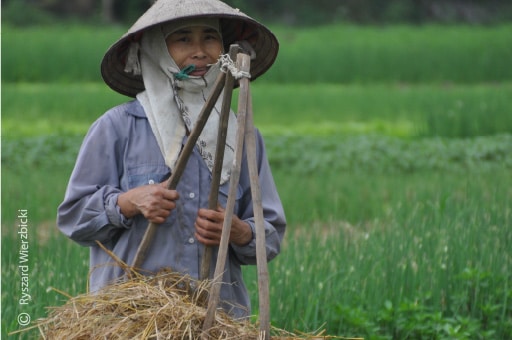
Exposure 1/500sec @ f/6.3 | ISO 220 | Focal Length 269.1mm
Ryszard Wierzbicki
Born in Poland in 1963, Ryszard Wierzbicki transitioned from a diverse career in social sciences and marketing to become a dedicated traveler and photographer. After emigrating to the United Kingdom in 2006, he shifted his focus toward exploring South-East Asia and documenting the human condition through his lens. Beyond his photographic pursuits, he is an active volunteer for children's charities and the founder of several online communities for travelers and photographers. His work is deeply influenced by his passion for exploration and his commitment to capturing the authentic stories of the people he encounters.
Resonance Score Breakdown
Transparency Note: The resonance score (13.0/20) is calculated based on social engagement metrics collected before the award announcement.
Expert Photography Reviews · 6
The Salt of the Earth
The smell of damp soil always brings me back to the first time I pressed my palms into a garden bed. It is a heavy, metallic scent, like iron and rain, that clings to the skin long after the work is done.
Read the reflection →The Cartography of Endurance
The bark of an ancient oak does not simply grow; it records. Each fissure and ridge is a biological ledger, a map of droughts endured, winters survived, and the slow, relentless pressure of the sun.
Read the reflection →Reviews & Comments
Share your thoughts about this award-winning photograph. Your reviews contribute to the community engagement score.
Most portraits of labor feel like tourist trophies, but this one avoids that trap. By pushing the 269mm focal length to compress the background, Wierzbicki forces us to confront the grit in those deep, sun-etched lines. It’s the eyes that stopped me; they don’t look at the lens, they look through the exhaustion. I’ve seen thousands of faces, but this one feels like a permanent record of a vanishing way of life. It’ll still matter in thirty years.
The deep furrows in this man’s skin aren’t just age; they’re trenches where light goes to die. Wierzbicki doesn’t just frame a face; he traps a soul in the Nikon’s cold, clinical reach. I’ve stared at these shadows until my own eyes ache, feeling the crushing weight of a life lived entirely in the sun’s unforgiving glare. It’s a brutal, honest confrontation. He doesn’t invite us to look; he forces us to reckon with the darkness.
You didn’t just snap a portrait; you sat with the weight of this man’s life. I’ve spent years in fields like this, and I can feel the humidity and the grit in those lines around his eyes. You waited for the right second, and it shows. Because you didn’t rush him, the camera caught a quiet, heavy truth. It’s rare to see such raw dignity. You earned this moment, and I respect that.
The light here isn’t merely illumination; it’s a conversation with time itself. Ryszard caught the farmer in that soft, diffused glow that only exists when the world holds its breath. I’ve spent enough dawns waiting for such clarity to know he didn’t rush this. Looking at those deep, etched lines, I feel a sudden, quiet ache for the soil he’s tended. It’s a rare, holy stillness, captured just before the day’s heat could steal the soul away.
It’s a sharp enough portrait, though one wonders if the shutter was clicked on a whim. At 269mm, it’s a long-distance observation, lacking the intimacy of a photographer who’s spent a morning earning the subject’s trust. I’ve spent enough hours in the mud to know that distance often masks a lack of commitment. Still, those eyes hold a weariness I recognize all too well. It’s a decent shot, but I’d have preferred he stayed longer.
Why does this lens compress the farmer into a mere landscape of wrinkles? It’s a classic ethnographic trap. By isolating the subject against a blurred void, Wierzbicki strips away the context of the land that actually sustains him. Does this portrait honor the man, or does it just aestheticize his poverty for our consumption? I find the shallow depth of field deeply uncomfortable. It feels like we’re stealing his dignity while pretending to celebrate his resilience.