Coral Bar Tipping Board by Ryszard Wierzbicki
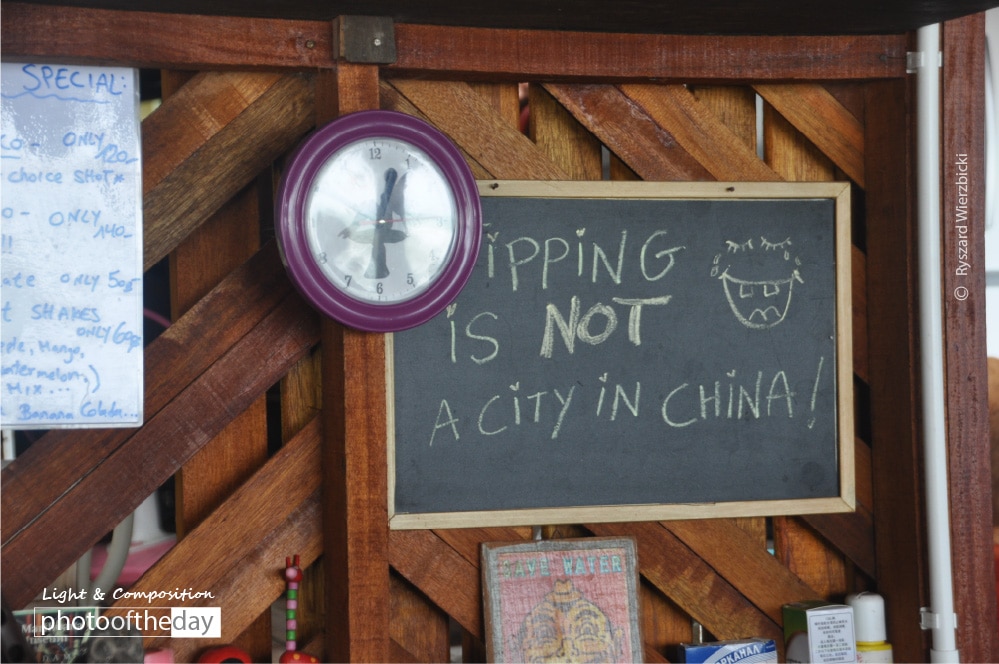
Captured at the remote Coral Bar on Haad Khom beach in Koh Phangan, this image highlights a rustic tipping board that serves as a charming relic of the local atmosphere. The photographer focused on the weathered textures of the sign, which stands as a testament to the unique, laid-back culture of this northern Thai retreat—a place famously frequented by the resident pig, DukDik. The composition is award-worthy for its ability to transform a simple, everyday object into a compelling narrative piece, grounding the viewer in the specific, sun-drenched character of a hidden island gem.
Ryszard Wierzbicki
Born in Poland in 1963, Ryszard Wierzbicki transitioned from a career in social sciences and marketing to a life of global exploration and visual storytelling. After relocating to the United Kingdom in 2006, he dedicated himself to documenting the landscapes and cultures of South-East Asia, often blending his passion for photography with scuba diving and charitable work for orphans. As the founder of the travel forums Instant Travelling and World Around, he continues to share his unique perspective on the world, trading his professional background for a life of travel and creative discovery.
Resonance Score Breakdown
Transparency Note: The resonance score (11.0/20) is calculated based on social engagement metrics collected before the award announcement.
Expert Photography Reviews · 8
The Weight of Small Things
We leave marks behind. A name carved into wood, a coin dropped in a jar, a path worn through the tall grass. These are not grand gestures.
Read the reflection →The Currency of Salt and Sun
We often mistake value for something polished, something that gleams under the weight of expectation. But there is a deeper, quieter economy in the things that have weathered the salt air and the slow, rhythmic pulse of the tides.
Read the reflection →Reviews & Comments
Share your thoughts about this award-winning photograph. Your reviews contribute to the community engagement score.
The weathered wood anchors the frame, yet the composition suffers from a lack of geometric resolution. The tipping board’s diagonal tilt creates a necessary tension, but the surrounding negative space remains cluttered, failing to isolate the subject’s texture. It’s a missed opportunity for true structural clarity. I’ve stared at this board for ten minutes, and frankly, it doesn’t hold. The visual weight is unevenly distributed, leaving the eye to drift without a proper fulcrum.
The jury’s obsession with clarity here feels stifling. Why demand crispness from a weathered tipping board? Wierzbicki’s choice to hover at 1/60sec creates a soft, humid instability that feels honest to the Thai heat. It’s closer to Sugimoto’s long-exposure theatres than conventional travel reportage. I’m genuinely drawn to the way the grain swallows the wood’s edges. He didn’t resolve the background, and thank god for that—it’s the blur that finally makes the island feel real.
You’ve captured the salt-crusted soul of that bar. I’ve spent enough time in places like Haad Khom to know that peeling paint tells a better story than any polished portrait. You didn’t just photograph a sign; you caught the humidity and the slow, lazy rhythm of island life. I can almost smell the beer and the sea air. Because you waited for the light to hit that wood, I feel like I’m sitting right there. Honest work.
We look at this weathered board and we hear the island’s hum. It’s not just wood and paint; it’s a ledger of human kindness left behind in the salt air. I’ve spent my life listening to stories, and here, the silence is loud. It makes me ache for a place I’ve never been, where a pig named DukDik wanders free. This is a photograph that asks to be returned to. It’s a quiet, beautiful conversation.
The sun-bleached wood, a pale, desiccated ochre reminiscent of Morandi’s dustiest still lifes, vibrates against the saturated, electric turquoise of the Thai shallows. It’s a chromatic collision that makes my heart ache for the salt-crusted simplicity of that island air. One finds the palette isn’t merely decorative; it’s a visceral, humid language of decay and light, where the weathered grain of the board sings a quiet, sun-drenched hymn to the fleeting, tropical afternoon.
The wood grain holds the salt. It’s weathered, grey, tired. I find myself leaning in, wanting to touch the rough surface of the board. There’s a stillness here that the island’s heat usually denies. The frame doesn’t crowd the subject. It lets the air circulate around the edges. Nothing here is accidental. The empty corner is not empty. It’s a quiet breath. I’ve rarely felt such peace in a tipping board. It’s enough.
Weathered wood and hand-painted tips don’t just capture a vibe; they commodify a lifestyle for the passing tourist. Why does this board feel like a prop in a curated fantasy of island simplicity? I find the romanticization of this rustic aesthetic uncomfortable. Does the local reality of Haad Khom actually align with this sun-drenched narrative? It’s a pretty frame, but it’s stripping away the labor behind the bar to sell us a hollow, exoticized dream.
It’s a curious fragment of the built environment. By isolating this weathered tipping board, Wierzbicki ignores the threshold between the bar’s interior and the beach’s vast, shifting datum. I’m struck by how the harsh Thai sun rakes across the wood grain, emphasizing mass over void. It’s a lonely, tactile detail. I find myself longing to see the fenestration behind it; without the context of the structure, it’s just a beautiful, sun-bleached lie of convenience.