The Arch of Former Nanyang University by Siew Bee Lim
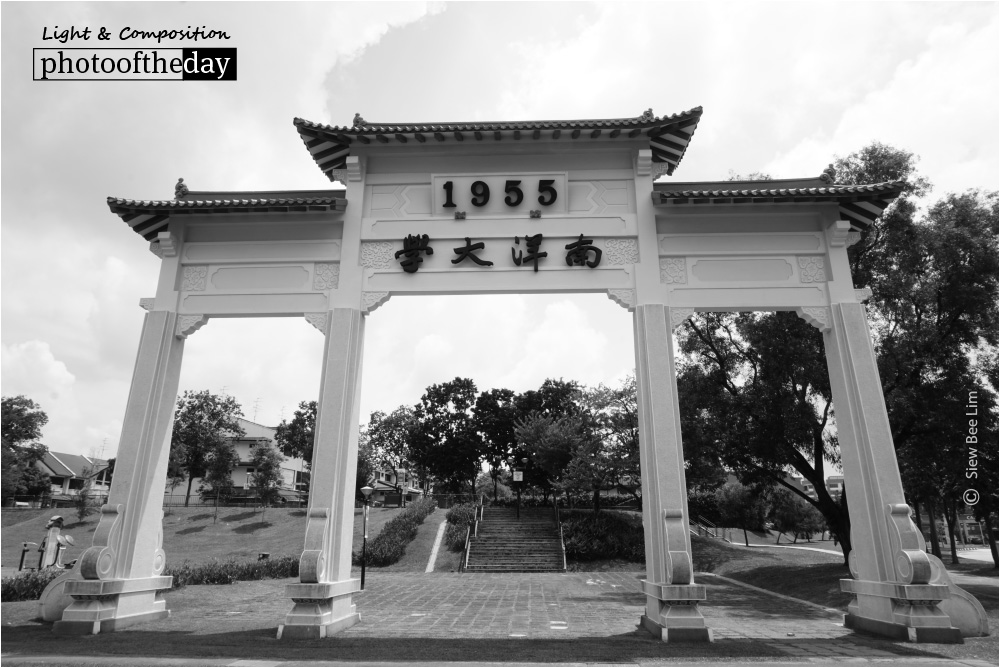
The Arch of Former Nanyang University captures a poignant piece of Singaporean history, framing the iconic structure against the weight of time. The photographer utilized a wide 16mm focal length and a narrow f/22 aperture to ensure deep focus, emphasizing the architectural details of the arch. The image highlights the physical remnants of the university, including the partially buried footings that alter the structure's perceived height. This photograph is award-worthy for its ability to blend historical narrative with technical precision, transforming a controversial relic into a compelling visual study of preservation and architectural identity.
Siew Bee Lim
Born in Singapore in 1965, Siew Bee Lim has long nurtured a passion for the art of photography. Recognizing the value of structured growth, she has turned to the Light & Composition platform to refine her technical skills and deepen her creative practice. Her work reflects a commitment to lifelong learning and a keen interest in documenting the cultural and historical landscapes of her home country.
Resonance Score Breakdown
Transparency Note: The resonance score (12.7/20) is calculated based on social engagement metrics collected before the award announcement.
Expert Photography Reviews · 3
The Weight of Stone
There is a peculiar silence that gathers around structures built by hands that have long since moved on.
Read the reflection →The Persistence of Stone
Lichens are the quiet pioneers of the landscape, secreting acids that slowly break down the surface of bare rock to create the first thin layer of soil. They do not fight the stone; they inhabit it, turning the unyielding mineral into a foundation for future growth.
Read the reflection →Reviews & Comments
Share your thoughts about this award-winning photograph. Your reviews contribute to the community engagement score.
Shadows here don’t merely cling to the stone; they swallow the history beneath the arch. It’s a brutal, honest darkness. By forcing the aperture to f/22, Lim traps the light in a suffocating, crystalline grip. I’ve stared at these buried footings until my own pulse slowed, feeling the crushing weight of what’s been erased. It doesn’t invite us in. It demands we acknowledge that time isn’t a river, but a tomb we’re slowly building.
We look at this arch and we don’t just see stone; we see a ghost of a conversation. By burying the footings, Siew Bee Lim forces us to listen to the ground beneath. It’s as if the university is trying to whisper its secrets upward. I’ve walked past such ruins, but here, the silence feels heavy, almost human. It’s a portrait of a memory that refuses to be forgotten. This is a photograph that haunts me.
1/30sec at f/22, 16mm. Diffraction is the enemy here. Stopping down to f/22 on an APS-C sensor softens the fine architectural edges, turning crisp stone into mush. It’s a technical miscalculation that undermines the intended sharpness. I’ve seen this mistake too often; the desire for deep focus shouldn’t cost you resolution. It’s frustrating to see such a strong subject compromised by basic optics. The composition holds, but the data tells a story of lost potential.