Lotus Leaves by Siew Bee Lim
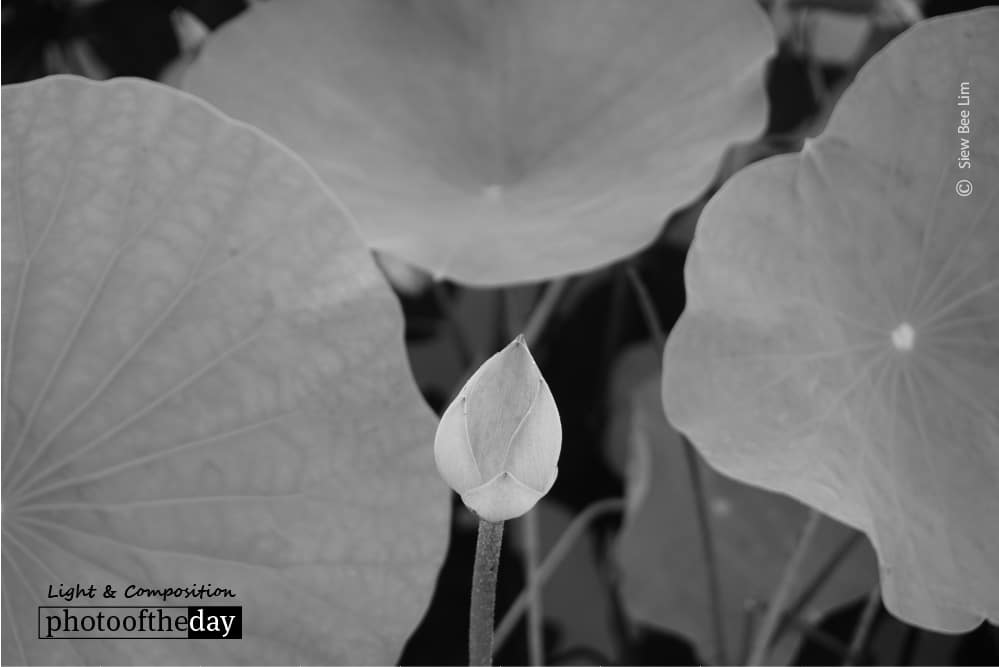
On a quiet July morning, the photographer visited a serene pond within the Chinese Garden, drawn to the delicate geometry of nature. Captivated by a single lotus bulb cradled by three surrounding leaves, the photographer experimented with various technical settings to capture the scene's inherent harmony. This particular image was selected as the most compelling result of that session, showcasing a keen eye for botanical detail. The photograph is award-worthy for its clean composition and the soft, natural light that highlights the intricate textures of the lotus, transforming a simple garden moment into a refined study of form and tranquility.
Siew Bee Lim
Born in 1965 in Singapore, Siew Bee Lim has long nurtured a passion for photography as a personal hobby. Currently seeking to refine her craft through formal education, she is dedicated to expanding her technical knowledge and artistic vision through the Light & Composition platform. Her work reflects a patient, observant approach to the natural world, demonstrating a commitment to growth and a deep appreciation for the art of capturing light.
Resonance Score Breakdown
Transparency Note: The resonance score (12.7/20) is calculated based on social engagement metrics collected before the award announcement.
Expert Photography Reviews · 8
The Architecture of Stillness
I remember sitting on a wooden bench in a Kyoto garden, watching an elderly man spend an hour simply observing the way water pooled on a single leaf. He didn't have a camera, or a book, or a phone.
Read the reflection →The Weight of Stillness
There is a quiet wisdom in the way a leaf holds the morning. It does not rush to unfurl, nor does it fret over the coming heat of the day. It simply exists, anchored in the cool dampness of its own being.
Read the reflection →Reviews & Comments
Share your thoughts about this award-winning photograph. Your reviews contribute to the community engagement score.
Most botanical shots are just pretty records, but this one lingers. I’ve seen thousands of lotus studies, yet the way these three leaves cradle the bulb creates a geometric tension that feels intentional, not accidental. It’s the restraint that wins me over; the soft light doesn’t over-explain the texture, it invites you to touch it. I find myself wanting to sit by that pond. It’s a quiet, enduring piece of nature’s own architecture.
Before the eye identifies the lotus, something in the chest softens. It’s the stillness of the water, I think. The way those three leaves cradle the bulb creates a rhythmic, almost hypnotic, containment. When I return to this, I feel my own pulse slow to match the pond’s quiet. It’s not just a botanical study; it’s a sensory anchor. I’ve found myself breathing deeper just looking at the way the light rests on those veins.
It’s a shame the lens didn’t surrender to the motion of the pond. We’re left with a clinical, static study of geometry that feels almost too polite. I’d have preferred the lotus to dissolve into the water, embracing the blur like Sugimoto’s long-exposure theatres. Why resolve every vein when you could have captured the rhythm of the wind? It’s technically competent, sure, but it lacks the courage to let the subject actually breathe.
You’ve captured a quiet, breathing stillness here. I’ve spent enough time in the field to know that nature doesn’t always cooperate, but you waited until the light softened just right. It’s a clean study, sure, but it’s the way that bulb sits tucked against those leaves that gets me. It feels like a secret. You weren’t just documenting a plant; you were listening to the garden. There’s something honest happening here. I respect that patience.
Nature’s geometry here feels almost too curated, doesn’t it? Siew Bee Lim captures the lotus with clinical precision, yet I find myself craving a bit of grit. Why must we sanitize the pond to find beauty? The soft light renders the leaves into a perfect, quiet abstraction, but it strips away the swampy reality of the Chinese Garden. It’s technically flawless, but does it actually see the plant, or just the idea of one?
1/50sec at f/6.3, 50mm, ISO 100. It’s a conservative choice, but it works. The f/6.3 aperture provides enough depth to keep the lotus bulb sharp while softening the background clutter. I’ve seen enough mushy macro shots to appreciate this restraint. It’s technically sound, though the shutter speed is borderline for handheld work. I actually felt a rare moment of relief seeing the textures held this clearly. The math holds up. It’s a disciplined execution.
The verdant saturation here evokes Morandi’s hushed still lifes, where the jade of the lotus leaves bleeds into the pale, chalky chartreuse of the bulb with such liquid grace that one’s breath catches in the throat. It’s a symphony of chlorophyll and morning mist, where the light doesn’t merely illuminate but caresses, turning the pond’s surface into a cool, vitreous expanse of celadon that feels, quite frankly, like a dream I’ve had before.
At f/6.3, the Sony’s 50mm focal plane renders the lotus bulb with surprising micro-contrast. You can see the diffraction of light across the waxy cuticle of the leaves, revealing cellular textures invisible to the naked eye. It’s a precise optical capture of botanical geometry. I’m genuinely moved by how the lens resolves those fine, hydrophobic veins; it’s as if the glass has finally caught the quiet, humid breath of the Singapore morning. It’s simply exquisite.