An Old Tree by Siew Bee Lim
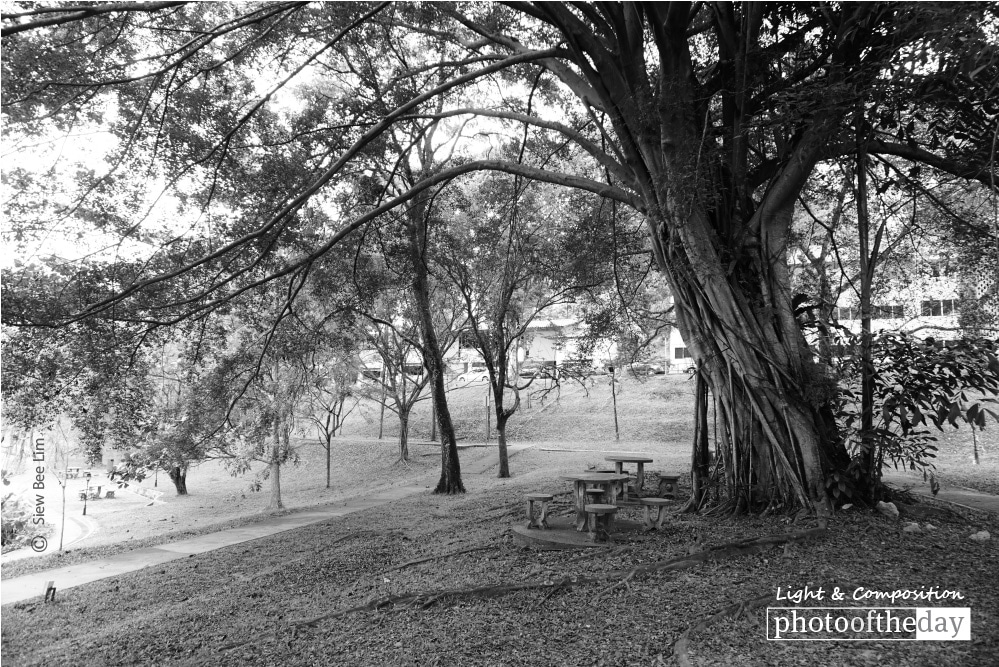
Captured with a deliberate choice for monochrome, this photograph highlights the quiet, sentimental atmosphere of an ancient tree standing near a tranquil lake. The composition draws the eye to the weathered tables and stools nestled beneath the canopy, while the intricate, exposed roots and a scattering of fallen leaves across the ground evoke a sense of timelessness. By stripping away color, the photographer emphasizes the textures and the poignant, melancholic beauty of the scene, transforming a simple lakeside setting into a contemplative study of age and stillness.
Siew Bee Lim
Born in Singapore in 1965, Siew Bee Lim has long nurtured a passion for the art of photography. Currently seeking to refine her creative vision through formal study with Light & Composition, she demonstrates a keen eye for capturing the sentimental and atmospheric qualities of her surroundings. Her work reflects a dedicated pursuit of technical growth and a deep appreciation for the storytelling potential inherent in black and white imagery.
Resonance Score Breakdown
Transparency Note: The resonance score (11.4/20) is calculated based on social engagement metrics collected before the award announcement.
Expert Photography Reviews · 4
The Rough Skin of Time
The smell of damp earth after a long rain always brings me back to the garden of my childhood. It is a heavy, metallic scent, like wet iron mixed with the sweetness of decaying leaves.
Read the reflection →The Architecture of Silence
To grow old is to learn the language of the earth. We spend our youth reaching for the sky, frantic to touch the clouds, but the true wisdom is found in the slow, subterranean work of the roots.
Read the reflection →Reviews & Comments
Share your thoughts about this award-winning photograph. Your reviews contribute to the community engagement score.
Lim’s tree echoes the melancholic, gnarled silhouettes of Bill Brandt’s early landscapes, yet it’s the deliberate f/22 depth that grounds this in a modern, clinical precision Brandt never sought. I’m genuinely struck by the way those weathered stools anchor the composition; they’re human ghosts in a botanical cathedral. It’s a quiet dialogue between organic decay and human permanence. I’ve seen a thousand trees, but this one’s stillness feels like a fresh, sharp breath of air.
At f/22, Lim’s choice to resolve every leaf and root feels almost defensive, a retreat into the safety of total clarity. I’m left craving a rupture in that stillness. Why fixate on the static when the tree’s age suggests a slow, temporal drift? It’s technically competent, sure, but I’d trade that sharpness for a long-exposure blur that captures the wind’s ghost. It’s a missed opportunity to let the atmosphere actually breathe.
The roots grip the earth. They don’t reach for the sky. They hold the ground. I’ve spent minutes staring at the space between the stools. It’s heavy. It’s quiet. The monochrome isn’t a choice; it’s a necessity. It strips the noise away. I feel a sudden, sharp ache in my chest looking at those leaves. Nothing here is accidental. The empty corner is not empty. It’s a breath held in the dark.
The light here is flat, directionless, the way it feels just before a storm breaks. Siew Bee Lim didn’t rush; she waited for the world to stop breathing. I’ve sat beneath such trees, feeling the weight of the roots pulling at the earth. It’s a quiet, aching stillness. Looking at those empty stools, I feel a sudden, sharp loneliness—the kind that only comes when you realize the land has been waiting longer than you have.