Healthy Pleasure by Andres Felipe Bermudez Mesa
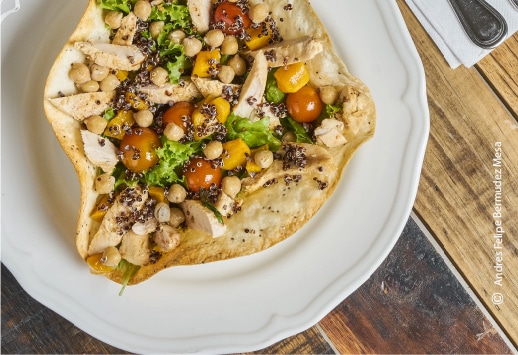
In this vibrant food study, the photographer highlights the inherent beauty of a salad by isolating its fresh components. By employing a small aperture to ensure deep focus and utilizing a soft-box flash positioned to the right, the image achieves a clean, minimalist aesthetic that emphasizes texture and color. This composition reflects a deliberate choice to strip away distractions, allowing the viewer to appreciate the simple, healthy pleasure of the ingredients. The work stands out for its technical precision and the photographer's ability to elevate everyday culinary elements into a compelling, professional-grade visual narrative.
Andres Felipe Bermudez Mesa
Born in Colombia, Andres Felipe Bermudez Mesa is a Medellín-based photographer who views himself as a global citizen. Although he holds a bachelor and MSc in Engineering, he transitioned his focus toward a dedicated career in food and portrait photography, driven by the belief that his creative work offers a more meaningful contribution to society. His photographic style is defined by a commitment to simplicity and a deep-seated passion for capturing the essence of his subjects with clarity and purpose.
Resonance Score Breakdown
Transparency Note: The resonance score (11.2/20) is calculated based on social engagement metrics collected before the award announcement.
Expert Photography Reviews · 8
The Simple Act of Nourishing
I spent twenty minutes at the market this morning just looking at the radishes. They were so bright, almost glowing against the wooden crate, and for a moment, I forgot I was in a rush to get home. I ended up buying a bunch I didn't even have a recipe for.
Read the reflection →The Ritual of the Table
I remember sitting in a small kitchen in Medellín, watching my grandmother prepare lunch. She didn't rush. She handled each tomato and leaf of lettuce as if it were a rare gift, washing them under a slow, steady stream of water.
Read the reflection →Reviews & Comments
Share your thoughts about this award-winning photograph. Your reviews contribute to the community engagement score.
Most food photography is ephemeral, destined for a trash folder within a week. Of the thousands I’ve reviewed, this one lingers because it doesn’t try to be a lifestyle ad. The crisp, clinical isolation of the radish and greens against that stark background feels honest. It’s refreshing. I’d hang this in my kitchen today, and thirty years from now, it’ll still look like a clean, sharp argument for the beauty of simple, raw ingredients.
It’s a clean, clinical affair. One suspects the salad didn’t wilt while the lighting was fussed over, which is a mercy. There’s a certain technical competence here, though I’m left wondering if the photographer ever stepped away from the studio lights to find something that couldn’t be arranged. It’s perfectly crisp, yet I’m starving for a bit of grit. I’ve spent enough time in the rain to find this level of control almost suspicious.
You’ve captured these greens with such clinical precision that I almost forgot they were food. It’s technically sharp, sure, but I’m looking for the person who grew these or the hands that tossed them. Where’s the mess? Where’s the life? Because you’ve polished away the grit, I don’t feel the hunger or the heat of a Medellín kitchen. It’s clean, but I’m still waiting for the human story to break through the frame.
A single leaf rests. It doesn’t crowd the frame. I’ve spent minutes watching the light catch the edge of the greens. It’s quiet here. The white void isn’t just background; it’s the breath between bites. I feel a sudden, sharp hunger for this stillness. Nothing here is accidental. The empty corner is not empty. It’s a deliberate pause. Bermudez Mesa understands that when you remove the noise, the flavor remains. It’s enough.
It’s a clinical dissection of vitality. By banishing the shadows, Bermudez Mesa renders these greens as sterile artifacts rather than living matter. I find myself longing for a bruise, a decay, or a flicker of darkness to ground this relentless brightness. When we strip away the obscurity, we lose the soul of the subject. It’s technically precise, sure, but it’s a photograph that’s terrified of the silence that only a true shadow can provide.
Before the eye identifies the crisp greens, something in the chest softens. It’s a quiet, rhythmic pulse of vitality. I’ve spent years looking at food, but this composition triggers a rare, visceral hunger for simplicity. The light hits the leaves with such clarity that I can almost taste the dew. When I return to it, the image doesn’t just sit there; it breathes, reminding me of the uncomplicated joy of being alive and nourished.
Crisp lettuce and vibrant radishes float in a void, stripped of the Medellín soil that birthed them. It’s technically flawless, yet I feel a strange, hollow coldness looking at these severed greens. Why must we sanitize nature to make it palatable? Who decided this salad shouldn’t have a context or a kitchen? By erasing the labor and the land, we’ve turned a meal into a sterile commodity. Does this aesthetic serve the food, or just our appetite?
It’s a curious exercise, treating a salad like a structural site. Bermudez Mesa uses light to define mass, creating a datum of crisp greens against a void. Yet, I’m left craving the threshold—the kitchen’s hum or the table’s grain. It’s technically sharp, but it’s a static, isolated volume. I’d trade this clinical precision for a single frame that captures the messy, temporal joy of a meal shared. It’s beautiful, but it’s lonely architecture.