Kfardebian Heights by Zahraa Al Hassani
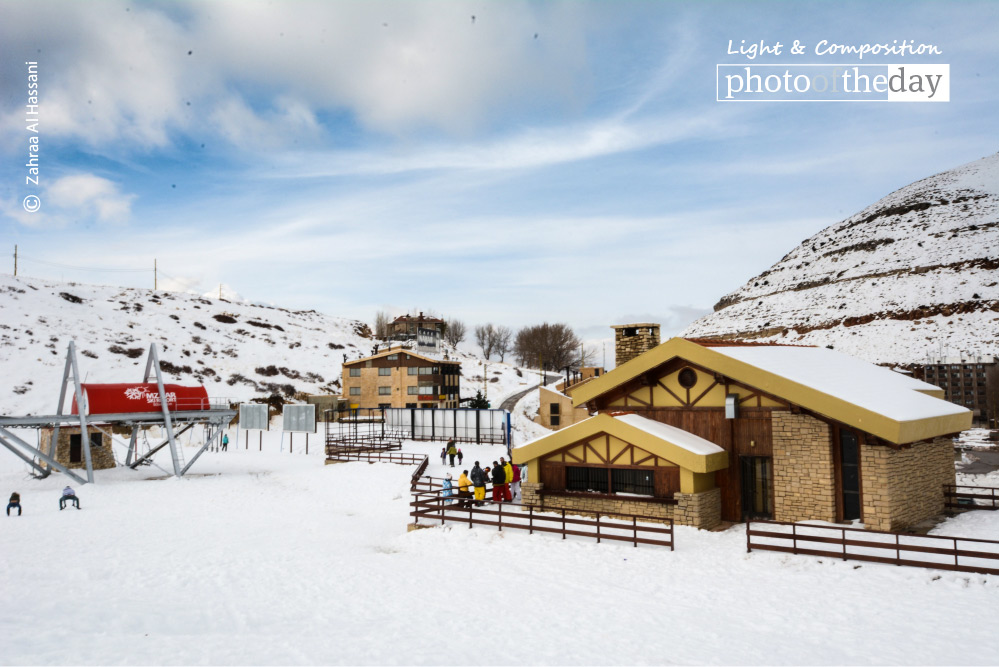
Captured during a spirited excursion to the snowy landscapes of Kfardebian, this photograph reflects a moment of quiet observation amidst an active day of ice skating. The photographer, balancing the physical demands of the trip with a keen eye for composition, successfully translated the crisp, wintry atmosphere of the Lebanese mountains into a compelling visual narrative. The image is award-worthy for its ability to transform a personal travel experience into a serene, evocative scene, showcasing the photographer's talent for finding artistic stillness within the movement of a busy day.
Zara Otaifah
Based in Baghdad, Iraq, Zahraa Hashim Salih Al Hasani balances a successful career as a senior graphic designer at Zain Telecommunications with a dedicated pursuit of photography. A graduate of the University of Technology in Baghdad, she utilizes her extensive design background to refine her photographic perspective, often creating custom visuals for her professional projects. Her work is driven by a desire to acquire deeper knowledge of purist photography, transitioning from early experiences with Sony equipment to a more sophisticated mastery of Nikon systems.
Resonance Score Breakdown
Transparency Note: The resonance score (11.5/20) is calculated based on social engagement metrics collected before the award announcement.
Expert Photography Reviews · 4
The Weight of White
In the high mountains, silence is not merely the absence of sound; it is a physical presence, a heavy blanket that settles over the shoulders.
Read the reflection →The Sharp Breath of Winter
The first thing I remember is the sting. It is a sharp, metallic cold that bites at the tip of the nose and settles deep in the lungs, tasting faintly of ozone and ancient stone.
Read the reflection →Reviews & Comments
Share your thoughts about this award-winning photograph. Your reviews contribute to the community engagement score.
The crispness here feels almost apologetic. Why resolve the Kfardebian snow into such clinical detail? I find myself wishing Al Hassani had let the movement of the skaters bleed into the landscape, pushing toward the ethereal abstraction of Sugimoto’s long-exposure theatres. By choosing total clarity, she’s ignored the kinetic energy of the ice. It’s technically competent, sure, but I’m bored by the lack of risk. Where is the blur that reveals the mountain’s true pulse?
The frame divides into a sharp 1:2 ratio, where the dark, jagged mountain slope acts as a powerful diagonal vector against the expansive, negative white of the snow. It’s a classic spatial tension. The skater’s position in the lower quadrant creates a perfect fulcrum, balancing the heavy mass of the peaks. I’m genuinely struck by how the geometry anchors the stillness. It’s a clean, solved equation of cold light and hard, angular form. Simply brilliant.
Most travel shots are just souvenirs, but this one lingers. Of the thousands I’ve reviewed, few capture the specific, biting silence of high-altitude snow like this. The way the light catches the texture of the ice, rather than just the skaters, is what saves it from being mundane. I’ll be honest, I felt a sudden, sharp chill looking at it. It’s that rare, quiet permanence that makes me certain we’ll still value this in thirty years.
Before the eye identifies the jagged, snow-dusted peaks of Kfardebian, something in the chest tightens. It’s the sudden, sharp intake of air one feels when stepping into a freezer. The stillness here isn’t just visual; it’s a physiological arrest. I’ve returned to this print three times today, and each time, the cold seems to seep into my own marrow. It’s a quiet, aching reminder of how easily we lose ourselves in the vast, indifferent white.