Harvesting Boy by Ryszard Wierzbicki
Captured during a journey between Phonsavan and Luang Prabang, Laos, this poignant portrait documents a young boy diligently gathering grass along the roadside. The photographer, struck by the industrious nature of local children assisting their families with daily chores, paused his travels to frame this moment of quiet labor. The image is award-worthy for its authentic portrayal of rural life, utilizing a tight focal length to isolate the subject against the landscape. By capturing the boy’s focused expression and the humble reality of his task, the photograph offers a compelling, humanistic glimpse into the daily rhythms of Southeast Asian village life.
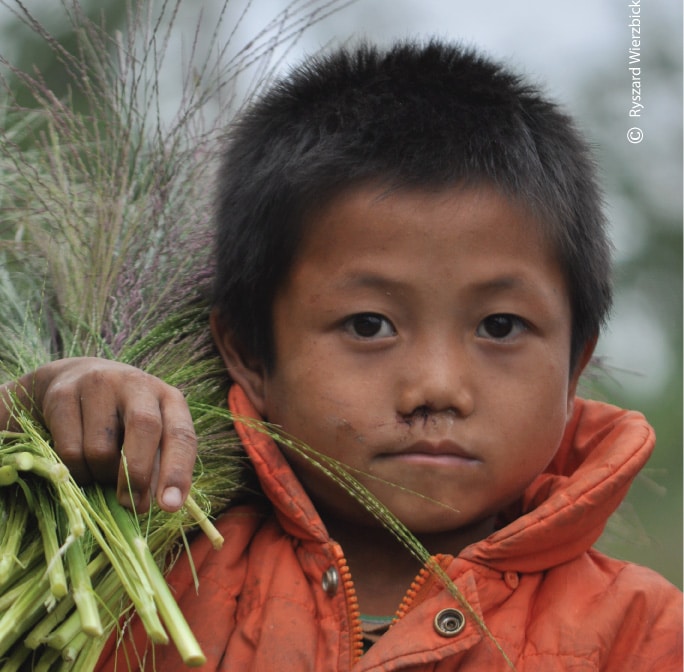
Exposure 1/500sec @ f/5.6 | ISO 360 | Focal Length 200mm
Ryszard Wierzbicki
Born in 1963, Ryszard Wierzbicki is a Polish-born photographer and educator currently based in Swindon, United Kingdom. After a diverse career in social sciences, marketing, and child care, he transitioned into a life of exploration, focusing his lens on the cultures and landscapes of Southeast Asia. A dedicated traveler and PADI scuba instructor, Wierzbicki channels his passion for humanitarian work and photography into his projects, including his support for the Stu and the Kids charity. His work reflects a deep commitment to documenting the human experience through his active travel forums and ongoing global expeditions.
Resonance Score Breakdown
Transparency Note: The resonance score (11.3/20) is calculated based on social engagement metrics collected before the award announcement.
Expert Photography Reviews · 7
The Weight of the Day
I remember a morning in a small village outside of Luang Prabang where the air felt heavy with the scent of damp earth and woodsmoke.
Read the reflection →The Weight of Small Hands
There is a quiet dignity in the way a child learns the rhythm of the earth. We often mistake labor for a burden, forgetting that to work with the land is to enter into a conversation with it. Each movement, however small, is a thread woven into the fabric of a season.
Read the reflection →Reviews & Comments
Share your thoughts about this award-winning photograph. Your reviews contribute to the community engagement score.
It’s a decent enough roadside capture, though one wonders if the shutter was clicked from the comfort of a passing vehicle. The boy’s focus is genuine, yet the composition feels snatched rather than earned. I’ve spent enough hours shivering in tall grass to know when a photographer hasn’t bothered to get their boots dirty. It’s a pleasant enough portrait, but it lacks the weight of someone who actually stayed to share the boy’s afternoon.
The frame holds its breath. That 200mm compression flattens the Laotian heat, pinning the boy against the blur of the roadside. It’s a tight, rhythmic edit. He’s working, and the shutter caught the exact second his focus turned into a performance of survival. I’ve seen a thousand portraits, but this one hits me in the gut. The cut would’ve been a mistake. It’s the frame the editor keeps because it’s where the story finally stops moving.
The boy’s focused gaze pulls me in, yet I’m unsettled by the distance. Why does the 200mm lens feel like a wall between us? It’s a clean composition, sure, but does it trap him in a narrative of quaint, rural labor? I find myself wondering if he’s even aware he’s being framed. When we isolate a child’s struggle for aesthetic consumption, what are we actually choosing to ignore about his reality?
Most portraits of rural labor feel staged, but Wierzbicki’s boy is genuinely lost in his task. Of the thousands of travel shots I’ve reviewed, this succeeds because the 200mm compression flattens the background, forcing the viewer to confront the boy’s calloused hands and singular focus. It’s a quiet, aching reminder of childhood stolen by necessity. I found myself holding my breath, hoping he’d eventually put down that bundle and just go play. That’s why it endures.
At 200mm, the compression flattens the background, pushing the bokeh into a soft, creamy wash that isolates the boy’s intensity. It’s a sharp focal plane, resolving the individual blades of grass with a clarity that defies the lens’s modest pedigree. I’m genuinely moved by how the light catches the dust on his skin; it’s a tactile, visceral reminder of the labor he’s performing. It’s not just a portrait; it’s a triumph of optical isolation.
You waited for him to look up, and that’s where the truth lives. It’s not just a kid gathering grass; it’s the weight of that bundle against his small frame. I’ve spent enough time on those dusty roads to know that look—it’s not staged, it’s just life. You didn’t interfere, you just let him be. And honestly? It makes my chest ache a little. You caught a quiet, heavy moment of dignity. Well done.
The boy’s posture creates a perfect scalene triangle, anchoring the frame against the sweeping, blurred horizon. That 200mm compression flattens the depth, forcing a rigid relationship between his hunched shoulders and the rhythmic, vertical stalks of grass. It’s a tight, efficient equation of labor. I’m genuinely moved by how the diagonal of his arm resolves the tension in the negative space. It’s not just a portrait; it’s a beautifully balanced spatial solution to a human problem.