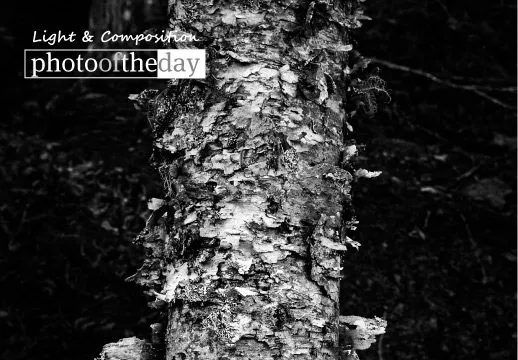
Barking 1 by Keith Goldstein
Captured within the rugged landscapes of Acadia National Park, Barking 1 serves as a poignant homage to Keith Goldstein’s mentor, Tad Yamashiro. The image reflects a departure from technical rigidity, focusing instead on the emotional interior—the space between the viewer and the frame. By embracing a more abstract and emotive approach, Goldstein translates his internal truth into a visual narrative. The photograph is award-worthy for its profound sense of intimacy and the photographer's ability to distill complex personal history into a singular, evocative composition that honors the legacy of those who shaped his artistic vision.
Keith Goldstein
Born in Brooklyn in 1957, Keith Goldstein is a distinguished fine art photographer whose creative journey was profoundly shaped by his studies at the School of Visual Arts and the Cranbrook Academy of Art. With an extensive career spanning over four decades, he has exhibited internationally and contributed to numerous prestigious publications and book covers. Goldstein is recognized for his minimalist approach to equipment, favoring a simple kit to maintain the freedom necessary to explore the emotional complexities of the world through his lens.
Resonance Score Breakdown
Transparency Note: The resonance score (12.2/20) is calculated based on social engagement metrics collected before the award announcement.
Expert Photography Reviews · 4
The Texture of Memory
I spent an hour this morning trying to peel a stubborn sticker off a second-hand book. My fingernails were sore, and I kept leaving behind these tiny, jagged bits of paper that refused to let go.
Read the reflection →The Skin of the World
There is a specific silence that lives in the bark of an old tree. It is not the absence of sound, but the accumulation of it—the slow, tectonic recording of seasons that have already passed.
Read the reflection →Reviews & Comments
Share your thoughts about this award-winning photograph. Your reviews contribute to the community engagement score.
Shadow isn’t just an absence here; it’s the heavy, textured silence of Acadia pressing against the frame. Goldstein doesn’t merely document bark; he excavates the grief buried in the grain. I’ve stared at these deep, suffocating blacks until my own pulse slowed to match the stillness. It’s an uncomfortable intimacy, isn’t it? Like watching a man mourn in a dark room. He’s finally stopped chasing light and started listening to what the darkness has to say.
The frame’s geometry is precarious. Goldstein’s reliance on the 19mm focal length creates a spatial distortion that threatens to collapse the picture plane entirely. While the jury praises the sentiment, it’s the structural instability that haunts me. The negative space doesn’t breathe; it suffocates the subject. It’s a bold gamble, yet the lack of a clear fulcrum leaves the eye adrift. I’ve rarely seen such technical precision undermined by a refusal to anchor the composition.
Stripped of chromatic distraction, the silver-grey tonality here evokes the melancholic, dust-laden stillness of a Morandi still life, where the absence of hue forces one to confront the raw architecture of light itself. It’s a haunting, tactile monochrome that feels like the cold, salt-crusted air of a Maine winter against one’s own skin. I’m genuinely moved by how these velvet shadows, devoid of pigment, manage to hum with such a profound, resonant, and aching emotional clarity.
The light here doesn’t announce itself; it hums. Standing in Acadia, Keith must have felt the cooling air settle as the shadows deepened against the bark. It’s a quiet, tactile intimacy that makes me want to reach out and touch the grain. He didn’t rush the shutter. He waited until the texture became a conversation between the tree and his own memory. I’ve felt that same stillness, and it’s truly a rare, sacred thing.