Al-Shaheed Mounment by Zahraa Al Hassani
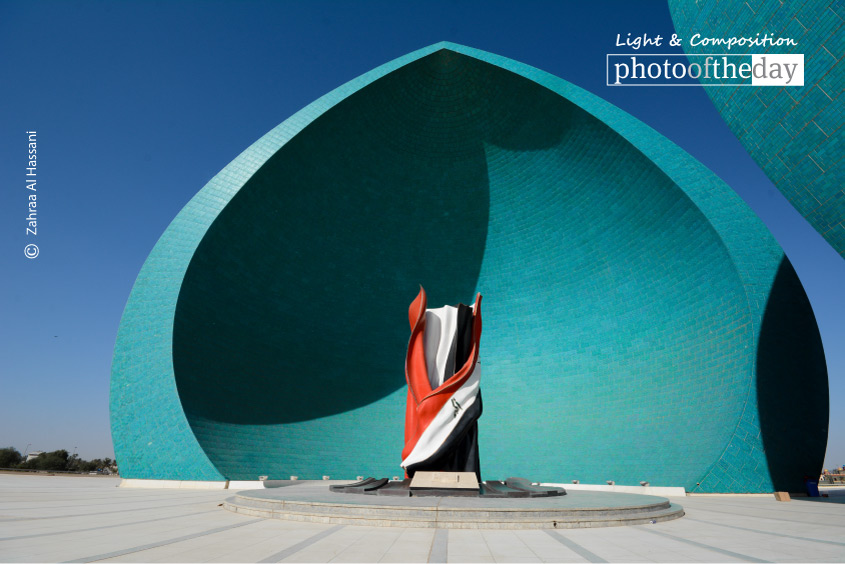
Captured at the iconic Al-Shaheed Monument in Baghdad, this photograph highlights the striking geometric elegance of the memorial dedicated to Iraq's fallen soldiers. By utilizing a wide-angle lens, the photographer emphasizes the monumental scale and the dramatic split-dome architecture against the clear sky. The composition masterfully balances the stark, modern lines of the structure with the historical gravity of the site. This image is award-worthy for its technical precision and its ability to transform a solemn, architectural landmark into a compelling visual narrative that honors both the design of Saman Kamal and the spirit of the monument.
Zara Otaifah
Based in Baghdad, Iraq, Zahraa Hashim Salih Al Hasani is a dedicated professional who balances a successful career in graphic design with a profound passion for photography. A graduate of the University of Technology in Baghdad, she currently serves as a senior graphic designer at Zain Telecommunications, where she leverages her visual expertise to enhance corporate identity. Her photographic journey, which evolved from early experimentation with Sony equipment to her current work with Nikon, is deeply influenced by her design background. Zahraa continues to refine her craft, driven by a commitment to learning and a desire to capture the world through a purist lens.
Resonance Score Breakdown
Transparency Note: The resonance score (13.5/20) is calculated based on social engagement metrics collected before the award announcement.
Expert Photography Reviews · 8
The Weight of the Split
There is a specific silence that lives in the space between two halves of a whole. It is not the silence of peace, but the silence of a held breath, waiting for a reunion that the architecture itself forbids.
Read the reflection →The Weight of Memory
Monuments are rarely built for the dead; they are built for the living, to anchor a specific version of history into the physical fabric of the city. We carve stone and pour concrete to dictate how a society should remember, or perhaps, what it should be forced to forget.
Read the reflection →Reviews & Comments
Share your thoughts about this award-winning photograph. Your reviews contribute to the community engagement score.
The split dome doesn’t merely divide the sky; it severs the light, forcing a confrontation with the void beneath. I’ve stared at these shadows until my eyes ached, feeling the crushing weight of the martyrs they conceal. It’s a brutal, geometric silence. When the sun hits that turquoise tile, it doesn’t invite us in—it warns us. We aren’t looking at architecture here, but at the precise, terrifying anatomy of an absence that refuses to be forgotten.
Most architectural shots of the Al-Shaheed Monument collapse into mere geometry. What separates this from the thousands I’ve reviewed is the way the 10mm focal length forces the split dome to loom, turning cold concrete into a crushing weight. It’s haunting. I felt a genuine chill looking at that void against the blue. It’s not just a building; it’s a permanent scar on the horizon. Thirty years from now, this perspective will still feel heavy.
The split dome hangs in the blue. It’s a rupture in the sky. I’ve spent minutes watching the shadow stretch across the concrete curve. It doesn’t demand attention. It waits. The emptiness between the two halves is heavy. It’s where the silence lives. I feel a sudden, sharp ache in my chest looking at that void. Nothing here is accidental. The empty space is not empty. It’s the weight of everything unsaid.
We look at this split dome and we don’t just see stone; we see a fractured heart. Zahraa Al Hassani listened to the silence of Baghdad before she clicked the shutter. By pulling back with her wide lens, she lets the monument breathe its grief into the sky. It’s haunting. I feel a sudden, sharp ache in my chest looking at that void. It’s a portrait of a country’s memory, captured with profound, quiet respect.
The split dome rises, a silent prayer carved into the Baghdad sky. She stood here when the sun was high, listening to the way those sharp, concrete edges cut through the heat. It’s a heavy, quiet geometry. I’ve felt that same stillness in the desert, where the light doesn’t just fall; it demands your surrender. Looking at this, I feel a sudden, sharp ache for the history held within those shadows. It’s deeply, hauntingly patient.
Before the eye identifies the geometry, a sudden, sharp stillness settles in the chest. The split dome doesn’t just frame the sky; it cleaves the viewer’s perspective, forcing a breath you didn’t know you were holding. I’ve returned to this blue void three times today, and each time, the scale feels more like a physical weight. It’s a haunting, hollow ache that follows me home, lingering long after the screen goes dark.
The geometry here is sharp, almost clinical. One wonders how long she sat in that Baghdad heat, waiting for the sun to align perfectly with the split dome’s edge. It’s a clean, disciplined frame, though I’ve always found the midday sun a bit unforgiving on such stark concrete. Still, I find myself lingering on the shadows. They’ve been placed with intention. She didn’t just stumble upon this; she clearly stood her ground.
You’ve captured the split dome’s weight, but I’m looking for the ghost of the person who stood here before you. It’s technically sharp, sure, but it feels a bit cold. I’ve walked through spaces like this, and they usually demand a pulse. You waited for the light, but did you wait for the feeling? I want to see how this monument lives in the air of Baghdad, not just how it sits against the sky.