Instruments behind the taste by Tanmoy Saha
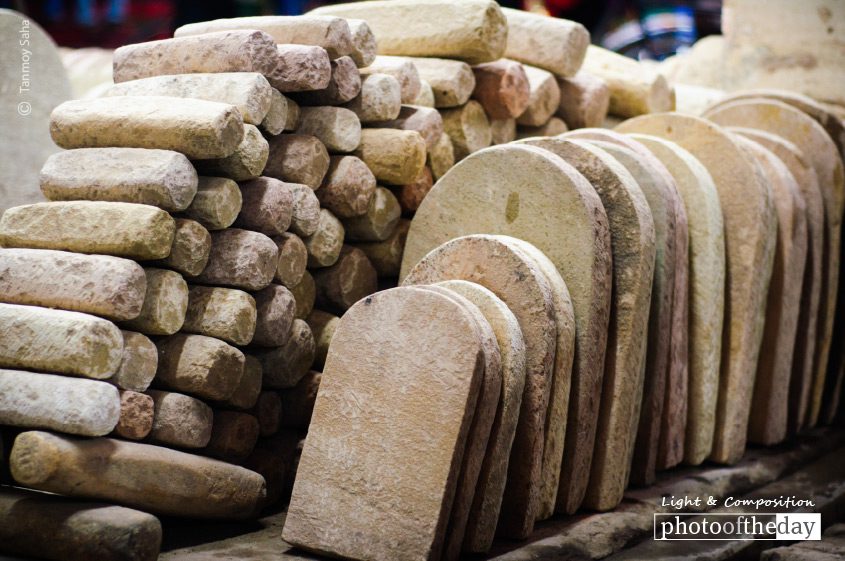
Captured in the bustling old town of Dhaka, this photograph highlights the traditional Pata-Puuta, essential stone tools used for grinding spices in Bengali cuisine. The photographer focused on these weathered instruments to celebrate the humble origins of culinary art. By utilizing a shallow depth of field and soft ambient light, the image elevates these utilitarian objects into a compelling still life study. The composition emphasizes the texture and history embedded in the stone, transforming a mundane shop scene into a poignant tribute to cultural heritage and the craftsmanship behind everyday cooking.
Exposure 1/20sec @ f/3.2 | ISO 400 | Focal Length 50mm
Tanmoy Saha
Based in Dhaka, Bangladesh, Tanmoy Saha Turja is a dedicated photographer who began his creative journey in 2007. An Electronics and Telecommunication Engineering graduate, he balances his technical background with a deep passion for portrait, landscape, and wildlife photography. His formal training includes studies at the Dhaka University Photography Society and Pathshala, leading to his work being featured in prestigious exhibitions at the National Art Gallery in Bangladesh. Currently working in the audio-visual sector, he continues to refine his artistic vision through the lens of everyday life.
Resonance Score Breakdown
Transparency Note: The resonance score (12.2/20) is calculated based on social engagement metrics collected before the award announcement.
Expert Photography Reviews · 5
The Weight of the Grind
My grandmother kept a heavy stone mortar in the corner of her pantry, worn smooth by decades of friction.
Read the reflection →The Grit of Memory
The smell of crushed mustard seeds is a sharp, yellow heat that settles at the back of the throat. It is a scent that demands attention, pulling the body back to a kitchen floor worn smooth by generations of knees.
Read the reflection →Reviews & Comments
Share your thoughts about this award-winning photograph. Your reviews contribute to the community engagement score.
One wonders if the photographer spent an afternoon dodging the Dhaka crowds to find this quiet corner, or if it was a lucky stroll. The texture on that stone is honest, worn by years of spice and labor. It’s a decent study, though I’d have preferred a bit more grit in the shadows. Still, looking at those worn edges, I’m reminded of my own kitchen. It’s a quiet, earned moment of stillness in a chaotic city.
You’ve captured the weight of these stones, and I can almost smell the damp earth and crushed turmeric. It’s not just a still life; it’s the ghost of a thousand meals prepared in Dhaka’s heat. I’ve spent enough time in kitchens like this to know the grit under a cook’s fingernails. You waited for the light to soften the edges of that worn granite. And it works. There’s a quiet, human dignity in your frame.
1/20sec at f/3.2, ISO 400, 50mm. A precarious shutter speed for a handheld shot. It’s a gamble that barely pays off. The shallow depth of field isolates the Pata-Puuta, but the motion blur in the background is distracting rather than atmospheric. I’ve spent years looking at these stone textures, and honestly, the lack of sharpness here irritates me. You’ve captured the history, but the technical execution is sloppy. It’s a missed opportunity for true clarity.
Before the eye identifies the stone, a sudden stillness settles in the chest. It’s the weight of the Pata-Puuta that pulls at my pulse, a tactile memory of labor I’ve never actually performed. When I return to it, I don’t see tools; I feel the grit of spice against granite. It’s a quiet, rhythmic ache. I find myself holding my breath, waiting for the sound of grinding that never comes. It’s hauntingly, beautifully heavy.
In the Old Town of Dhaka, we don’t just see stone tools; we hear the rhythmic grinding of generations. Tanmoy Saha listened to the silence of the Pata-Puuta before he captured it. These weathered surfaces hold the ghosts of a thousand meals, and I find myself aching for the warmth of a kitchen I’ve never visited. It’s a portrait of labor itself. We look at these worn edges and we finally understand the taste of heritage.