The Papaver Flower by Bawar Mohammad
Captured in the rugged mountains of Kurdistan, this striking image of a Papaver flower highlights the delicate transition of the bloom as its sepals fall away. Bawar Mohammad utilized a 200mm focal length at a wide f/2.8 aperture to isolate the poppy against a soft, ethereal background, emphasizing its intricate textures and vibrant form. The photograph is award-worthy for its masterful control of depth of field and its ability to elevate a common garden flower into a symbol of natural elegance. It serves as a poignant tribute to the unique botanical beauty found within the landscapes of Iraq.
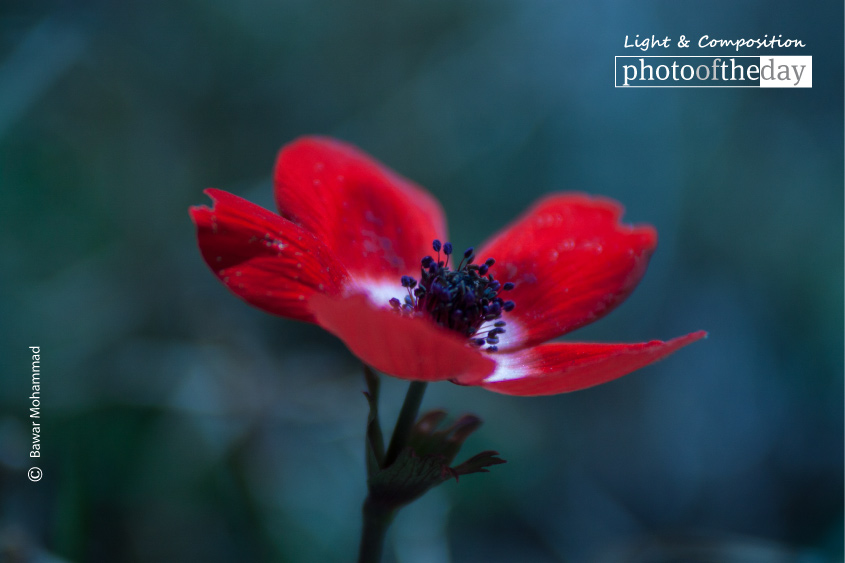
Exposure 1/3200sec @ f/2.8 | ISO 100 | Focal Length 200mm
Bawar Mohammad
Born in 1985 in Duhok, Kurdistan, Bawar Mohammad is a computer graduate from the University of Duhok who has dedicated his career to the arts. Currently serving as a journalist and freelance photographer, he focuses his lens on the intersection of nature, human life, and cultural expression. Mohammad is driven by a desire to bridge global communities, aiming to share the rich artistic heritage of his nation with an international audience through his evocative and disciplined photographic work.
Resonance Score Breakdown
Transparency Note: The resonance score (13.6/20) is calculated based on social engagement metrics collected before the award announcement.
Expert Photography Reviews · 5
The Quiet Letting Go
I spent this morning clearing out the old books from my bedside table. There was a dried leaf tucked inside a novel I hadn't opened in years, its edges brittle and ready to crumble at the slightest touch.
Read the reflection →The Velvet Pulse
There is a specific resistance when you press your thumb against the petal of a poppy. It is not quite silk, and it is not quite paper; it is the feeling of something living that has decided to let go.
Read the reflection →Reviews & Comments
Share your thoughts about this award-winning photograph. Your reviews contribute to the community engagement score.
The central vertical axis anchors this poppy, creating a perfect equilibrium between the organic curves and the negative space. I’m struck by the 1:2 ratio of the bloom’s mass to the blurred background, which effectively isolates the geometry of the sepals. It’s a precise spatial solution. The shallow depth of field at f/2.8 creates a soft, circular gradient that perfectly offsets the sharp, angular tension of the falling petals. I honestly find the symmetry here quite exhilarating.
The sepals fall. A shedding of weight. I’ve spent minutes watching this poppy breathe against the blur of the Kurdish mountains. It’s quiet. The background doesn’t intrude; it recedes. I feel a sudden, sharp ache for the stillness I’ve lost in the city. Nothing here is accidental. The empty corner is not empty. It’s a breath held in the heat of Duhok. The flower remains. It doesn’t need to shout to be heard.
At f/2.8, the 200mm focal length compresses the background into a creamy, near-perfect blur, isolating the Papaver with surgical precision. The diffraction of light across the delicate, shedding sepals is, in the strictest physical sense, extraordinary. I’m genuinely moved by how the lens captures the microscopic veins of the petals; it’s a level of resolution that feels almost tactile. It’s rare to see such a fragile biological transition rendered with this much optical clarity.
It’s easy to snap a poppy in a breeze, but catching that precise moment the sepals surrender requires a stubborn sort of stillness. I’ve spent enough mornings shivering in the hills to know the wind rarely plays fair. Mohammad didn’t just find this; he waited for the air to hold its breath. It’s a quiet, fragile victory. I find myself wanting to lean in, just to see if the petals have finally finished their descent.
Before the eye identifies the poppy, a sudden stillness settles in the chest. The sepals falling away trigger a visceral sense of shedding, a quiet surrender I feel in my own tired shoulders. It’s not just a flower; it’s the fragility of a held breath. When I return to this, I’m struck by how the blurred, rugged mountains of Duhok press against the bloom, making its vulnerability feel almost defiant. It’s a beautiful, aching weight.