Bihari Refugee in Geneva Camp by Ashik Masud
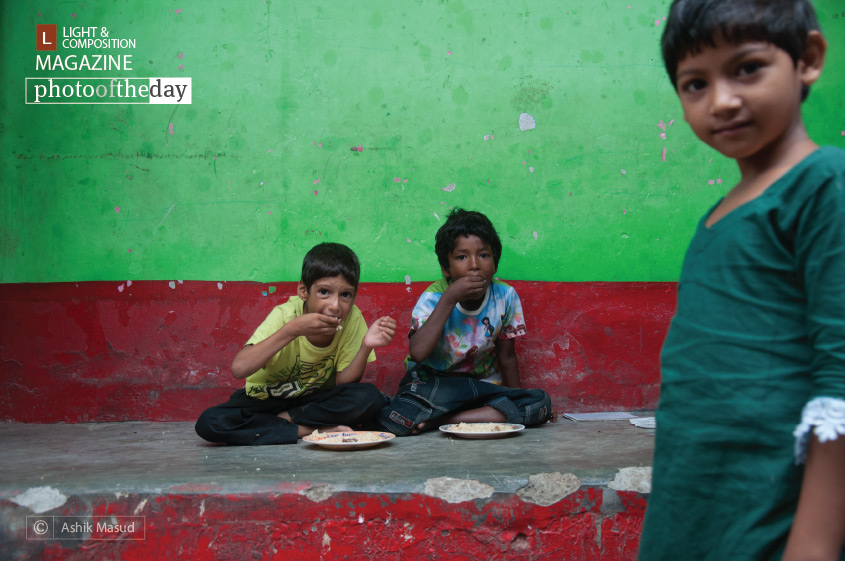
This poignant documentary photograph captures the stark reality of life within the Geneva Camp in Mohammadpur, Dhaka, where thousands of Bihari refugees reside. The image serves as a visual testament to the enduring struggles of a community living in the shadow of historical displacement, marked by unhygienic conditions and systemic economic insecurity. By focusing on the human element amidst the squalor, the photographer highlights the acute identity crisis and resilience of the Bihari people. The work is award-worthy for its raw, empathetic approach to social documentation, transforming a complex humanitarian crisis into a powerful, intimate narrative that demands global attention.
Ashik Masud
Based in Dhaka, Bangladesh, Ashik Masud is a dedicated documentary photographer and IT professional who uses his camera to bridge cultural divides. His work is defined by a vibrant, energetic aesthetic that captures the authentic interactions of people within their environments. As a self-taught artist, Masud is driven by a profound respect for the diverse cultures he encounters, consistently striving to represent the spirit of his homeland through a compassionate and observant lens.
Resonance Score Breakdown
Transparency Note: The resonance score (6.3/20) is calculated based on social engagement metrics collected before the award announcement.
Expert Photography Reviews · 3
The Weight of Belonging
We often speak of home as if it were a fixed coordinate, a dot on a map where the floorboards creak in a familiar key and the light hits the kitchen table at a predictable hour. But what happens when the map itself is folded away, or worse, burned?
Read the reflection →The Weight of a Name
I once met a man in a transit lounge in Istanbul who carried his entire life in a single, frayed leather satchel. He told me he had been moving for twenty years, crossing borders that didn't exist on his old maps.
Read the reflection →Reviews & Comments
Share your thoughts about this award-winning photograph. Your reviews contribute to the community engagement score.
One can’t help but notice the grit under the fingernails here. It’s clear Masud didn’t just wander through Geneva Camp with a shutter-happy finger. He’s sat in that suffocating heat until the subjects stopped performing for the lens. I’ve spent enough time in cramped, miserable quarters to know that kind of intimacy isn’t gifted; it’s extorted through sheer, stubborn presence. It’s a heavy, honest piece of work. He earned every bit of this frame.
The light here doesn’t fall; it clings to the corrugated metal, heavy with the humidity of a Dhaka afternoon. Ashik waited until the shadows softened the edges of this displacement. I’ve stood in similar heat, feeling the air grow thick and still. It’s a quiet, aching presence. Looking at the subject’s eyes, I feel a sudden, sharp pang of shame for my own comfort. He didn’t just document a camp; he listened to its silence.
The frame’s geometry is compromised. The subject’s gaze drifts, lacking a clear anchor within the chaotic architecture of the camp. While the vertical lines of the corrugated metal provide a necessary rhythm, the spatial tension collapses under the weight of too much visual noise. It’s frustrating. The composition doesn’t hold the eye; it scatters it. I’ve seen better discipline in far less demanding environments. Structure is the only thing that saves a frame from irrelevance.