Bags Booth by Ryszard Wierzbicki
Captured in the vibrant streets of Kathmandu in September 2013, this image highlights the rich textures and colors of a local bags booth. The photographer was drawn to the spontaneous, everyday beauty of the market stalls, choosing to frame the scene to emphasize the variety and craftsmanship of the goods on display. By utilizing a mid-range focal length and careful exposure settings, the photographer successfully balanced the ambient light to create a warm, inviting atmosphere. The photograph is award-worthy for its authentic documentation of local commerce, showcasing a keen eye for color and the quiet, compelling stories found within bustling urban environments.
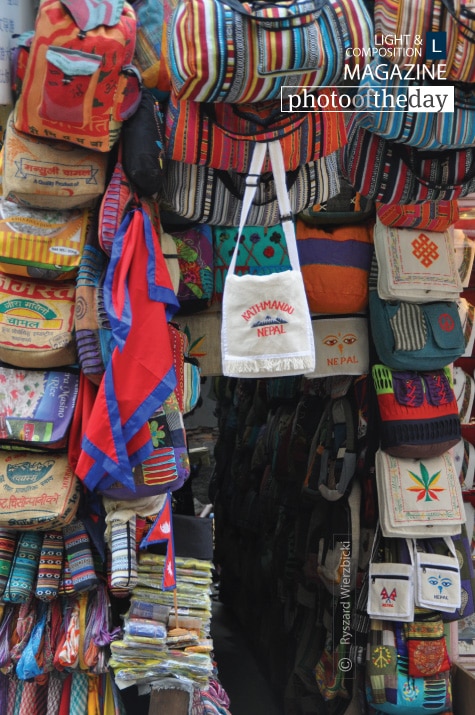
Exposure 1/60sec @ f/4.8 | ISO 640 | Focal Length 48mm
Ryszard Wierzbicki
Born in Poland in 1963, Ryszard Wierzbicki is a dedicated photographer and traveler currently based in Swindon, United Kingdom. After a diverse professional career in education and marketing, he transitioned into a life of exploration, focusing his lens on the cultures and landscapes of South-East Asia. Beyond his photography, he is an active volunteer for children's charities and a founder of digital communities for travelers. His work reflects a deep-seated passion for documenting the world, blending his adventurous spirit with a refined, observant approach to visual storytelling.
Resonance Score Breakdown
Transparency Note: The resonance score (12.3/20) is calculated based on social engagement metrics collected before the award announcement.
Expert Photography Reviews · 7
The Weight of Our Belongings
I spent an hour this morning trying to find a specific tote bag in my closet. It was buried under a pile of winter scarves and old receipts, tucked away as if it were hiding from me.
Read the reflection →The Architecture of Belonging
We spend our lives gathering vessels. We fill them with the things we hope will define us—the heavy weight of our histories, the soft fabric of our dreams, the small, sharp edges of our daily needs.
Read the reflection →Reviews & Comments
Share your thoughts about this award-winning photograph. Your reviews contribute to the community engagement score.
1/60sec at f/4.8, ISO 640, 48mm. It’s a lazy compromise. The shutter speed is barely enough to avoid motion blur, yet the aperture is too wide to keep the bags in focus across the frame. I’m frustrated by the softness in the corners. It’s a technical failure that undermines the texture of the goods. Wierzbicki had the light, but he didn’t have the discipline. He’s chasing color while ignoring the physics of the lens.
The light here doesn’t shout; it settles softly into the worn textures of the leather. Ryszard stood in the humid, quiet hum of the market, waiting for the shadows to soften against the hanging bags. It’s a humble, breathing geometry. I find myself wanting to reach out and touch the grain of the straps, feeling the weight of the day’s trade. He didn’t rush the moment. He simply let the Kathmandu air hold him still.
Kathmandu’s vibrant clutter usually demands our gaze, but here, the bags hang like hollowed-out skins. It’s a claustrophobic display where the light doesn’t illuminate; it merely exposes the surface. I’ve stared at these synthetic textures until the colors felt like a bruise. Where is the depth? The shadows are too shallow, too afraid to swallow the excess. It’s a market stall that refuses to dream. I find myself wishing for a darkness that actually hides something.
Most street photography is just noise, but here, the chaotic geometry of the bags creates a rhythm that actually holds up. I’ve seen thousands of market shots, yet this one avoids the usual clutter trap. The way the saturated reds anchor the frame against the muted background is why it’s still relevant a decade later. It’s a simple, honest slice of Kathmandu. Honestly, looking at it makes me miss the grit of those crowded, vibrant stalls.
The ochre of these satchels, reminiscent of a sun-drenched Morandi still life, vibrates against the shadows with a tactile, almost edible warmth that makes my heart ache for the dust of Kathmandu. It’s a chromatic symphony where the deep, bruised indigos of the hanging textiles anchor the frame, preventing the golden hues from drifting into mere decorative excess; one finds here a rare, quiet equilibrium that’s as intoxicating as it is profoundly, undeniably human.
The frame pulses with the frantic, humid rhythm of Kathmandu. It’s a dense, saturated sequence captured in a single breath. The bags hang like static actors, waiting for a scene that never starts. I’m struck by the warmth; it feels like walking into a crowded set just before the director yells action. Wierzbicki didn’t just document a stall; he held the shutter until the chaos settled into a perfect, vibrant composition. It’s the frame the editor keeps.
Before the eye identifies the bags, a sudden stillness settles in the chest. It’s the weight of the colors—those saturated, synthetic blues and reds—that triggers a visceral, almost claustrophobic comfort. I’ve returned to this stall three times today, and each time, the chaos of Kathmandu feels less like a city and more like a memory I haven’t lived yet. It doesn’t just document commerce; it anchors a restless mind in the warmth of someone else’s inventory.