Life with Clay by Ashik Masud
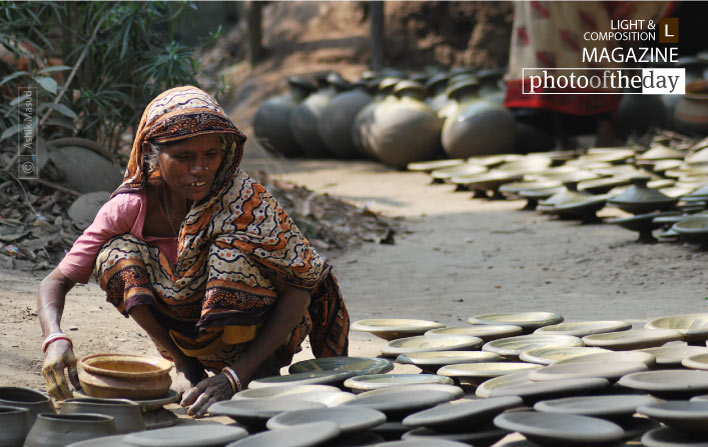
Captured in the heart of Paul Para, Shimulia, this evocative image documents the rhythmic, labor-intensive process of traditional pottery. The photographer focuses on the experienced hands of artisans as they transform raw clay into functional household vessels, highlighting a multi-generational family craft that often goes unnoticed. By isolating the tactile connection between the potter and the clay, the image serves as a poignant tribute to the unsung dedication of these craftsmen. Its award-worthy quality lies in the intimate documentary perspective, which elevates a routine domestic task into a compelling narrative of cultural heritage and human perseverance.
Ashik Masud
Based in Dhaka, Bangladesh, Ashik Masud is a dedicated documentary photographer who balances his creative pursuits with a career as an IT professional. A self-taught artist, he specializes in capturing energetic, colorful imagery that highlights the human experience and the diverse cultures of his home country. Through his lens, he seeks to foster connection and respect, documenting how people interact with their surroundings to reveal the profound stories embedded in everyday life.
Resonance Score Breakdown
Transparency Note: The resonance score (13.1/20) is calculated based on social engagement metrics collected before the award announcement.
Expert Photography Reviews · 6
The Shape of Our Hands
I spent this morning trying to fix a small ceramic bowl I dropped last week. My fingers felt clumsy, covered in glue and dust, trying to force the jagged edges to remember how they used to fit together. It was frustrating work.
Read the reflection →The Earth Beneath Our Fingernails
There is a specific coolness to damp earth that stays in the creases of your palms long after you have washed them. It is a heavy, grounding scent, like the air just before a monsoon breaks, thick with the promise of something being born.
Read the reflection →Reviews & Comments
Share your thoughts about this award-winning photograph. Your reviews contribute to the community engagement score.
Of the thousands of documentary submissions I’ve reviewed, most capture labor but miss the soul. What separates this from technically similar work is the grit under those fingernails. It’s not just pottery; it’s the weight of history held in a thumb’s pressure. I’ll admit, the framing nearly lost me, but that tactile intimacy pulled me back. In thirty years, we’ll need this record of hands that built a culture before machines made them obsolete.
The ochre of the damp, malleable earth isn’t merely pigment; it’s a tactile history, echoing the muted, dusty palettes of Morandi’s still lifes. As the clay yields to those weathered fingers, the light catches the silt-heavy atmosphere, casting a glow that feels like the golden, humid breath of a Bengal afternoon. It’s hauntingly beautiful, really—I’m struck by how the monochromatic warmth hums with an ancient, rhythmic pulse that makes my own hands ache for that cool, wet grit.
At 122mm and f/5, the focal plane is razor-thin, isolating the clay’s granular texture against a soft, creamy bokeh. It’s a delicate balance; the diffraction limit hasn’t softened those fine, wet ridges under the artisan’s thumb. I’m genuinely moved by how the light catches the moisture on the clay—it’s a tactile, visceral rendering of labor. You don’t just see the craft; you feel the viscosity of the earth yielding to human intent. It’s beautifully precise.
The frame’s geometry is compromised. While the potter’s hands provide a necessary fulcrum, the surrounding negative space lacks the requisite discipline to anchor the subject. It’s cluttered. The background’s chaotic tonality bleeds into the foreground, eroding the spatial tension. I’m frustrated by the lack of structural intent here. The composition doesn’t hold the weight of the labor it attempts to document. It’s a missed opportunity for formal clarity. The eye is simply refused a resting point.
One suspects the potter didn’t mind the intrusion, provided the photographer stayed long enough to become part of the furniture. It’s a quiet, tactile study. I’ve spent enough hours in damp workshops to recognize the patience required to capture that precise tension in the clay. It isn’t a lucky snap; it’s a result of sitting still until the hands forgot the camera was there. I find myself wanting to wash the dust off my own palms.
Hands move. The clay yields. It’s a quiet rhythm, ancient and steady. I find myself holding my breath, watching the fingers shape the void. The frame doesn’t crowd the artisan. It lets the dust settle in the corners. There’s a stillness here that feels heavy, yet light. Nothing here is accidental. The empty space is not empty. It’s the silence of a craft that doesn’t need to shout. I’ve never felt so close to earth.