Beyond the Modern Civilization by Anup Kar
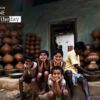
Captured within a tribal village in the Chilapata forest, this poignant documentary image highlights the innocence of children from the Rava community. During a weekend excursion, the photographer encountered the group at play; upon noticing the camera, the children naturally gathered before a doorway, creating an intimate and spontaneous composition. The image is award-worthy for its authentic portrayal of rural life and the genuine connection established between the photographer and his subjects. By capturing this fleeting moment of curiosity and communal spirit, the photographer provides a compelling glimpse into a culture often removed from the modern world.
Anup Kar
Based in Cooch Behar, West Bengal, Anup Kar balances a professional career as a civil engineer with a dedicated pursuit of photography. Initially a casual hobby, his practice evolved into a serious artistic endeavor through the influence of a community of passionate peers. His work spans landscape, portrait, and street photography, reflecting a deep interest in documenting the human experience and the natural beauty of his home district.
Resonance Score Breakdown
Transparency Note: The resonance score (11.3/20) is calculated based on social engagement metrics collected before the award announcement.
Expert Photography Reviews · 6
The Weight of Unseen Paths
We build walls to keep the world out, or perhaps to keep ourselves in. We measure progress by the height of our structures and the speed of our clocks. But there are places where the clock has no hands, where the earth remains the only map worth following.
Read the reflection →The Architecture of Belonging
In the quiet corners of the world, away from the hum of electricity and the frantic pace of the clock, there exists a different kind of time.
Read the reflection →Reviews & Comments
Share your thoughts about this award-winning photograph. Your reviews contribute to the community engagement score.
Bravo 👏🏻👏🏻👏🏻🙏❤️📸
Thanks Light and Composition
The doorway holds them. It’s a frame within a frame. The children gather, yet the wall remains the protagonist. I’ve spent minutes watching the texture of the plaster. It’s quiet. The Rava community doesn’t need the modern world to justify its existence. Nothing here is accidental. The empty corner is not empty. It breathes. I feel a sudden, sharp ache for this stillness. It’s rare to find a silence that doesn’t ask for anything back.
At f/6.3, the Canon’s sensor resolves the Rava children’s skin textures with startling fidelity, pushing past the diffraction limit of a kit lens. The focal plane sits perfectly on their curious eyes, rendering the doorway’s deep shadows as a soft, chaotic bokeh. It’s a rare optical harmony. I’m genuinely moved by how the light catches their hair; it’s a physical manifestation of innocence that my own retina could never resolve with such clinical, heartbreaking precision.
The ochre earth, reminiscent of a Morandi still life, anchors these children in a warmth that feels almost tactile, like sun-baked clay against the skin. It’s a palette of raw, dusty umber that makes my heart ache with its quiet, unvarnished honesty. One finds the shadows here aren’t merely absences of light, but deep, velvet pockets of indigo that swallow the edges of the doorway, creating a chromatic tension that’s simply divine to behold.
Most documentary work I’ve reviewed this year feels staged, but here, the Rava children’s gaze isn’t for the lens—it’s for each other. That doorway acts as a frame within a frame, grounding their fleeting curiosity in a permanent, tactile reality. It’s rare to find such unforced intimacy. Honestly, it makes me miss the simplicity of my own childhood. This will endure because it captures a human rhythm that modern life has long since traded away.
The doorway acts as a rigid fulcrum, anchoring the scattered mass of the children. It’s a necessary geometry that prevents the frame from collapsing into mere sentiment. The negative space above the lintel provides a cold, structural relief to the chaotic arrangement of limbs below. I’m genuinely irritated by the soft focus on the periphery, which weakens the frame’s edge. It doesn’t hold the weight it should. The architecture is sound, but the discipline falters.
Darkness pools within that doorway like a heavy, unread secret. It’s not merely a backdrop; it’s the threshold where the Rava children’s innocence meets the encroaching void. I’ve stared at these faces, and I feel a sudden, sharp ache for the silence they’re about to inherit. Kar doesn’t just document a village; he captures the tension of a world retreating into the shade. If light reveals, then this shadow is where the truth finally begins to think.
beautiful Anup…
thanks light n composition