
Hanging Lakes, by Steve Hirsch
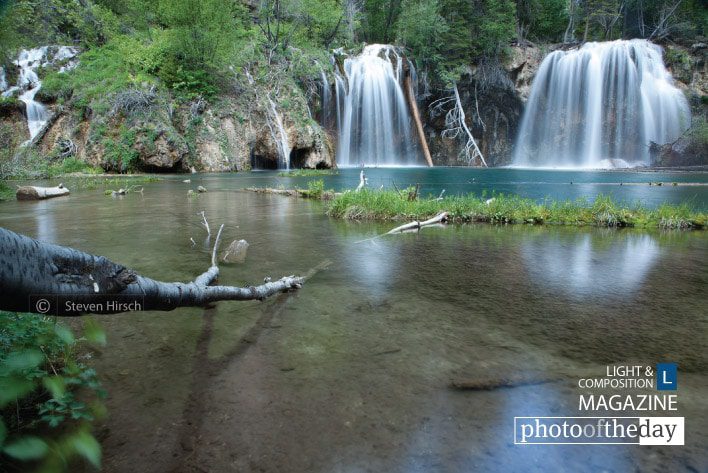
The snowfall in the winter of 2011 was a record in Colorado which led to a massive runoff in the spring. With my wife Sheila and good friends Barry and Shelly, we set out on this climb of 1 1/2 miles up to Hanging Lakes in Glenwood Colorado. A moderately difficult hike with a significant elevation was well worth the effort as these waterfalls were far better in 2011 than in previous years.
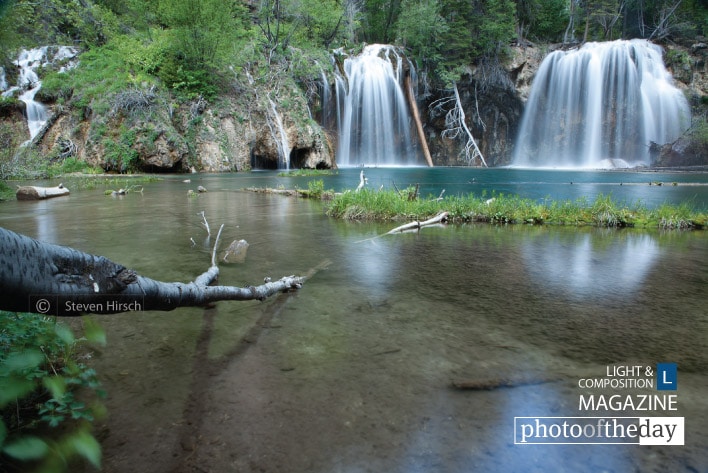
Canon 5DII | ISO 100 | ISO 100 24mm f/22 @ 4.0sec | Benro tripod Variable ND filter
Hanging Lakes, by Steve Hirsch
Award Winner: Photo of the Day | March 23
Photo of the Day Award Category: Nature Photography
Photograph Location: Glenwood Springs, Colorado | The United States
Photographer: Steve Hirsch (Columbus,Ohio, USA) Registered
Steve Hirsch grew up with a love of photography, had a darkroom in his basement and photographed throughout high school. He took some time off to get married, raise 3 girls and become an otolaryngologist. Now that the kids have grown he has renewed his interest in his favorite hobby. His other favorite pastime is travel. The two passions go hand-in-hand, travel landscape and wildlife photography. In order to grow as a photographer he has attended workshops in Africa and various locations. He continues to travel all over the world and the United states to capture animals in their natural habitat and photograph beautiful landscapes in all different seasons of the year and various lighting. His artwork adorns the walls of his home, his friends, family and clients homes as well as medical offices. He feels photography is his way to express oneself artistically and connect with people on a very basic level. He enjoys the process of planning and traveling to each unique location, patiently taking the best shot and exploring the best way to display his works of art. He currently lives in Columbus Ohio USA.
Website: stevehirschphotography.com
Flickr: www.flickr.com/photos/stevehirschphotography
Facebook Page: www.facebook.com/pages/Steve-Hirsch-Photography/229872250393874



 The Captain, by Joe Azure


Leave a Reply
Want to join the discussion?Feel free to contribute!