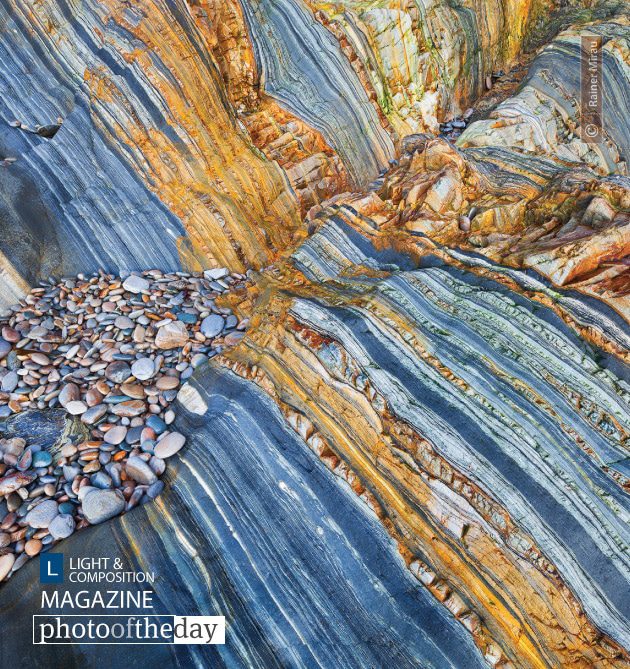
Rock n Roll by Rainer Mirau
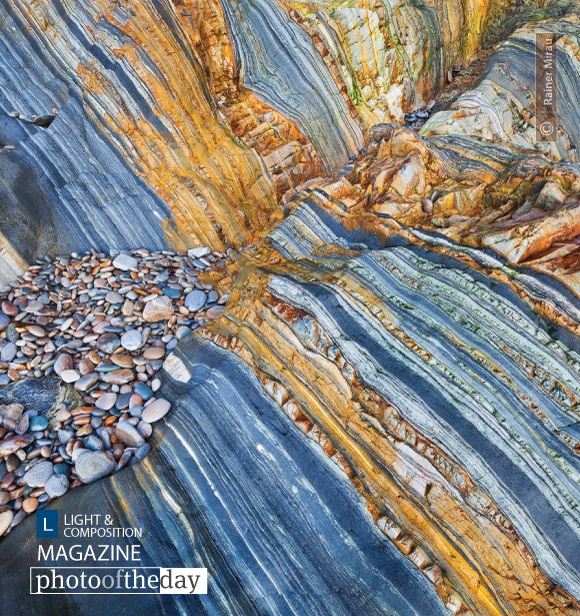
Captured in the rain-drenched landscapes of Baden, this photograph transforms the simple textures of shoreline stones into a compelling abstract study. By embracing flat, overcast light, the photographer highlights the intensified colors and intricate patterns of the rocks, turning a mundane scene into a vibrant composition. The use of a long six-second exposure and a polarizer allows for a meticulous rendering of detail, showcasing a keen eye for finding beauty in intimate, overlooked subjects. This image is award-worthy for its technical precision and the photographer's ability to elevate natural elements into a sophisticated, rhythmic visual narrative.
Rainer Mirau
Born in Vienna in 1976, Rainer Mirau resides in the idyllic town of Baden near the Vienna Forest. His photographic journey, inspired by early travels through Scandinavia and the works of masters like Ansel Adams, evolved from a youthful hobby into a dedicated pursuit of landscape and nature photography. Mirau frequently explores the Alps and Northern Europe in his camping van, finding balance and creative fulfillment in the intersection of technical mastery and the natural world. His work has earned recognition through numerous international publications and competition successes.
Resonance Score Breakdown
Transparency Note: The resonance score (13.6/20) is calculated based on social engagement metrics collected before the award announcement.
Expert Photography Reviews · 6
The Memory of Stone
We walk upon the earth as if it were a static floor, forgetting that every pebble is a traveler. Each stone is a slow-motion river, a fragment of a mountain that has spent eons unlearning its own height.
Read the reflection →The Weight of Wet Stone
The smell of rain on hot pavement is a sharp, metallic sting, but the smell of rain on river stone is something deeper—it is the scent of ancient, cooling earth. I remember kneeling by a creek when I was small, my palms pressed against the slick, mossy skin of a boulder.
Read the reflection →Reviews & Comments
Share your thoughts about this award-winning photograph. Your reviews contribute to the community engagement score.
At f/11, the diffraction limit begins to soften the micro-contrast, yet here it serves the texture of the wet stone beautifully. The six-second exposure integrates the water’s motion, creating a silky refractive index that contrasts against the rigid mineral geometry. I’m genuinely moved by how the polarizer cuts the specular highlights, revealing the deep, saturated chromaticity beneath. It’s a precise calibration of light and glass that makes the mundane feel utterly, physically transcendent. I’ve rarely seen such clarity.
Most abstract work I’ve seen this year relies on cheap tricks, but Mirau’s six-second exposure earns its place. By smoothing the water, he forces the eye to confront the chaotic geometry of the stones. It’s a quiet, rhythmic tension that doesn’t scream for attention. Honestly, looking at these wet, vibrant textures makes me want to reach out and touch them. That’s the mark of a piece that’ll still hold weight in thirty years. It’s simply honest.
The wet stones shimmer with the bruised, melancholic ochre of a Morandi still life, their surfaces drinking in the rain until they’re saturated with the deep, bruised violet of a storm-tossed Aegean. It’s a rhythmic, liquid chromaticism that makes my heart ache; the way the light clings to these slick, mineral textures feels like a secret whispered in the dark. One finds here a profound, damp silence, where the palette breathes with an ancient, heavy grace.
Six seconds of rain. The water blurs, turning stone into stillness. I’ve spent minutes watching these rocks. They don’t move, yet they hum. It’s a quiet rhythm. The frame isn’t crowded. It’s held. The wet edges pull my eye toward the center, then let it drift away. I feel a sudden, sharp peace standing here. Nothing here is accidental. The empty corner is not empty. It’s a breath. A pause. It’s enough.
Baden’s rain-drenched stones don’t merely sit; they endure. Mirau’s six-second exposure flattens the world into a rhythmic, liquid tomb. It’s technically precise, sure, but I’m haunted by the lack of true black. Where is the abyss? Without the weight of deep shadow, these rocks feel adrift in a sterile, overcast purgatory. It’s beautiful, I suppose, but it’s a beauty that refuses to bleed. It doesn’t dare to ask the darkness what it truly knows.
Six seconds of exposure in the rain suggests someone who didn’t mind getting their kit soaked. Most would have packed up at the first sign of a drizzle, yet here we are. The stones hold a depth that only comes from staying put while the world turns grey. I’ve spent enough miserable hours in the damp to recognize the commitment. It’s a quiet, sodden sort of triumph. One respects the patience required for this.