Enjoy the Light by Rob van der Waal
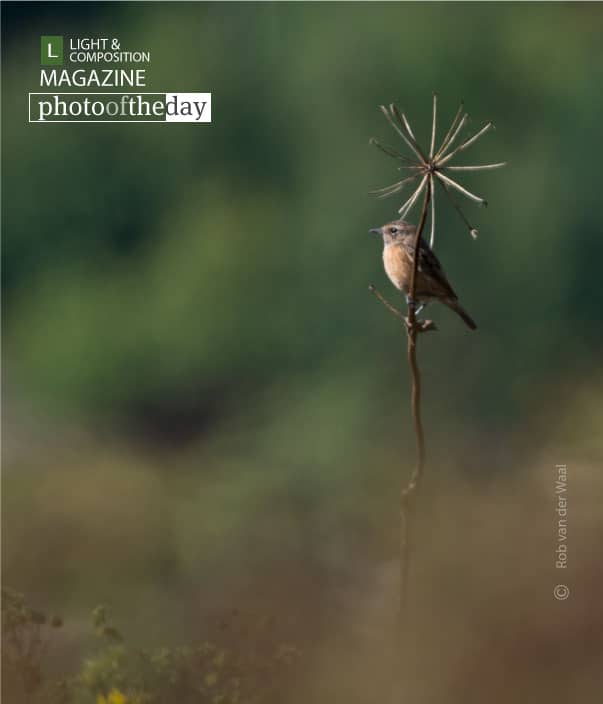
Captured during a hike through the hills of the Algarve, this image features a European Stonechat in a moment of quiet respite. The photographer observed the bird as it searched for food before settling down, allowing for a perfectly timed shot that highlights the delicate textures of its plumage against a soft, natural backdrop. The image is award-worthy for its sharp focus and the photographer's ability to transform a fleeting wildlife encounter into a serene, intimate portrait, showcasing both technical precision and a deep, respectful connection to the natural world.
Rob van der Waal
Born in 1957 in Rotterdam, Rob van der Waal was introduced to the craft by his father, a passionate photographer who maintained a home darkroom. An autodidact who refined his skills through practice and observation, van der Waal is known for a pure and honest photographic style that frequently explores the intersection of nature, maritime life, and light. Based in Hellevoetsluis, he remains a dedicated observer of the natural world, constantly seeking new ways to tell compelling stories through the lens.
Resonance Score Breakdown
Transparency Note: The resonance score (12.9/20) is calculated based on social engagement metrics collected before the award announcement.
Expert Photography Reviews · 8
The Weight of a Whisper
To be small is to be closer to the earth’s secret pulse. We spend our lives reaching for the canopy, straining toward the sun, yet the most profound truths are often found in the quiet, low-hanging branches where the wind barely dares to breathe.
Read the reflection →The Weight of a Whisper
The smell of dry grass after a long, parched summer always brings me back to the feeling of grit between my toes. It is a sharp, earthy scent—the smell of sun-baked stalks snapping underfoot, releasing a ghost of dust that settles in the back of the throat.
Read the reflection →Reviews & Comments
Share your thoughts about this award-winning photograph. Your reviews contribute to the community engagement score.
The ochre of the Stonechat’s breast, reminiscent of a Morandi still life, vibrates against the muted, dusty olive of the Algarve scrub, creating a chromatic tension that’s utterly intoxicating. It’s the way the light catches those feathers—a pale, sun-bleached gold—that makes my heart ache with a sudden, quiet longing for the Mediterranean heat. One finds here a rare, delicate harmony where the bird’s warmth doesn’t merely sit upon the frame, but breathes within it.
A 340mm lens suggests a photographer who didn’t just stumble upon this Stonechat. It’s a decent bit of work, though one wonders if the bird was the only thing waiting in those Algarve hills. I’ve spent enough mornings shivering in the brush to know that stillness is a tax one pays for clarity. The plumage is sharp, the patience evident. It’s a quiet, earned moment. I’d have liked to see him stay until dusk.
Of the thousands of bird portraits I’ve reviewed, most are merely technical exercises. What separates this from the pack is the Stonechat’s posture; it isn’t just perched, it’s leaning into the light. I’ve spent decades looking at wildlife, yet this quiet, soft-focus stillness makes me want to hold my breath. It’s a rare, intimate study that will still feel honest in thirty years, long after the digital noise of today’s photography has faded away.
The Stonechat rests, and for a moment, the Algarve hills hold their breath. I’ve spent enough mornings waiting for a bird to settle to know Rob didn’t chase this; he simply became part of the landscape until the creature forgot he was there. It’s a quiet grace. Looking at the soft, blurred brush behind that tiny, alert eye, I feel a sudden, sharp ache for the stillness of that hillside. He listened well.
The Stonechat sits, yet it’s haunted by the void behind it. Van der Waal has captured a creature defined by what it isn’t—the encroaching, blurred nothingness that threatens to swallow its fragile plumage. I’m unsettled by how the light clings to the bird, a desperate, thin veneer against the encroaching dark. It’s not just a portrait; it’s a standoff. Heidegger would argue the bird is merely existing, but here, it’s fighting to remain visible.
The European Stonechat occupies the frame’s upper-right quadrant, creating a precarious diagonal tension. It’s a calculated placement. The blurred vegetation provides a necessary, muted counterweight to the bird’s sharp, intricate plumage. While the negative space doesn’t quite achieve total equilibrium, the focal plane remains disciplined. I’ve grown tired of wildlife sentimentality, yet the structural rigour here holds my attention. It’s a rare instance where the bird’s stillness actually justifies the frame’s rigid architecture.
The bird sits. A small weight against the vast, blurred ochre of the Algarve. It’s a study in restraint. Most would crowd the frame, but here, the space breathes. I find myself holding my breath, afraid to disturb the stillness. The blur isn’t just background; it’s the silence surrounding the subject. Nothing here is accidental. The empty corner is not empty. It’s the quiet I’ve been searching for all day. It’s enough.
At f/4.8, the D800’s sensor resolves the Stonechat’s plumage with a clinical sharpness that defies the bird’s erratic nature. The focal plane is razor-thin, isolating the subject while the bokeh, a function of that 340mm compression, dissolves the Algarve scrub into a creamy, non-distracting wash. I’m genuinely moved by how the light catches those fine, barbicel-rich feathers; it’s a rare moment where the optics don’t just record, they reveal a quiet, biological intimacy I’ve rarely seen.