Taobat by Imran Dawood
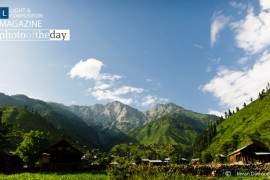
Captured during a rugged journey toward the remote village of Taobat, this image showcases the ethereal beauty of the Kel Valley in Azad Kashmir. The photographer navigated a challenging ten-hour 4WD trek through high-altitude mountain roads and sensitive border zones to reach this dreamlike landscape. The composition highlights the dramatic contrast between the serene, untouched natural surroundings and the precarious, construction-heavy terrain of the region. This photograph is award-worthy for its ability to transform a difficult, restricted travel experience into a tranquil visual narrative, capturing the raw, isolated majesty of a place rarely seen by the outside world.
Imran Dawood
Based in Lahore, Pakistan, Imran Dawood is a telecommunications engineer whose passion for photography blossomed while working abroad in the Philippines. A dedicated nature enthusiast, he has traveled extensively, documenting stunning landscapes and freezing fleeting memories through his lens. Having transitioned through various professional camera systems, Dawood now channels his technical background and adventurous spirit into capturing the world's most remote and breathtaking vistas.
Resonance Score Breakdown
Transparency Note: The resonance score (14.4/20) is calculated based on social engagement metrics collected before the award announcement.
Expert Photography Reviews · 3
The Weight of Silence
The mountains do not care if we arrive. They have stood in their own cold gravity long before we learned to walk, and they will remain long after our footprints have been erased by the wind.
Read the reflection →The Edge of the Map
There is a specific kind of silence that only exists at the periphery of things. We spend our lives huddled in the center, surrounded by the hum of the familiar, the predictable rhythm of the clock, and the steady pulse of the streets we know by heart.
Read the reflection →Reviews & Comments
Share your thoughts about this award-winning photograph. Your reviews contribute to the community engagement score.
The air in Kel Valley doesn’t just sit; it waits. Imran stood here as the light softened, listening to the silence of the high peaks. It’s a fragile peace, isn’t it? That precarious balance between the raw, ancient stone and the encroaching human hand. I’ve felt that same ache in my chest when the world finally stops moving. He didn’t force this frame; he let the valley breathe, capturing a stillness that’s almost impossible to find.
Ten hours in a 4WD is a decent start, but it doesn’t guarantee a frame. One suspects the light cooperated on the first attempt; it often does, for the lucky. I’ve spent enough time shivering in the Kel Valley to know that silence isn’t free. It’s a tidy composition, yet I find myself wondering if he stayed until the light turned sour. It’s a pleasant view, but I’m not convinced it was earned.
The valley floor anchors the frame, yet the jagged ridgeline disrupts the horizon’s stability. It’s a precarious geometry. The heavy, dark mass of the mountainside creates a necessary fulcrum, balancing the lighter, ethereal mist below. I’m genuinely unsettled by the way the foreground construction cuts into the negative space, forcing the eye toward the periphery. The composition doesn’t resolve, but it holds. It’s a rigid, architectural triumph that demands the viewer’s absolute, unblinking attention.