Civil War Roots by José J. Rivera-Negrón
This photo shows The Union League of Philadelphia, an old building found at Broad and Sansom Streets. It started in 1862 during the Civil War. Its main goal was to be a social and political group that backed President Abraham Lincoln and the Union. The building is a great example of Philadelphia's Second Empire style of architecture. It was designed by John Fraser and finished in 1865. I wanted to take this picture because the history of the place is very significant.
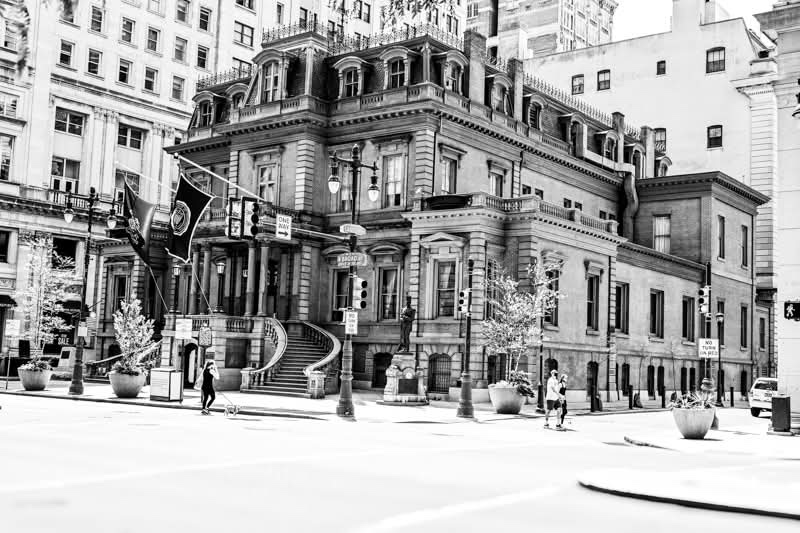
Exposure 1/320sec @ f/4.5 | ISO 100 | Focal Length 39mm
José J. Rivera-Negrón
José J. Rivera-Negrón was born in Puerto Rico and later moved to the United States, where he faced years of addiction, poverty, and life on the streets. After reaching a personal turning point, he sought help, completed rehabilitation, and made a firm decision to change his life. Those difficult experiences deeply shaped his perspective and eventually led him to photography—a medium through which he could express truth, struggle, and hope.
Today, Jose is a photographer whose work reflects resilience, recovery, and human connection. Through his travels, he documents diverse cultures and tells stories that carry messages of awareness, especially around addiction recovery and mental health. Working with Light and Composition has allowed him to share his vision with a wider audience. His journey stands as a reminder that even after the darkest chapters, it is always possible to start again and pursue one’s purpose.
Resonance Score Breakdown
Transparency Note: The resonance score (5.1/20) is calculated based on social engagement metrics collected before the award announcement.
Expert Photography Reviews · 6
Echoes in Stone
A stone remembers. It holds the shape of hands. The echo of voices.
Read the reflection →The City’s Deep Roots
There's a particular corner in Philadelphia, at Broad and Sansom, where the stone seems to hum with a different kind of silence. You can walk past a hundred times, preoccupied with the day's errands, and see only a grand facade.
Read the reflection →Reviews & Comments
Share your thoughts about this award-winning photograph. Your reviews contribute to the community engagement score.
“Civil War Roots” presents an imposing facade. But what history does this grand architecture truly embody? The Union League’s founding during the Civil War isn’t just a date; it’s a statement of power and allegiance. Who benefits from this particular framing of “significant history”? I find myself asking if the stark black and white simplifies a complex legacy. Does the lens merely admire the building, or does it ask what this institution *means* for Philadelphia today? We need to look closer.
“Civil War Roots” offers a meticulously resolved architectural study, technically precise, but I confess, it leaves me wanting more. I’m always asking what a photographer *chooses* not to resolve. Here, the sharp clarity feels like a conservative choice for a subject so steeped in complex history. Imagine the building’s past rendered with a deliberate blur, a long exposure akin to Sugimoto’s theatres, letting the present dissolve into the echoes of its origins. That would be truly provocative.
“Civil War Roots” presents a grand building, rich with history. But as I look at the Union League, I’m left wondering about the lives lived within its walls. Where are the faces? Where are the hands that shaped its purpose? This isn’t a portrait given; it’s a structure observed. I feel a pang of missed opportunity here. The history is present, yes, but the intimate human story, the truth we might receive from a trusting gaze, isn’t.
This building, The Union League, stands solid, a monument. But a monument doesn’t move. There’s no peak moment here, no body pushing against gravity, no muscle fiber at maximum tension. I’m looking for the weightless instant, the fraction where everything aligns, and it simply isn’t present in static architecture. It’s a record, yes, but not the capture of a single, decisive millisecond of action. Frankly, I’m left wanting for kinetic energy.
This structure, standing in Philadelphia, holds a history of human endeavor, of a nation’s struggle. The light here, bouncing from its Second Empire stone, has travelled only eight minutes from our sun. It’s a stark contrast to the light that left distant nebulae eons ago. I confess, I often wonder what stars might have been visible above such a structure, had the city not grown so bright, rendering a 1/320s exposure utterly blind to them.
The photograph of The Union League building, stark in black and white, presents a challenge. While it’s an architectural study, I can’t help but consider the *relationship* here. Was this perspective, from Broad and Sansom, simply a matter of walking up and clicking? Or did the photographer wait, unseen, for the light to fall just so, or for the street to clear, revealing the building’s true presence without human clutter? I’d be curious about the patience involved. It’s an impressive structure, but I always ask: was this moment earned, or merely extracted from a convenient vantage?