The Borders of the Wild
We often speak of the city as a closed system, a fortress of brick and asphalt designed to exclude the unruly chaos of the natural world. We draw lines on maps to define where the human project ends and the wilderness begins, assuming that these boundaries are absolute. Yet, the city is never truly separate from the earth it sits upon. It is a porous membrane, constantly negotiated by the creatures that refuse to acknowledge our zoning laws or our property lines. When we retreat, the wild does not merely wait; it reclaims, weaving itself back into the cracks of our infrastructure. We build for permanence, but the landscape is a document of constant transition, a reminder that our dominance is a fragile, temporary arrangement. If we were to step back and allow the edges to blur, would we find ourselves guests in a territory we once claimed to own, or would we finally understand that we are just another species struggling to find a place to feed?
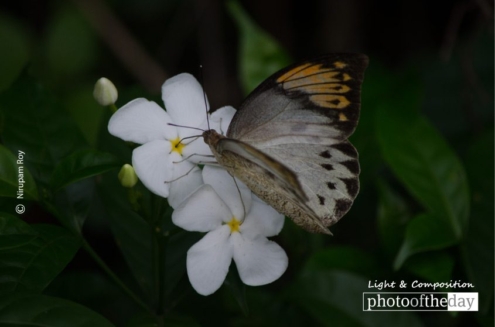
Nirupam Roy has taken this beautiful image titled Thirsty Sucking. It captures a moment of quiet persistence in a landscape that has seen the retreat of human industry. Does this image change how you view the boundaries between our spaces and the wild?